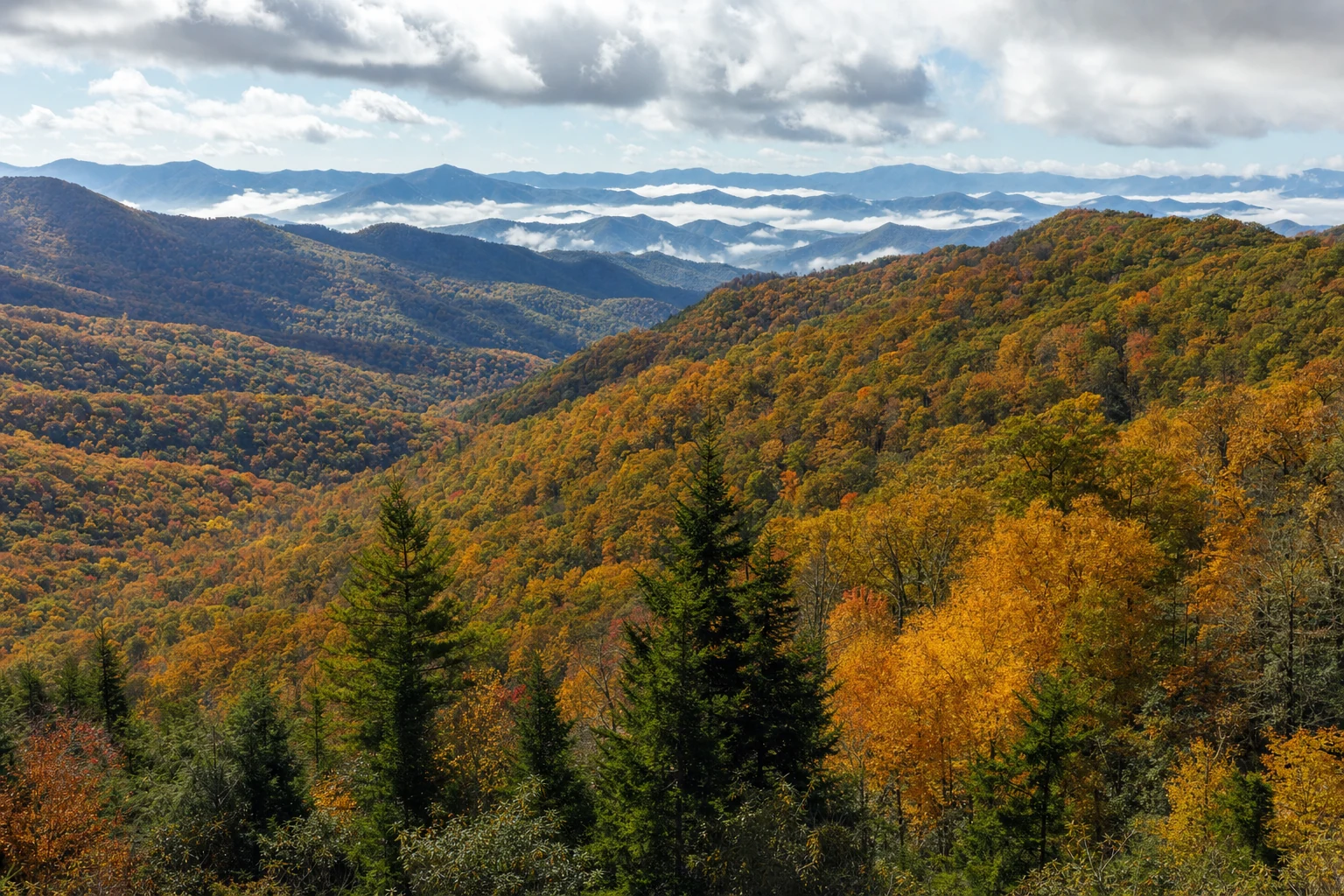

About Tremont Institute Main Lodge (former CCC Barracks):
Now I'll write the body copy, applying the anti-slop rules throughout.
---
The main lodge at Tremont started life as CCC barracks in the early 1930s — built fast, built plain, built to house the corps members who were cutting roads and laying trails through terrain that had barely been mapped. It's still standing. The interior isn't open to casual visitors; access belongs to participants in institute programs. But the building and the valley around it offer something worth seeing if you're already in the park, and the history behind the structure runs deeper than most day-trippers realize.
The CCC at Work in the Smokies
The Civilian Conservation Corps arrived in the Southern Appalachians with a straightforward mandate: put unemployed young men to work on public lands. In Great Smoky Mountains National Park, that meant clearing, grading, and building the basic infrastructure that made the park function — roads, bridges, fire towers, backcountry shelters, campgrounds. The work was physical and often rough, conducted in a mountain environment that doesn't reward carelessness.
The barracks at Tremont was the practical answer to a logistical question: where do these men sleep? The building went up to house workers stationed in the Middle Prong valley, close to the projects they were completing. It wasn't designed for longevity in any aesthetic sense; it was designed to be functional and cheap. The fact that it's still standing, still recognizable for what it was, gives it a kind of accidental integrity that more deliberately preserved structures sometimes lack.
The CCC ran nationally from 1933 until 1942, when wartime mobilization absorbed the workforce. During that window, corps members across the country built or improved an enormous share of the infrastructure in America's national parks and forests. Tremont's barracks is one fragment of that story, preserved by circumstance and later by intent.
What to Expect When You Arrive
The building is viewable from outside only. There's no interpretive signage attached to this specific structure in the way a museum installation might offer — you're reading the building itself, which means you get the exterior profile, the proportions, the materials, and the setting. For some visitors that's enough; for others who were hoping for a curated indoor experience, it won't be.
The Tremont valley is its own argument for making the drive. Middle Prong runs through hemlock and hardwood forest, and the road into the institute area follows the creek closely enough that you hear it most of the way in. Hikers who've spent time on Middle Prong Trail or along Lynn Camp Prong have often passed the lodge campus without knowing what the old barracks building is. Now you'll know.
Parking inside Great Smoky Mountains National Park requires a Park-It-Forward tag for any stop over 15 minutes. Daily tags cost $5, weekly $15, and an annual pass runs $40; buy them at recreation.gov before you go or at park entrance kiosks. There's no separate admission to the Tremont area.
The Institute That Occupies It Now
The building serves today as the main lodge for the Great Smoky Mountains Institute at Tremont, an environmental education and conservation organization that runs residential programs for school groups, families, and educators. The campus has grown around the original CCC-era structures, but the barracks building remains the oldest and most historically significant piece of it.
If you want to go inside, that path runs through an institute program rather than a drop-in visit. The institute offers programming across different formats and durations, with the surrounding forest and watershed serving as the primary classroom. For families with children who are genuinely interested in ecology or natural science, those programs are worth looking up directly through the institute's own channels — the setting is exceptional, and the curriculum uses the park as primary source material rather than backdrop.
When to Go
The Tremont valley sits at a relatively low elevation compared to much of GSMNP, which means spring arrives early. By late March in most years, wildflowers are already coming up along the creek banks before the high-elevation slopes have shaken off winter. That window — between the last cold snaps and the arrival of serious tourist traffic in May — is one of the better times to visit if you have flexibility.
Summer stays green and cool relative to the gateway towns, partly because the forest canopy along Middle Prong is dense and partly because moving water does real work on air temperature. It's never quiet in summer; the park as a whole draws millions of visitors and Tremont gets its share.
Fall peaks in mid-October most years for foliage, and that timing brings the highest traffic across the entire park. Go early in the morning if you're visiting then, and expect the parking area to fill. Winter drops foot traffic sharply. Roads in the park can close at higher elevations when ice forms, and a few lower routes run close enough to creek channels that heavy rain causes periodic access issues; check NPS road conditions before heading out between November and March.
Getting There
The Tremont area sits inside Great Smoky Mountains National Park. The road in is paved but narrow in sections, and the drive requires some patience. Plan your route before leaving the gateway towns rather than relying on real-time navigation inside the park, where signal is inconsistent.
Check NPS road conditions at the park's official site before you go, particularly outside peak season. High-elevation roads can close with little warning when temperatures drop, and even in the valley, the road conditions change after sustained rain. The Park-It-Forward tag is non-negotiable anywhere inside park boundaries for stops over 15 minutes — pick it up the night before on recreation.gov to skip the kiosk line.
How to Use the Visit
The barracks building works best as part of a longer Tremont day rather than a destination on its own. Combine it with a hike on Middle Prong Trail or a walk up to one of the cascades in the area and you'll have a full morning. The building gives the hike some historical texture; the hike gives the building some physical context. Separately, each one is fine. Together, they make the drive out feel earned.
If you're someone who responds to places where the labor of construction is still legible — where you can look at a structure and understand roughly who built it and why — this is worth your time. If you need a guided experience or indoor access, it isn't the right stop.