
About Laurel Falls Trailhead Pullout (MP 3.5)
Now I'll write the page copy, applying all constraints from both skill and prompt.
The pullout at Mile Post 3.5 on Little River Road sits at the mouth of one of the most-hiked trails in Great Smoky Mountains National Park, and the lot reflects that fact every morning from late spring through fall. The Little River runs alongside the road here; you can see and hear it before you even park. This is less a traditional overlook than a transition point — the spot where the road gives way to forest trail and traffic noise fades into moving water.
The View from the Parking Area
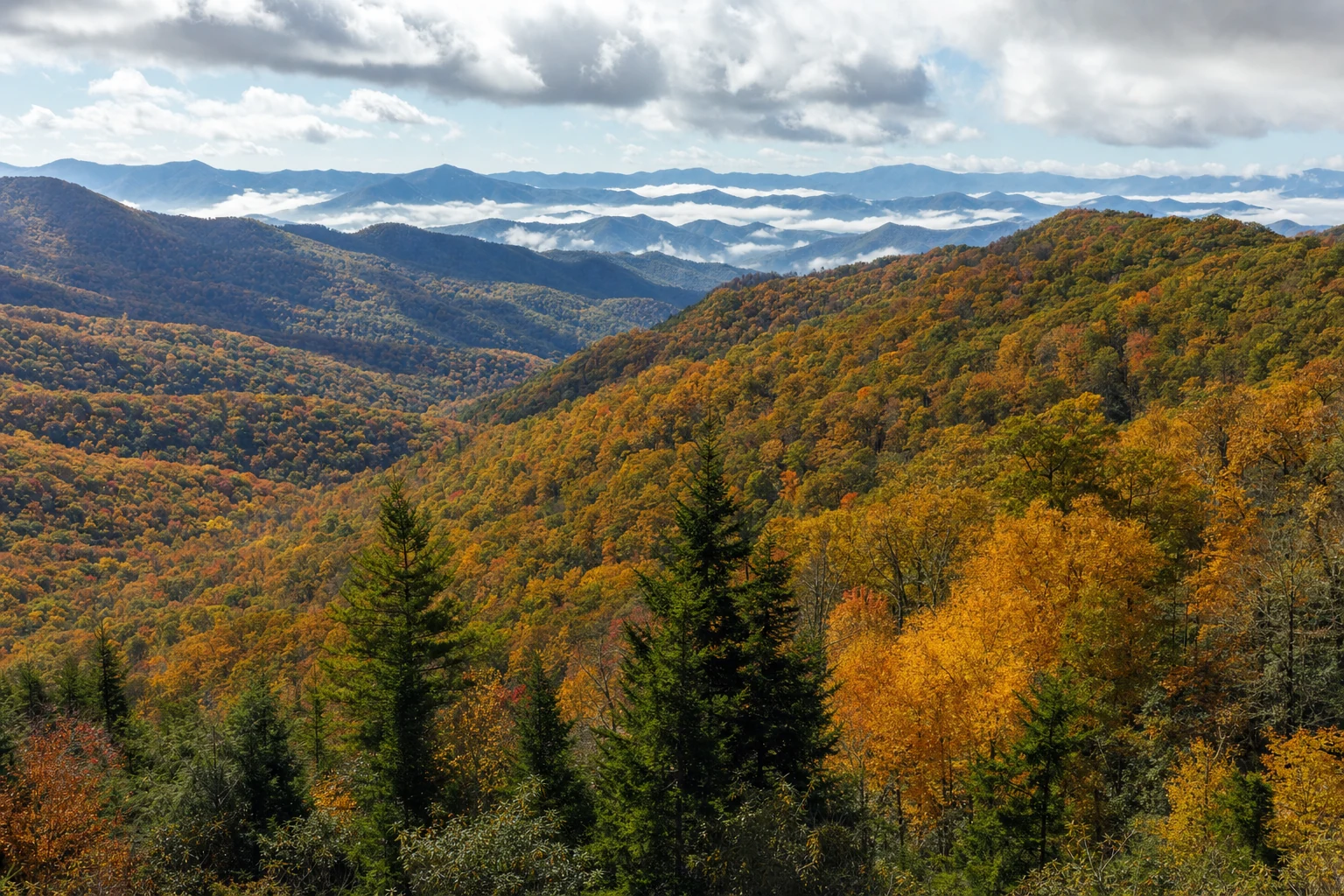
The views from the pullout itself aren't panoramic. There's no ridge to look out across, no distant horizon. What you get is intimate: the Little River moving through its rocky bed, forest pressing in from both banks, light working down through a canopy that stays dense through most seasons. On a clear mid-day, the light hits the water at an angle that makes the rocks under the surface readable, and the surrounding forest reads green against green with real depth.
The density of the canopy is what makes mid-day the best time to shoot here, which runs counter to the usual advice for park photography. The overhead light gets broken up before it reaches the water surface; you end up with diffuse, workable light rather than the harsh flat glare you'd expect at noon. Early morning brings too much shadow into the forest corridor; late afternoon loses contrast quickly as the sun drops behind the ridgeline to the west. If you're coming with a camera, mid-day is genuinely the right call.
Crowd Levels and How to Work Around Them
Crowd levels at MP 3.5 run consistently high, and that's not seasonal variation — it's the baseline condition. The trail that starts here leads to one of the most visited waterfalls in the entire national park system, so the parking lot operates under a different kind of demand pressure than most stops along Little River Road. On summer weekends, the lot can reach capacity before 9 a.m. Weekday mornings in shoulder season are a meaningfully different experience; arriving at 10 a.m. on a Tuesday in October might get you a spot without circling.
If you're visiting in July or August on a Saturday and you care about having room to breathe, arriving by 8 a.m. reliably gets you in. After 10 a.m. on peak days, expect to find the lot full and potentially need to park at a pullout further down the road and walk back along the road shoulder with traffic passing — not dangerous, but not pleasant either.
Parking and the Park-It-Forward Tag
The lot at MP 3.5 is one of the larger ones along the Little River corridor, but size doesn't solve the demand problem. It fills very early, sometimes before the mid-morning rush even starts in summer.
A Park-It-Forward parking tag is required for any stay over 15 minutes anywhere inside Great Smoky Mountains National Park: $5 daily, $15 weekly, $40 annually, available through recreation.gov or at kiosks near the park entrances. One daily tag covers you for all in-park parking on that calendar day, so if you're making multiple stops along Little River Road, you're not paying separately for each one.
If the main lot is full, smaller informal pullouts appear along the road in both directions, most fitting one to three cars. They offer direct river-edge access at a quieter scale — different in character from the trailhead, but useful when the main lot is at capacity.
Getting There
From Gatlinburg, take Newfound Gap Road south through the Sugarlands Visitor Center area and turn west onto Little River Road. Mile markers count up from the Sugarlands end, so MP 3.5 arrives within a few minutes of the turn. The road is two-lane with little passing opportunity and moves slowly on weekends; give yourself time, and don't try to rush it.
From Townsend and the western entrance, you're driving east along the river corridor with mile markers running in the opposite direction. The approach passes through the Townsend Wye, Meigs Creek Trailhead, and The Sinks before reaching MP 3.5. It's the longer route, but the drive through the river corridor along the way earns its time.
GPS works reliably to the park boundary but can drift inside GSMNP. Download the NPS GSMNP app or an offline park map before losing cell signal at the entrance.
The Rest of Little River Road
MP 3.5 is worth treating as part of a longer drive rather than a single isolated stop. The road follows the Little River through the western valley of the park, and the river barely leaves sight the whole way.
Two other stops stand out for different reasons. The Sinks at MP 12 shows a radically different face of the same river: the water drops into a geological depression and disappears briefly before re-emerging, creating a churning pool that doesn't look like anything else in the park. The Sinks also offers best light at mid-day and sees high crowds, though not quite at the volume of MP 3.5. Meigs Creek Trailhead at MP 10.5 is quieter, with lower traffic and a smaller lot, and the river views there have the same forest-and-water quality without the trailhead pressure. Throughout the full length of the road, informal single-car pullouts give direct river access for wading, fishing, or just parking long enough to listen to the water.
Before You Go
Little River Road can close in winter when overnight temperatures cause ice to form on the pavement; check the park's road status before planning a cold-weather visit. Even when the road stays open, the surfaces near the river tend to stay wet and can be slippery in freezing conditions.
No food, water, or restrooms are available at the pullout. Sugarlands Visitor Center, a short drive back toward Gatlinburg, has all of those. Cell service inside the park is inconsistent at best, so download whatever you need — maps, the park app, any reservation confirmations — before leaving range at the entrance.