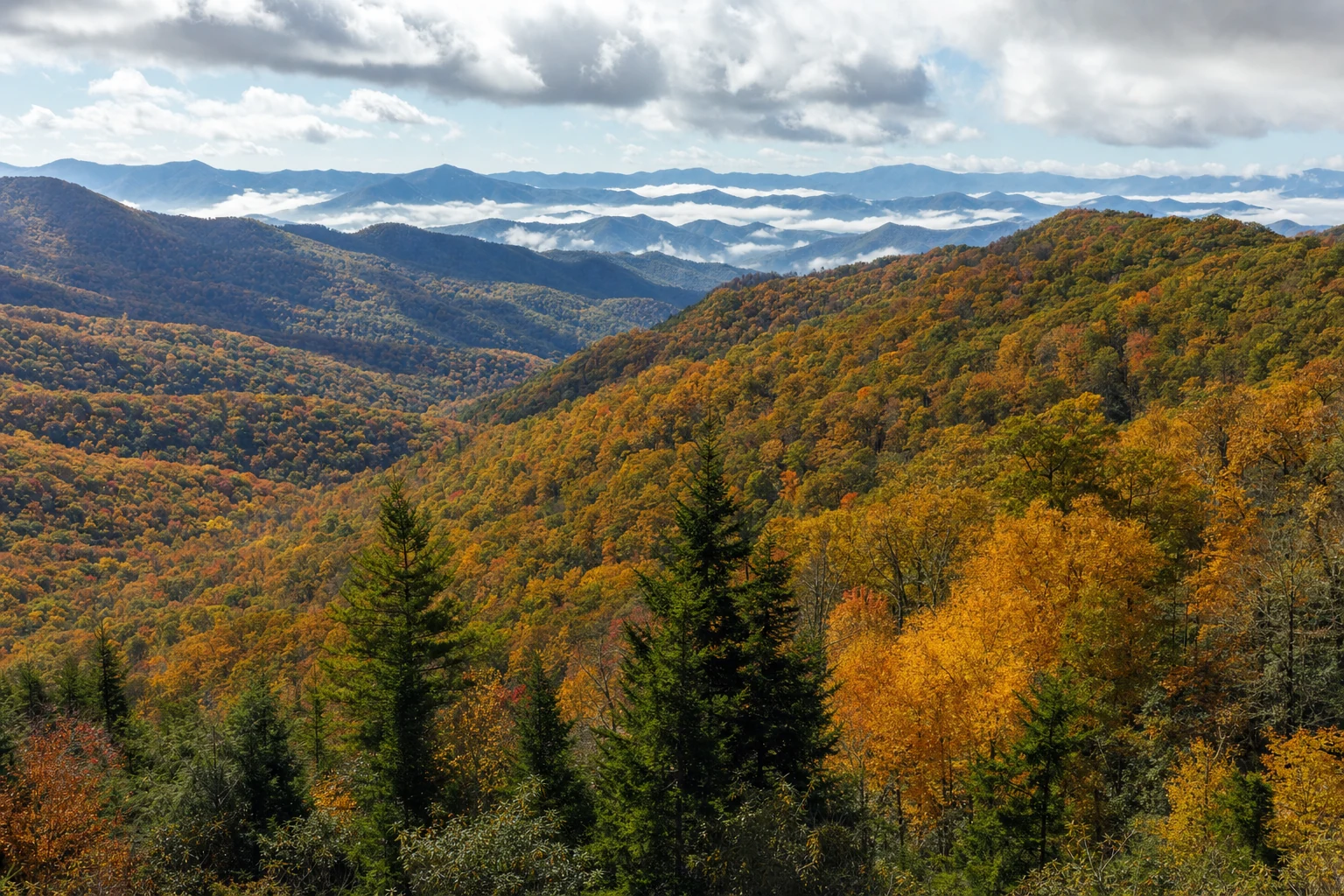

About Meigs Creek Trailhead Pullout (MP 10.5)
At milepost 10.5 on Little River Road, the Meigs Creek Trailhead Pullout doesn't announce itself. You're watching the river through the window, the small lot appears on your left, and you either catch it or you don't. The crowd counts here run low to moderate even during busy season, which is unusual for a road as scenic as Little River Road.
What You're Looking At
The view is the Little River, close and immediate. This isn't a ridge-to-ridge panorama; it's the river itself, a few strides from where you park, running over a rocky bed through a corridor of mixed forest so dense the sky barely shows. Dense canopy closes in on both banks.
Mid-day is the stated best light, which runs counter to the golden-hour instinct most photographers carry. It makes sense once you're there: the tree canopy blocks direct sun in the early morning and late afternoon, and what reaches the riverbank at those hours is mostly shadow. Around mid-day, the canopy opens slightly, diffuse light catches the water surface, and the scene sharpens. You're not chasing a dramatic sky; you're chasing the river itself.
The Little River at MP 10.5 moves at a moderate pace over its rock bed, not the dramatic plunge it makes at The Sinks two mileposts west, not the calm wide swimming hole at Townsend Wye. The character here is intimate rather than spectacular.
The Meigs Creek Trail
The pullout also marks the start of Meigs Creek Trail, which follows its namesake creek up through the forest above the road. The route involves multiple creek crossings as it climbs; on a dry summer day those crossings are typically shallow and manageable, but after heavy rain the creek can rise fast and the crossings get less casual about it.
The trail draws fewer visitors than most routes in this part of the park, consistent with the pullout's crowd profile. If you're coming to hike, you'll find real solitude on a mid-week visit. Summer weekends bring more company, though it's still quieter than the park's marquee trails.
If you're not planning to hike, the trailhead designation obligates nothing. Stop, walk to the water, spend five minutes, continue down the road.
When to Come
Low to moderate crowd level is a relative measure. In late April on a Tuesday, this pullout is genuinely quiet. In mid-October during peak fall color, the Little River Road corridor gets heavy throughout, and the smaller pullouts pick up overflow from the lots that fill first. MP 10.5's small lot can be full during those windows even though it isn't the specific draw people are seeking.
The park's heaviest traffic runs May through October, with fall foliage peak (typically the last two weeks of October) being the most congested period across the park. Mid-week visits in spring or early fall give you the actual quiet the crowd rating implies. Summer weekends, particularly July through Labor Day, are a different situation.
Early morning beats most crowd issues on most days. Before 9 a.m., even the bigger lots on Little River Road have space; the MP 10.5 pullout will almost certainly be available. The light before mid-day isn't optimal for the water surface, but the forest at that hour has its own quality.
Getting There
Little River Road runs from Sugarlands Visitor Center (near the Gatlinburg park entrance) west to the Townsend entrance. From downtown Gatlinburg, take US-441 South into the park to Sugarlands, then follow Little River Road west. Milepost 10.5 arrives before The Sinks at MP 12, so the pullout appears on your right when heading toward Townsend.
You'll need a Park It Forward parking tag for any stop over 15 minutes inside the park. The cost is $5 daily, $15 weekly, or $40 annually; purchase at recreation.gov before you arrive or at self-service kiosks near the park entrances. There are no fee collection points on Little River Road itself, so display the tag on your dashboard when you park.
The lot here is small. If it's full, the road shoulder at this section isn't a legal or safe overflow option. Your realistic choices are to wait (turnover at pullouts like this is usually quick), continue 1.5 mileposts to The Sinks which has a larger lot, or flag one of the informal river-access pullouts on your return.
Pair It with the Whole Road
Little River Road rewards treating as a deliberate drive rather than a transit corridor. The pullouts hit differently depending on what you're after. The Sinks at MP 12, 1.5 mileposts west, is the most dramatic stop: the Little River funnels through a rock formation and drops into a churning pool before re-emerging downstream. It's worth adding if you're already at MP 10.5. Laurel Falls Trailhead at MP 3.5, closer to Sugarlands, offers similar Little River views alongside one of the park's most-hiked trails — that lot fills early, so hit it first if you're heading east. At the far end of the road, Townsend Wye (MP 18) is a different world entirely: the river widens and slows, gravel bars emerge, families wade and swim all summer. And between all those named stops, small informal pullouts let you step directly down to the water with room for one or two cars and no signage, just the river from a foot above it.
Straight through, the drive takes about 45 minutes. With stops, plan for half a day.
Know Before You Go
Little River Road can close in winter when ice makes it hazardous, even at its relatively low elevation compared to the park's high-country routes. December through February, check the NPS park road status before you drive in, particularly after overnight temperatures near or below freezing.
Cell service is limited or absent through much of this corridor. Download offline maps and the NPS app trail data before entering the park. Once the signal drops, you're navigating on what you brought in.