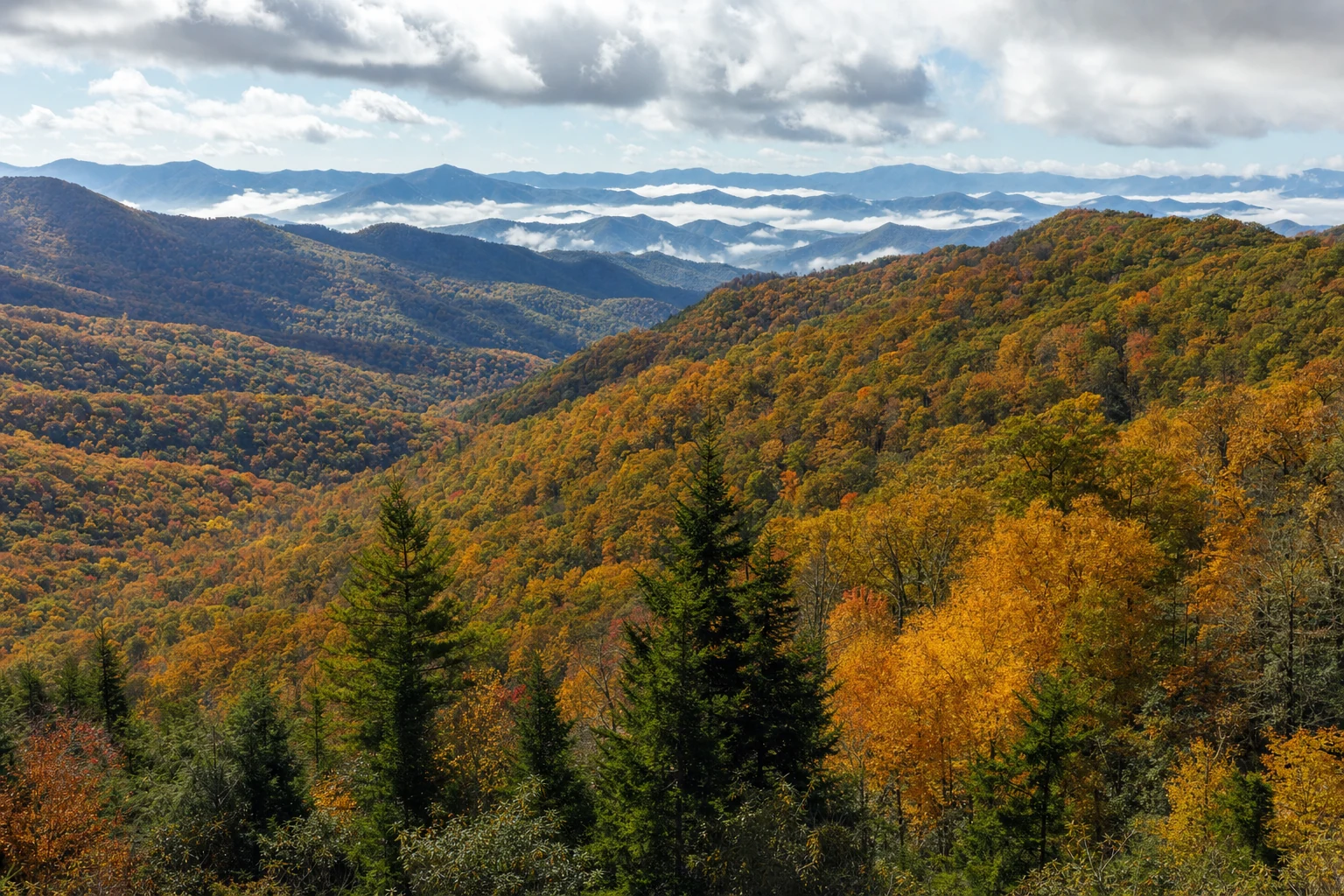

About Cades Cove Nature Trail:
The Cades Cove Nature Trail is a short, easy loop along Cades Cove Loop Road, one of the most visited stretches inside Great Smoky Mountains National Park. At 0.8 miles, it's the kind of walk that rewards travelers who've spent time circling the cove by car — a quiet detour into the forest that stands in clear contrast to the open meadow views that define this part of the park. Families, first-time park visitors, and anyone with limited time or mobility will find it accessible and genuinely worthwhile.
Trail Basics
The Cades Cove Nature Trail is a 0.8-mile loop rated Easy by the National Park Service. The terrain is flat, with a path that moves through mixed hardwood forest before returning to the loop road. Most people complete the walk in 30 to 45 minutes at a relaxed pace, though you'll likely slow down if wildlife is active along the edges.
The trailhead sits along Cades Cove Loop Road. A Park It Forward parking tag is required for any stay inside Great Smoky Mountains National Park longer than 15 minutes — daily tags cost $5, weekly tags $15, and an annual pass runs $40. Tags are available at recreation.gov or at park entrance kiosks before you drive in.
The Cades Cove Setting
Cades Cove is a broad, flat valley ringed by mountain ridges, and it holds a dual identity: it's one of the park's best wildlife viewing areas and its most intact surviving example of 19th-century Appalachian settlement. The open meadows are remnants of farms that families worked for generations before the land became part of the park. Historic structures — log cabins, barns, churches, and a working grist mill — still stand throughout the cove, and the Loop Road passes most of them.
The Nature Trail is short relative to the cove's overall scale, but it puts you on foot at the exact place where the meadow's open wildlife habitat transitions into shade and forest understory. That edge is where activity concentrates. You'll hear and see considerably more than you'd catch from a moving car, and the pace forces a different kind of attention to the landscape.
Wildlife Along the Way
Cades Cove has a well-earned reputation as the best spot in the park to see large mammals, and the Nature Trail runs through the same corridor. White-tailed deer graze the meadow edges throughout the day. Black bears are regularly sighted in the cove — sows with cubs in spring and summer, males working the forest margins in fall. Wild turkey, red foxes, and groundhogs appear often enough that none should come as a surprise.
NPS guidelines require at least 50 yards of distance from bears at all times. On a trail this short, you're rarely deep enough in the woods to feel removed from meadow activity — keep your eyes open at every forest-edge crossing and stay noise-aware. If you encounter a bear on or near the trail, don't approach; give it space to move and wait for it to clear before continuing. Never leave food unattended at the trailhead or in a visible pack on the trail.
What the Walk Feels Like
The Cades Cove Nature Trail is an interpretive loop, which means the landscape carries most of the meaning. The path moves through the kind of mixed hardwood canopy that covered the eastern Appalachian highlands before widespread settlement: tulip poplar, white oak, red maple, hickory. In spring, the understory fills with wildflowers before the overhead leaves close out the light. The transition from open cove into that canopy — even briefly — shifts the sensory register entirely.
The loop is flat enough that it rarely registers as hiking in any demanding sense. It functions more as a structured walk with context — a way to settle into the park on foot, stretch after the drive in from Townsend, and absorb the historic and ecological layers of the cove at a pace that driving simply doesn't allow. Children old enough to walk a mile without difficulty handle the trail without issue. For older visitors or those with mobility considerations, the easy grade and modest distance make it one of the more genuinely accessible options in the park.
Best Time to Visit
Spring is the strongest season for Cades Cove as a whole. Wildflowers activate the meadow edges and forest floor, wildlife is conspicuously active as bears emerge and deer become highly visible, and the meadows carry a vivid green from winter rainfall. Early morning visits — before the Loop Road fills — offer the best wildlife sightings and the quietest conditions on the trail itself.
Summer crowds are significant. Cades Cove Loop Road is one of the most congested roads in the park, and summer weekends can produce slow, stop-and-go conditions for its full length. For the Nature Trail specifically, arriving before 9 a.m. is the single most effective strategy. You'll get better wildlife access and a noticeably calmer walk.
Fall is the busiest season across all of GSMNP, with peak foliage typically arriving at cove elevation in mid-October. The combination of turning hardwoods framing the open meadow is striking in a way that earns the reputation, but expect the largest crowds of the year. Weekday mornings remain far more manageable than weekend afternoons throughout October.
Winter quiets the cove substantially. The meadows go dormant, the trees lose their leaves, and views across to the surrounding ridgeline open up in ways that summer's canopy prevents. It's the least-visited season, and the Nature Trail reflects that. Cades Cove Loop Road itself doesn't face the high-elevation closures that periodically affect routes like Newfound Gap Road, but icy conditions can develop in January and February — check NPS road status before driving out.
Getting There
From Townsend, Laurel Creek Road leads directly into Cades Cove. It's the primary approach from the Tennessee side and avoids the more congested Gatlinburg-area entrances. The Loop Road begins at the end of Laurel Creek Road, and the Nature Trail trailhead is along that loop. A Park It Forward tag is required once you're inside the park.
The Cades Cove Campground, picnic area, and the Cable Mill historic area share the same general section of the loop, so parking fills fast during peak hours. Arriving early is the most reliable way to get a spot without a wait, especially on summer and fall weekends.
Nearby Trails Worth Pairing
The Nature Trail works well as either a warmup or a short closing walk after a longer outing. If you want more trail time in the Cades Cove area, Lead Cove Trail (1.8 miles one-way, Moderate) climbs into the forested ridge above the cove floor and adds genuine elevation to the day. Ace Gap Trail (5.6 miles one-way, Moderate) extends farther along the same ridge corridor. For a full-day commitment, the Bote Mountain Trail route to Spence Field (6.9 miles one-way, Strenuous) gains significant elevation and connects to the Appalachian Trail with long views across the Tennessee-North Carolina state line. Cooper Road Trail (10.9 miles one-way, Moderate) is the longest option in this cluster, following an old roadbed through forest and reaching the park's backcountry network for those looking to extend into an overnight.
Frequently asked questions
- Do I need a parking tag?
- Yes — a Park It Forward parking tag is required for vehicles parked more than 15 minutes anywhere inside Great Smoky Mountains National Park. Daily ($5), weekly ($15), or annual ($40) tags are available via recreation.gov or park kiosks.