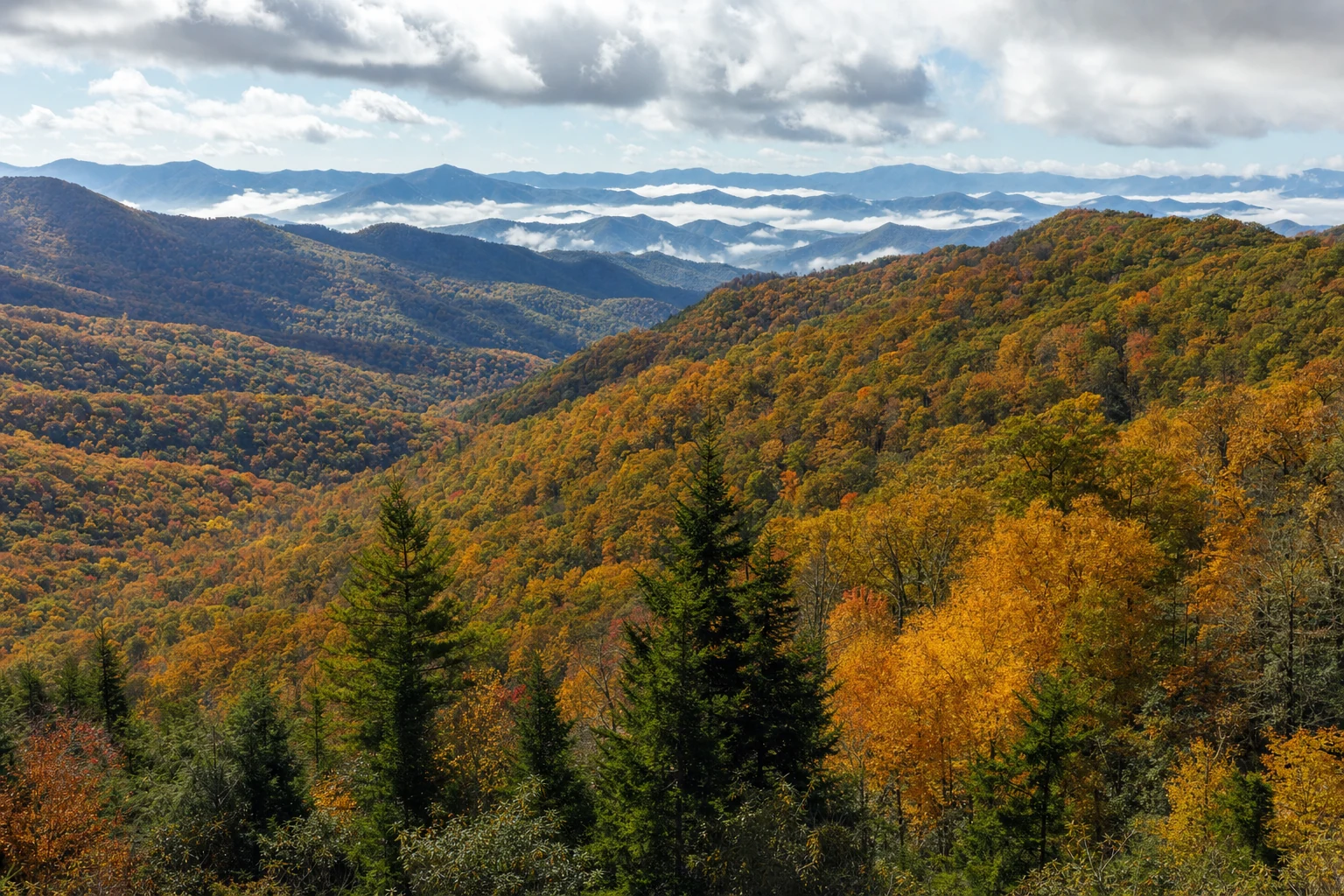


About Ace Gap Trail:
Ace Gap Trail runs 5.6 miles one-way from Cades Cove into the forested ridgelines of Great Smoky Mountains National Park, rated Moderate by the NPS. For hikers who want more than the cove's famous loop road, this trail moves you quickly into genuine backcountry: old-growth forest, real elevation gain, and quiet you won't find in the valley below. It's a full day if you go out and return; plan accordingly.
The Trail Itself
At 5.6 miles one-way, an out-and-back totals 11.2 miles — a commitment that separates this trail from the casual nature-walk options scattered around Cades Cove. The NPS Moderate rating means sustained but manageable climbing rather than technical terrain. The western end of GSMNP rises steeply from the cove floor, so this trail gains meaningful elevation despite not earning a Strenuous designation; expect your legs to feel it by mile three.
There's no rule requiring you to push the full 5.6 miles. Turn around at any point that suits the day and your group. The forest at mile three will not disappoint you for having skipped mile five.
Trail conditions vary by season in ways that matter. After significant rain, expect wet footing, particularly on the steeper sections where leaf litter sits on top of exposed roots. In dry summer months the trail is more forgiving underfoot but the canopy provides welcome shade. Early spring and late fall offer the clearest sight lines through the trees.
Starting from Cades Cove
Cades Cove is one of GSMNP's most visited areas, and understanding that shapes every part of the logistics. The 11-mile loop road through the cove draws consistent traffic all year; fall weekends in particular can make the entire approach to the cove feel like a slow procession. On those days, a 6:30am start puts you at the trailhead before the loop road fills.
Wildlife moves freely through the cove: deer and turkey are routine sightings, black bears considerably less predictable. Once Ace Gap Trail climbs you out of the valley, the visible wildlife pressure drops, but you're still deep in active bear habitat. Standard park protocol applies from the moment you park the car.
The cove has a distinct character compared to the park's eastern entrances near Gatlinburg and Cherokee. It feels more open, more pastoral, with historic homesites and farm structures visible from the loop road. That history ends at the treeline, where the trail shifts into dense mixed forest. The transition is fast.
Getting to the Trailhead
From downtown Gatlinburg, take US-441 south into the park to Sugarlands Visitor Center, then follow Little River Road west to Laurel Creek Road. That road deposits you at the Cades Cove entrance. Budget 45 minutes to an hour depending on traffic through Gatlinburg and along the park roads; fall foliage weekends can push that considerably longer.
Parking anywhere inside GSMNP for more than 15 minutes requires a Park-It-Forward tag: $5 daily, $15 weekly, or $40 annually. You can buy one at recreation.gov ahead of time or at kiosks near major trailheads. During fall peak season, handle this online — kiosk lines at Cades Cove are real.
Other Trails to Pair Nearby
Cades Cove has a solid selection of trails across different distances and difficulty levels. If you're already making the drive out, it's worth knowing what else is accessible from the same area:
- Lead Cove Trail: 1.8 miles one-way, Moderate. A shorter option on the western end of the cove; a reasonable warmup or a second trail to add without extending your day much.
- Cades Cove Nature Trail: 0.8 miles loop, Easy. Runs near the visitor facilities and works as a quick leg-stretch before or after a longer hike.
- Spence Field via Bote Mountain Trail: 6.9 miles one-way, Strenuous. The Cades Cove route that puts you on the Appalachian Trail ridge; a harder objective for a future trip when you want to escalate.
- Cooper Road Trail: 10.9 miles one-way, Moderate. The serious endurance option in this part of the park. Not for the same day as Ace Gap unless you're logging heavy miles.
When to Go
Spring from April through early June brings wildflowers at lower elevations and swells seasonal streams. Summer hiking here works best early; the parking areas at Cades Cove fill fast on summer weekends, and afternoon thunderstorms arrive with little warning. Get on trail by 7am in July or August if you want a calm morning.
Fall is the single busiest period in all of GSMNP. Foliage peaks around mid-October and Cades Cove draws visitors who combine leaf-peeping with the loop road wildlife drive. The trail itself is at its most visually striking in that window, but the logistics are also at their most demanding. An early start or a weekday date makes a significant difference.
Winter is underrated for this trail. Crowds drop sharply after November, bare trees open long sight lines that canopy closes in summer, and this section of the park rarely sees the ice conditions that shut down high-elevation routes. Dress for cold, carry more layers than you expect to need, and you may have the cove and the trail largely to yourself.
What to Bring
Mountain weather in GSMNP changes faster than most visitors expect. A full rain layer and an insulating mid-layer are worth carrying even in July; afternoon fronts move in quickly and the ridge above the cove catches them directly. Water is the other consistent underestimate on a trail this length. An out-and-back is over 11 miles with real climbing; one or two liters won't get you through a summer day.
Cell coverage inside the park is poor to nonexistent once you leave the main roads. Download an offline map before you leave the car. Leave your itinerary with someone and give them a realistic return time. These are standard protocols, but the cove's popularity can create a false sense of accessibility; once you're up the ridge and a mile from the valley floor, you're on your own if something goes wrong.
Bear Safety
Black bears are active throughout GSMNP year-round. Cades Cove has higher bear density and visibility than most sections of the park; sightings along the loop road are common enough that people pull over to watch. The NPS standard is a minimum 50 yards of distance. Don't approach, don't feed, and never leave food or scented items unattended at the trailhead or on the trail.
Ace Gap Trail takes you out of the open meadows where bears are easily spotted and into forested terrain where surprise encounters are more likely. Make noise while hiking, especially near blind curves and around dense streamside vegetation. A group hiking together and talking normally is sufficient; you don't need to shout. Bears generally avoid humans when they hear them coming.
Frequently asked questions
- Do I need a parking tag?
- Yes — a Park It Forward parking tag is required for vehicles parked more than 15 minutes anywhere inside Great Smoky Mountains National Park. Daily ($5), weekly ($15), or annual ($40) tags are available via recreation.gov or park kiosks.