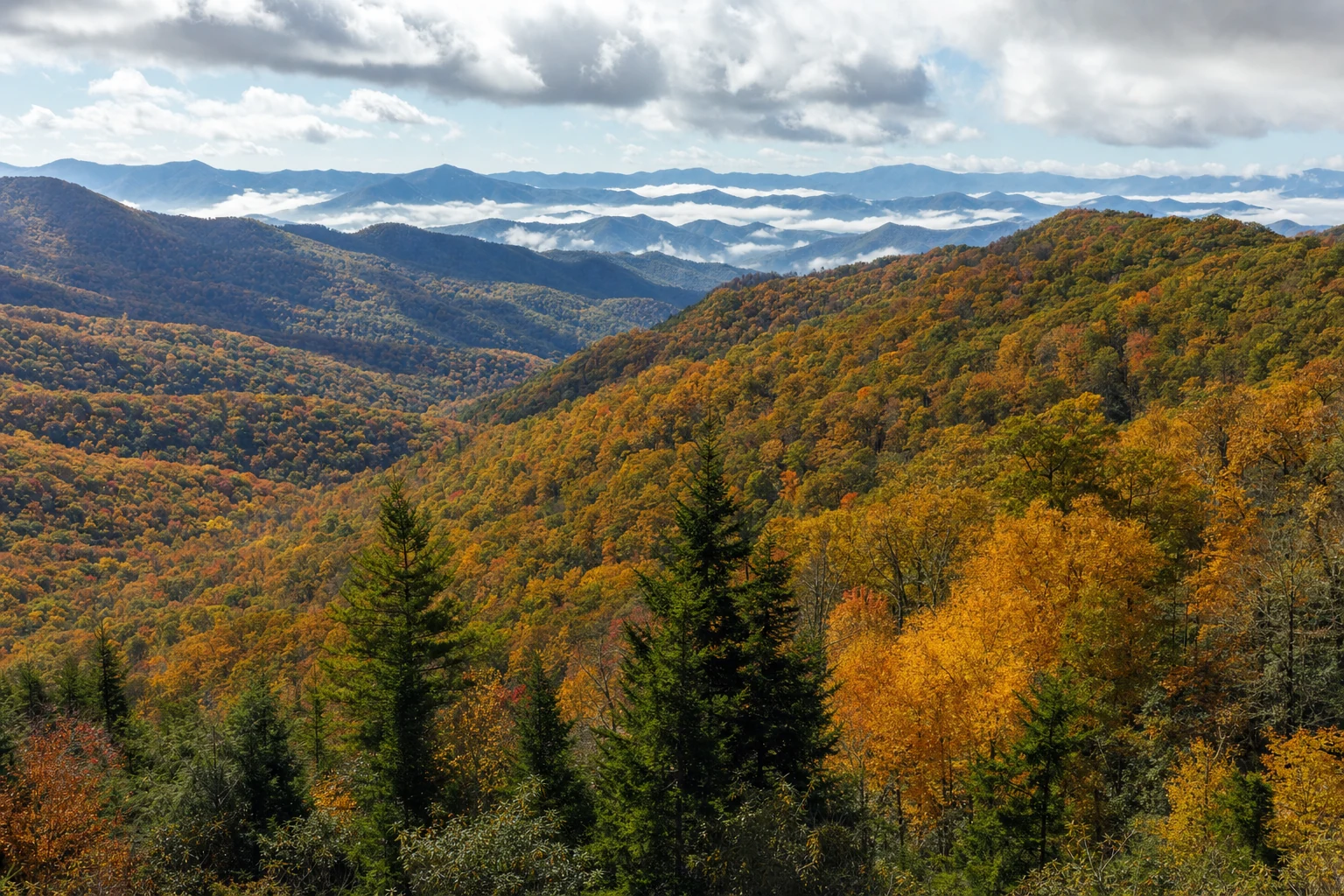

About Backcountry Horse Camp Trails (various):
Great Smoky Mountains National Park maintains a dedicated network of horse-designated trails and backcountry campsites woven across its 522,000 acres — a separate system from the general hiking trail network, built around the practical needs of horse parties traveling through remote terrain. These routes reach areas of the park that see far fewer visitors than the roadside trailheads, offering a fundamentally different way to experience the Smokies.
What "Horse Camp Trails" Actually Means
The label covers more than just the trail corridors. Throughout the park, the NPS has designated specific backcountry campsites for use by horse parties, equipping them with high-tie areas, hitching posts, and in some cases water access for animals. The trail network that connects these sites is what the designation refers to collectively. Not every trail in the park permits horses — the NPS restricts equestrian use to specific corridors to protect both trail surfaces and the ecosystems alongside them.
The practical result for a visitor: if you're planning a multi-day ride, you're navigating a patchwork of permitted routes and reserved campsites rather than simply picking up any trailhead. Day-riders have somewhat more flexibility, but the backcountry camping component requires advance coordination regardless of group size.
Key Riding Areas
The park's horse-accessible routes are distributed across several distinct regions, each with different character.
Deep Creek on the North Carolina side of the park includes the Deep Creek Horse Trail, a 5.0-mile moderate loop that gives riders a sense of the park's lower-elevation hollows without requiring a multi-day commitment. The Deep Creek corridor is known for its waterfalls and relatively gentle grade — unusual for a park where most terrain runs steeply.
Cades Cove in the Tennessee portion is one of the most logistically accessible areas for equestrian visitors. The broad valley, open meadows, and farm-era roads make it well-suited to horses, and several trail corridors here extend into the surrounding ridgelines. Trails like Ace Gap (5.6 miles one-way, Moderate) and Cooper Road (10.9 miles one-way, Moderate) provide longer corridors for parties willing to move deeper into the backcountry. The Cooper Road route in particular, at nearly 11 miles one-way, is one of the longer moderate-rated options in the park.
Cataloochee in the eastern section of the park offers access to less-traveled terrain and several trails in the moderate range. The valley itself sits at a higher elevation than Cades Cove, with a different feel — more enclosed, more forested.
Twentymile and Greenbrier round out the major equestrian-accessible areas, with trails ranging from moderate to strenuous. These zones tend to see lighter general hiker traffic, which matters when you're managing animals on narrow terrain.
Backcountry Permits and Reservations
Any overnight stay in GSMNP backcountry — including at horse camps — requires a permit. The park uses a reservation system for backcountry campsites; sites can fill well in advance during peak seasons (spring wildflower season and fall foliage, roughly late March through early June and mid-September through late October). Planning a multi-day horse trip during these windows without reservations is a genuine risk.
Reservations are handled through the park's backcountry permit system. The permit specifies which campsites you'll use on which nights — you can't simply camp wherever looks convenient. For horse parties, this matters more than for hikers, since not every backcountry site has the high-tie infrastructure that animals require. Confirm that your reserved sites are specifically designated for horse use before finalizing your itinerary.
Group size and number of animals are typically subject to limits at individual sites. Check current NPS guidance on these caps, as they can change.
Practical Preparation for Equestrian Trips
Self-contained travel is the baseline expectation. There are no services inside the backcountry. Feed, farrier supplies, first-aid materials for both riders and animals — everything comes in with the party and goes out with the party. Leave-no-trace standards apply strictly in GSMNP; that includes manure management at campsites, where concentrations can cause lasting vegetation damage.
Water is generally available from streams along most routes, but water quality in any backcountry setting requires treatment. High-volume filtration for horses is worth planning around — figure out your water sources before you leave the trailhead.
Trail surface conditions vary significantly by season. Spring brings mud and trail erosion, and some horse-designated routes may be temporarily closed following heavy rain or winter damage. Check current trail conditions through the park's website or by calling the backcountry office before departure. Late summer and fall typically offer the most reliable footing.
Stock trailers require larger parking footprints than standard vehicles. Not every trailhead with horse access has dedicated trailer parking; confirm parking availability for your specific trailhead when planning your route. The park's "Park It Forward" parking tag ($5 daily / $15 weekly / $40 annual via recreation.gov or park kiosks) applies to vehicle parking anywhere inside GSMNP for stays over 15 minutes — this covers your tow vehicle and trailer if they occupy a paid spot.
Best Times to Go
Fall is the strongest season for multi-day horse trips in the park. The foliage (typically peaking mid-October across most elevations) is a genuine draw, and cooler temperatures reduce the strain on animals working steep terrain. Trail surfaces are generally firm after the drier late-summer period. Crowds concentrate at roadside viewpoints and popular day-hike trailheads, but the backcountry sees comparatively light use even at peak fall.
Spring is viable but muddy. The wildflower bloom from late March through May is exceptional — trilliums, fire pinks, and phacelia in the lower hollows — but horse parties should expect soft trail conditions and possible route restrictions following wet winters. Book backcountry sites early; spring is competitive.
Summer brings heat and humidity at lower elevations. Higher-elevation routes stay cooler, but those tend to be steeper and more demanding. If riding in summer, early morning starts before temperatures build are the practical approach.
Winter offers empty trails and striking scenery, but high-elevation routes may be iced or inaccessible, and some roads that access trailheads close seasonally. Shorter days reduce workable riding hours.
Getting to the Trailheads
The park has multiple access points serving the horse-designated areas. From Gatlinburg, Sugarlands Visitor Center is the primary entry point into the Tennessee side of the park, with Cades Cove accessible via Little River Road. The North Carolina entrances at Cherokee provide access to Deep Creek, Cataloochee, and Smokemont. Each area has its own trailhead infrastructure — some well-developed, some minimal.
Cell coverage inside the park is poor to nonexistent across most of the backcountry. Download offline maps and carry printed NPS trail maps as backup. Share your route and expected return time with someone outside the park before heading in.
Frequently asked questions
- Do I need a parking tag?
- Yes — a Park It Forward parking tag is required for vehicles parked more than 15 minutes anywhere inside Great Smoky Mountains National Park. Daily ($5), weekly ($15), or annual ($40) tags are available via recreation.gov or park kiosks.