
About Bald River Falls Trail
Now I'll write the page copy using the anti-slop rules.
Bald River Falls Trail delivers a 90-foot waterfall at the end of 5.6 miles through one of the better-preserved forest corridors in the southern Appalachians. The round trip covers 11.2 miles with 800 feet of elevation gain, which puts it in moderate territory — long enough that you'll feel the distance, not so severe that it requires athletic conditioning to complete. The Bald River runs alongside most of the route, and the old-growth forest framing that walk is worth attention in its own right, not just as scenery on the way to the falls.
Trail at a Glance
The trailhead is at Tellico River Road (Forest Service Road 210), coordinates 35.3410° N, 84.1480° W. The route is out-and-back: you hike 5.6 miles in to the waterfall, then retrace the same path. Elevation gain is gradual — 800 feet spread over 5.6 miles means the climb rarely feels steep, and there are no significant technical sections. This trail sits within the Cherokee National Forest under the USDA Forest Service, not GSMNP, which matters for parking and fee purposes (the GSMNP "Park It Forward" tag doesn't apply here; check the Cherokee National Forest recreation page for current requirements before you go).
Expect 4 to 6 hours total depending on your pace and how long you linger at the falls.
The Route and What You'll Find
For most of the walk, the Bald River is right there with you. It's not a distant backdrop visible through trees — the trail parallels it closely enough that you hear it constantly and see it clearly for long stretches. Depending on season and recent rainfall, the river runs fast; after wet springs, it's genuinely loud. That proximity makes the middle miles feel different from most forest trails where you're just moving through trees waiting for a destination.
The old-growth character of the forest here is worth noting. Larger-diameter trees, more varied understory, a generally denser canopy. Genuinely old forest is uncommon in the southern Appalachians after a century of logging and fire, so the sections along this corridor have an ecological weight that's different from younger second-growth. It won't read that way in any dramatic sense; it just feels more settled and complex than the typical trail forest.
Bald River Falls itself drops roughly 90 feet into a pool at the base. The scale registers differently in person than in photos — up close, the volume of water and the surrounding rock face make for a legitimately impressive endpoint. The pool at the base is accessible and a reasonable place to stop for a while before the return trip. If the water level is manageable, some hikers get close enough to feel the spray; conditions vary significantly by season.
The return trip is the same trail in reverse, which sounds redundant but often reads differently moving in the opposite direction. The river is now on your other side, the light changes across the day, and you're moving faster on familiar ground.
Best Time to Visit
Spring is the strongest case for this trail. Snowmelt and spring rains push the Bald River and the falls to their highest volume, and the forest floor comes up with wildflowers from late March through May — trout lily, hepatica, trillium in sequence. The falls are louder and more dramatic in this window than any other time of year.
Summer brings crowds, particularly on weekends in July and August. Parking at the trailhead fills early on peak days; getting there by 7 or 8 a.m. solves the problem. The river corridor runs cooler than surrounding lowlands, but summer heat and humidity on an 11-mile round trip means water planning matters more than people expect. The forest canopy provides real shade.
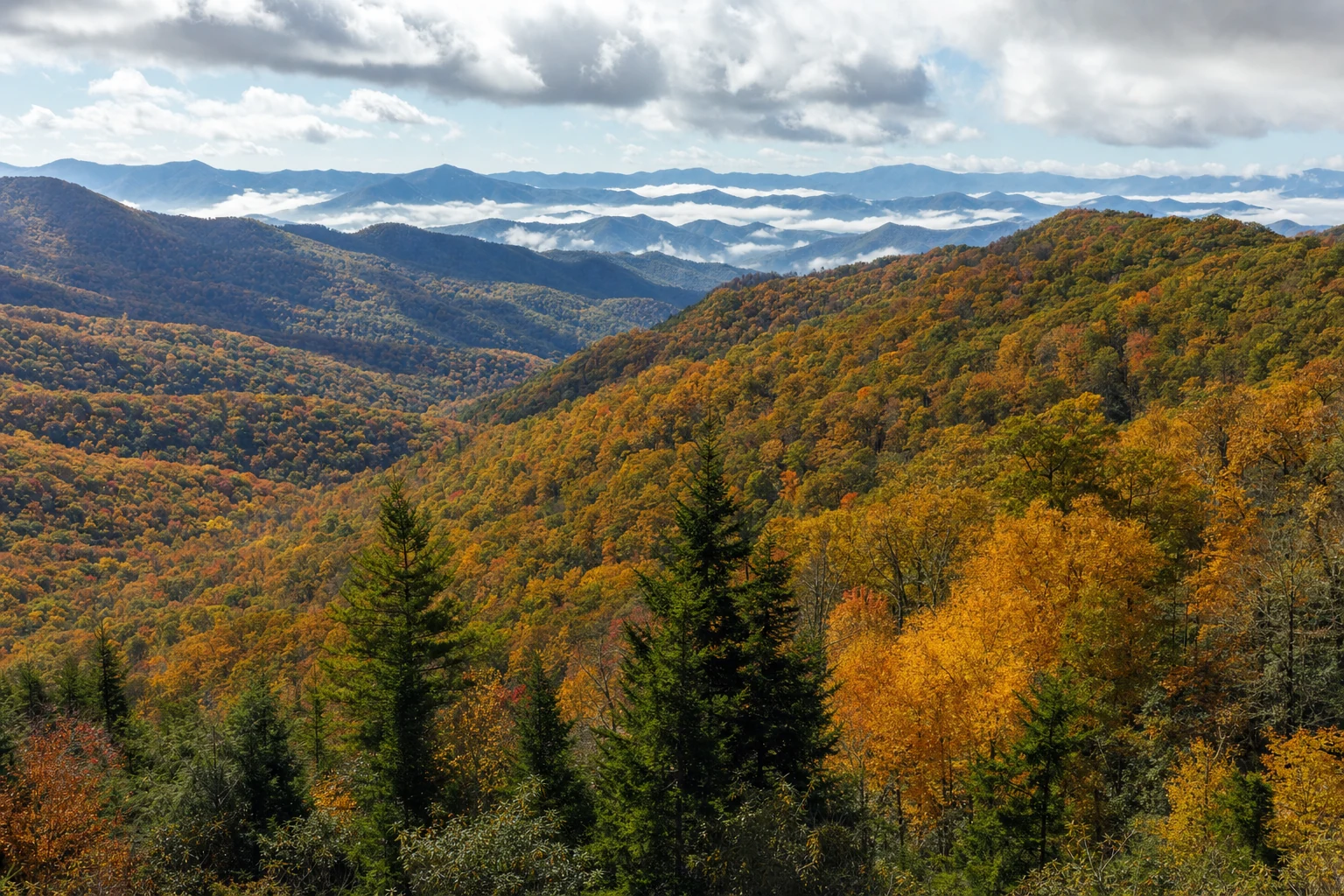
Fall peaks around mid-October for foliage. The canopy along the river corridor turns hard, and the filtered light through yellow and orange leaves over moving water is about as good as this region gets. The falls are typically lower volume by October than in spring, but the setting around them is more visually layered. Expect more hikers during peak fall color weeks.
Winter is quiet. Fewer people, colder temperatures, and the possibility of ice formations on the rock face near the falls — which changes the character of the destination significantly. Roads in Cherokee National Forest can close or become difficult after significant winter weather events; check conditions before driving out, since cell service drops well before the trailhead.
Getting There
The trailhead address is Tellico River Road (FS 210), with GPS coordinates 35.3410° N, 84.1480° W. Plug those coordinates directly into your navigation app rather than relying on the road name alone — rural forest service roads don't always resolve cleanly. If you're based in Gatlinburg, the drive takes you south and west through the national forest; plan for more time than the straight-line distance suggests, because FS roads narrow and the pace drops once you're off the main highway.
Cell service becomes unreliable before you reach the trailhead. Download offline maps before leaving — AllTrails, Gaia GPS, and Google Maps offline mode all cover this area — and make sure your vehicle has enough fuel. There are no services once you're in the forest road corridor. Parking at the trailhead is limited; weekends fill faster than weekdays.
Know Before You Go
Water is the most common miscalculation on this trail. Eleven miles in summer conditions burns through it faster than people expect, and there's no resupply option along the route unless you're carrying filtration gear and are comfortable pulling from the river. Carrying more than you think you need is the right call.
A rain shell is worth the weight regardless of the morning forecast. Afternoon thunderstorms are common in summer, and the sky can change fast in mountain terrain. The same applies for a warm layer in fall and spring — mornings in the forest corridor can run 15 to 20 degrees cooler than what the Gatlinburg weather app shows.
Black bears are active throughout Cherokee National Forest. Standard practice: maintain distance when you can, store food properly, don't leave anything edible unattended. Footwear should have real grip — sections of trail near the river get muddy after rain, and rock surfaces near the water are slick. Waterproof trail runners or light hiking boots cover this adequately for most conditions; sandals don't.
The trail is marked, but cell coverage is unreliable for navigation once you're deep in. Carry your offline maps loaded and accessible, not just downloaded as a backup.
Who Should Attempt This Trail
Moderately fit adults and older teenagers handle this route well. The 11.2-mile round trip with 800 feet of gain is real exercise, but the grade is forgiving and there are no scrambling sections. Most people in reasonable shape complete it without difficulty.
Families with young children face a harder calculation. There's no rewarding destination before the falls themselves — no partial-route payoff at 2 or 3 miles that makes an early turnaround feel worthwhile. For kids under 10, the distance-to-payoff ratio is challenging enough that it's worth evaluating honestly before committing.
This trail pairs well with other hikes in the Tellico River corridor if you're spending multiple days in the area. The forest service road network along the Tellico provides access to several trailheads within a short drive of each other, which makes a base closer to the corridor worth considering rather than driving back to Gatlinburg between each outing.
Frequently asked questions
- How long is Bald River Falls Trail?
- Bald River Falls Trail is 5.6 miles one-way (11.2 miles round-trip), with 800 feet of elevation gain. It is rated moderate.
- Do I need a parking tag?
- Yes — a Park It Forward parking tag is required for vehicles parked more than 15 minutes anywhere inside Great Smoky Mountains National Park. Daily ($5), weekly ($15), or annual ($40) tags are available via recreation.gov or park kiosks.