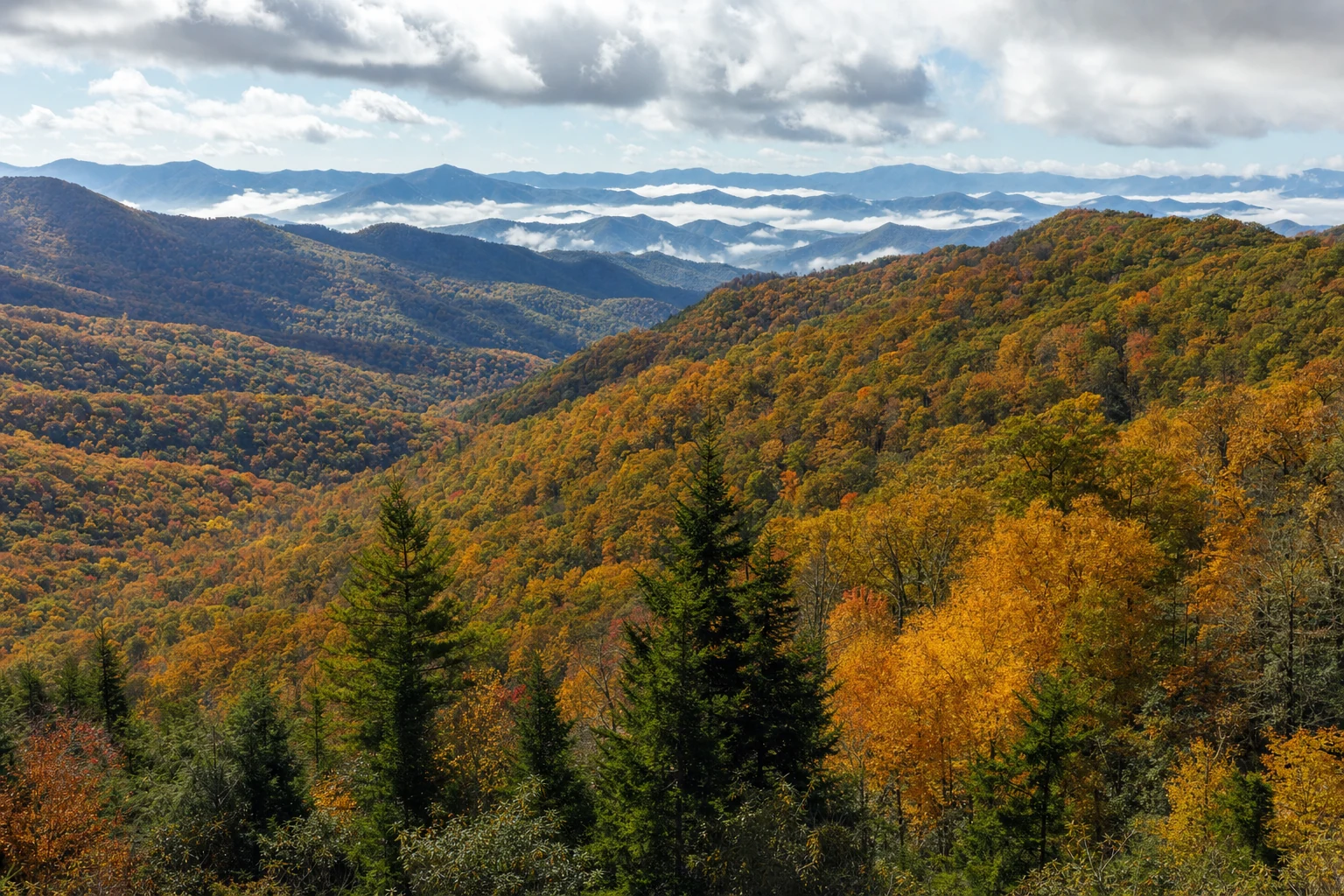

About Balsam Corner Trail:
Now I'll write the guide using the anti-slop rules and the confirmed facts (2.5 miles one-way, Moderate, Balsam Mountain, GSMNP).
---
Balsam Corner Trail runs 2.5 miles one-way through the Balsam Mountain section of Great Smoky Mountains National Park, on the quieter eastern end that most visitors driving in from Gatlinburg never reach. The Moderate rating puts it squarely in the accessible-but-real category: enough distance and elevation to feel like an actual hike, not a paved nature loop with a gift shop at the turnaround.
Getting Here
Balsam Mountain sits in the eastern portion of GSMNP, reached primarily via Heintooga Ridge Road, which branches off the Blue Ridge Parkway near Cherokee, North Carolina. That routing matters because it changes your whole approach to the day. This isn't a quick detour from Gatlinburg; it's a deliberate drive into a section of the park that functions differently than the Sugarlands entrance corridor. From downtown Gatlinburg, budget at least an hour and fifteen minutes to reach the Balsam Mountain area, and more if you're traveling in fall when the Blue Ridge Parkway backs up.
Once you're on Heintooga Ridge Road, the elevation climbs steadily and the forest transitions. The roadside scenery is worth slowing down for before you ever reach the trailhead.
A Park It Forward parking tag is required for any vehicle staying more than 15 minutes anywhere inside GSMNP. Tags cost $5 daily, $15 weekly, or $40 for an annual pass; buy one at recreation.gov or at park entrance kiosks before you drive out this way. There are no kiosks in the Balsam Mountain backcountry.
The Trail Itself
At 2.5 miles one-way, an out-and-back gives you a 5-mile day with moderate elevation gain, which most fit adults can complete in three to four hours including time to stop and actually look around. The trail carries the Moderate designation honestly: expect rooted and rocky footpath, real terrain change, and surfaces that reward actual hiking boots over sneakers.
Balsam Mountain's elevation pushes you into spruce-fir forest, the high-altitude habitat that defines the upper reaches of the Smokies. It looks different from the cove hardwood forests visitors see near Alum Cave or Laurel Falls. The canopy closes tight overhead, mosses cover everything at ground level on north-facing slopes, and the air temperature runs noticeably cooler than the valley. On a clear day, the ridge views reach across the surrounding mountains without the haze that settles into the lower elevations by mid-morning in summer.
Because this section of the park sees less foot traffic than the main Gatlinburg-side corridors, you're less likely to spend the day leapfrogging the same group of hikers. That's not a minor thing on a trail where the point is to actually be in the woods.
Who It Suits
Balsam Corner works well for hikers who've already knocked out the standard Smokies itinerary and want something with less crowd pressure. The 2.5-mile one-way distance and Moderate rating also make it reasonable for teenagers and fit older adults who aren't up for a strenuous all-day push. Very young children and anyone expecting a paved surface should look elsewhere; roots and uneven rock are present throughout, not intermittently.
Hikers comfortable navigating a backcountry trail without cell service will find this a satisfying choice. Those who get anxious without signal should download offline maps before leaving the car.
Seasonal Access
Heintooga Ridge Road closes in winter and typically doesn't reopen until late spring, which effectively gates off Balsam Mountain trails for months. Check current closure status on the NPS website before making the drive; conditions vary year to year and a gated road is a hard stop with no workaround.
Spring here runs later than at lower elevations. The high-elevation wildflower window shifts by a few weeks compared to the Sugarlands area, so if you're planning a trip around blooms, factor in the altitude difference. Summer is the strongest case for Balsam Mountain: temperatures stay well below what you'd feel in the valley, which makes July and August genuinely comfortable for hiking when lower-elevation trails are unpleasant by 10am.
Fall is when the eastern park section rewards early planning. High-elevation foliage colors earlier than mid-slope trees, meaning a well-timed trip in late September or early October puts you ahead of the crowd that floods Newfound Gap and Clingmans Dome road two weeks later. The light is sharp in October, the air is cold enough to keep moving, and the drive up Heintooga Ridge Road is worth the trip on its own.
Practical Logistics
Cell coverage is essentially zero in the Balsam Mountain backcountry. This isn't a spot where you'll drop to one bar; you won't have coverage. Download offline maps through AllTrails, Gaia GPS, or Google Maps before you leave the trailhead parking area.
Carry more water than your plan calls for. There are no services out here, and while streams run through the park, treating backcountry water adds a step most day hikers aren't equipped for. Two liters per person is a reasonable floor for a 5-mile out-and-back; more in summer.
Mountain weather changes fast and the Balsam Mountain elevation amplifies that. A clear morning can bring afternoon thunderstorms by early afternoon; pack a rain layer regardless of what the valley forecast says when you wake up. A warm mid-layer matters too, because the temperature differential between the parking area and the top of your climb can be significant even in August.
Black bears are active throughout this section of the park. Keep 50 yards of distance, secure all food and scented items in your vehicle before hitting the trail, and never leave a pack unattended at the trailhead.
Pairing with Other Trails Nearby
The Balsam Mountain area connects to several other NPS trails worth considering for a longer day or a multi-day visit. Flat Creek Trail at Cataloochee covers 2.0 miles one-way at Moderate difficulty through high-elevation terrain with a different character than Balsam Corner. Hog Camp Gap Trail, also at Cataloochee, runs 3.5 miles one-way at Moderate and can be combined with Flat Creek for a more substantial loop if you're willing to do the shuttle logistics. For hikers who want something harder, Fork Ridge Trail out of the Kuwohi area covers 4.9 miles one-way at Strenuous difficulty and gives you a full-day high-elevation ridge experience.
The eastern park section rewards building a full-day itinerary around two shorter trails rather than fixating on one. The drive in is long enough that making it count with a second trailhead visit is worth the planning.
Frequently asked questions
- Do I need a parking tag?
- Yes — a Park It Forward parking tag is required for vehicles parked more than 15 minutes anywhere inside Great Smoky Mountains National Park. Daily ($5), weekly ($15), or annual ($40) tags are available via recreation.gov or park kiosks.