
About Bartram Trail - Various Sections
The Bartram Trail runs 100 miles through Nantahala National Forest, tracing segments of the route naturalist William Bartram traveled through the Southern Appalachians in the 1770s. It's a point-to-point route, and with 100 miles of total distance, virtually everyone who hikes it is picking a segment rather than walking it end to end. The trail rates moderate overall, with sections that push into strenuous territory at higher elevations. Access points at Wayah Bald and Cheoah Bald offer two of the most commonly used entries into the trail's upper terrain.
The man behind the name
William Bartram was an 18th-century naturalist and botanist who spent years exploring the American Southeast, documenting plants, animals, and Indigenous cultures he encountered along the way. His account of those travels, Travels, published in 1791, is still in print — read both as natural history and as one of the stranger, more vivid works of the period. The trail named for him runs through terrain Bartram specifically observed and recorded, which gives it a historical dimension most mountain routes don't have. The plant communities and ecosystems he documented are still here in recognizable form; that continuity is part of what makes hiking the Bartram feel different from a standard park trail.
What the terrain is actually like
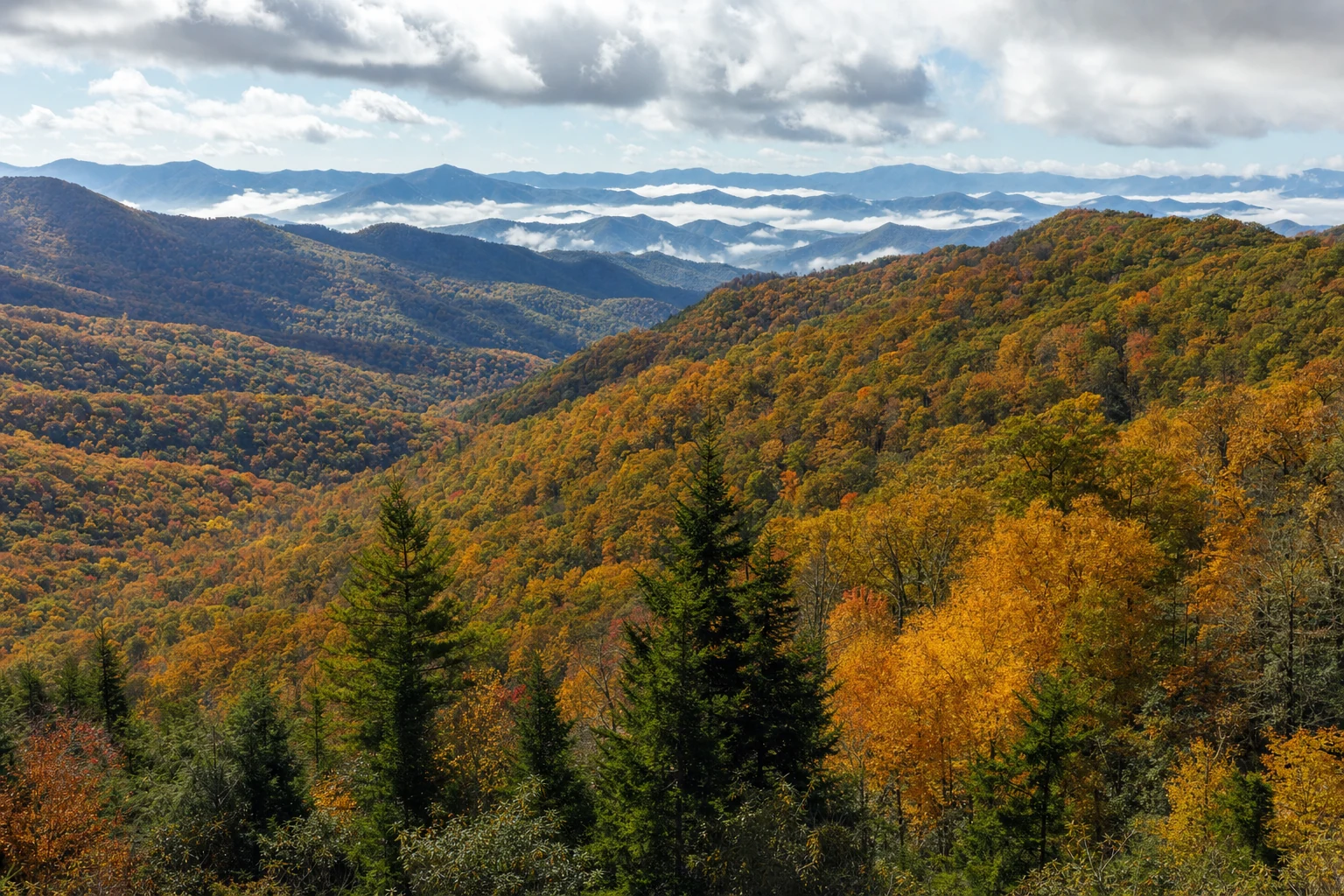
The trail moves through several distinct ecological zones across its length. Lower elevations carry dense hardwood cove forest — the mixed deciduous cover typical of the Southern Appalachians at moderate altitude, wet and deeply shaded, with a rich understory. As you gain elevation, the character shifts: the forest opens onto heath balds where rhododendron and mountain laurel give way to sky and long views. Wayah Bald and Cheoah Bald are two of the prominent high points along the route; both are genuine summit experiences rather than forested ridgeline walk-ons. The overall rating is moderate, but individual sections range into strenuous territory where the trail climbs sharply to gain a ridge or exposed bald. Mileage alone tells you little about how demanding a given section will be — elevation profile matters more.
Getting to the trailheads
Wayah Bald is the more commonly visited access point, reachable from Franklin, NC via a combination of state highway and forest road. Cheoah Bald sits near Robbinsville, NC, on the western end of the trail's higher terrain. Neither is a quick drive from Gatlinburg — budget two hours or more from the GSMNP corridor, longer if road conditions are compromised in spring or early winter. Nantahala National Forest trailhead parking typically requires a daily fee; confirm current requirements through recreation.gov or the forest service before you go, since posted signage at remote lots can lag behind policy changes. The Bartram Trail Society (bartramtrail.org) maintains trail maps and posts current condition reports, which makes it your most reliable single source for trip-specific planning.
If you're arranging a section hike that needs vehicles at both ends, work out the shuttle logistics in advance. The forest roads connecting different trailheads aren't always intuitive, and some access roads aren't suitable for low-clearance vehicles after heavy rain.
Planning a section hike
The 100-mile total length means the Bartram is either a multi-day backpacking trip or a series of day hikes — not a single outing. For day hikers, the practical approach is picking a segment between two known access points, arranging a car shuttle, and building your day around that distance. Backpackers can plan multi-night trips using dispersed camping available in Nantahala National Forest; no advance reservations are required for most backcountry sites in the forest, but check current fire restrictions and regulations with the USFS before you go.
Water is available from creek crossings throughout the route, but treat or filter everything. Cell coverage across the forest is poor, so download offline maps before you leave and carry a paper backup if you're unfamiliar with the specific section. Black bears are present throughout Nantahala National Forest; store food properly, don't leave anything scented in an unattended pack, and give any bear you encounter room to move away on its own terms.
When to go
Spring is the strongest season for lower-elevation sections, when cove forests fill with wildflowers and creeks run fast with snowmelt. Late April through early June typically offers the best combination of mild temperatures and plant activity. Fall draws hikers to the higher elevations: the open balds and ridges above the treeline show foliage from mid-October through early November, and the cleared deciduous canopy allows long views that summer forest blocks entirely.
Summer hiking is workable but demands an early start. Afternoon thunderstorms develop quickly in these mountains, and exposed balds offer no cover. Winter is worth considering for the high sections if you're equipped for cold — quiet, with frost-rimed vegetation and some of the sharpest long views of the year — but trail surfaces can ice over on shaded north-facing slopes, and some approach roads close after significant snowfall. Check conditions before any winter trip.
Pairing it with the broader Smokies region
The Bartram Trail sits west of GSMNP in western North Carolina rather than Tennessee, so it doesn't pair as directly with a Gatlinburg-based itinerary as trails inside the national park do. That said, if you're spending several days in the broader Smokies region, a drive into Nantahala National Forest for a Bartram section makes a good contrast to the busier park trails — different land management, different crowd levels, genuinely different character. Franklin and Robbinsville are the closest towns to the main trailheads; Robbinsville in particular is a small, low-key mountain community with very different energy from the Gatlinburg corridor, and worth knowing about if you want to base yourself near the trail's western sections rather than drive in from the Tennessee side each day.
Frequently asked questions
- How long is Bartram Trail - Various Sections?
- Bartram Trail - Various Sections is 100 miles one-way, with modest feet of elevation gain. It is rated moderate.
- Do I need a parking tag?
- Yes — a Park It Forward parking tag is required for vehicles parked more than 15 minutes anywhere inside Great Smoky Mountains National Park. Daily ($5), weekly ($15), or annual ($40) tags are available via recreation.gov or park kiosks.