
About Big Frog Trail (Big Frog Wilderness)
The Big Frog Trail climbs 1,800 feet over 5.5 miles to the summit of Big Frog Mountain, threading through some of the most remote wilderness terrain in the southern Appalachians. This is not a trail for casual hikers; the elevation grade stays relentless, and the round-trip distance of 11 miles demands a full-day commitment. What you get in return is old-growth forest, genuine solitude, and summit views that the more crowded park corridors simply can't offer.
Trail at a Glance
- Distance: 11 miles round-trip (5.5 miles each way)
- Elevation gain: 1,800 feet
- Difficulty: Strenuous
- Route type: Out-and-back
- Trailhead: Grassy Gap Trailhead (35.0450° N, 84.5100° W)
The 1,800-foot gain sounds manageable until you're in it. That elevation distributes unevenly along the route, with steeper pitches as you approach the summit ridge, so don't pace yourself for a steady climb and then feel blindsided by the upper third. Most hikers need four to six hours to complete the full out-and-back, factoring in rest stops and time at the top. Plan for a full day and start early.
What the Trail Is Actually Like
Big Frog Mountain's wilderness designation is doing real work here. The area is managed as a roadless wilderness, which means no facilities, sparser trail markings than you'd find on a heavily managed park corridor, and genuine solitude on most days. Don't expect to see another party at every switchback.
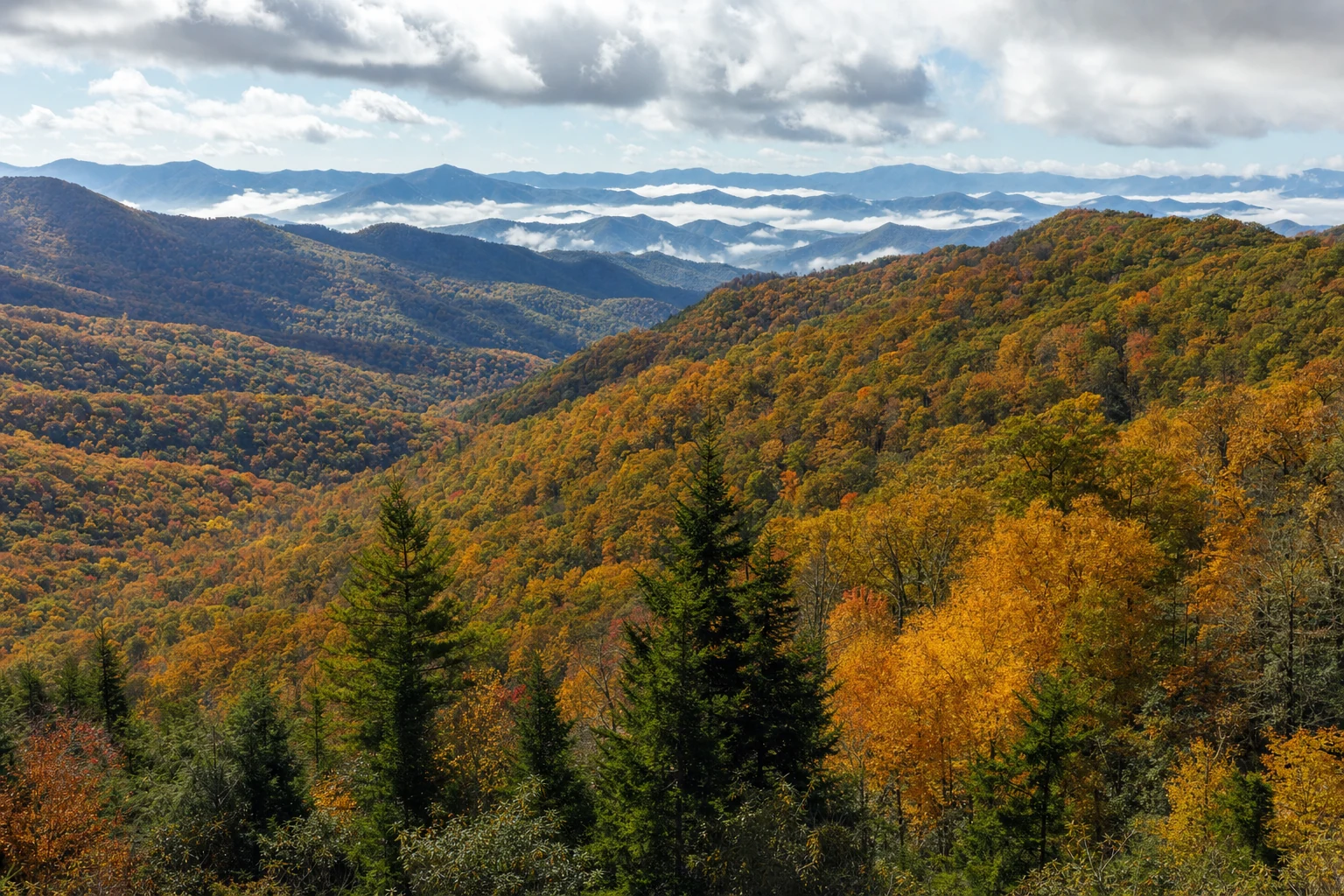
The forest through the lower sections mixes second-growth hardwood with pockets of old-growth canopy where tulip poplars and hemlocks have grown undisturbed for generations. The understory opens as you climb, and the trail eventually breaks out onto the summit ridge where long views carry east and west on clear days. On a good morning, the ridgeline panorama justifies every steep pitch below.
Because this trail sees far less foot traffic than the main GSMNP corridors, it also gets less erosion management. Exposed roots and rocky pitches show up regularly, along with stream crossings that lack bridges. Trekking poles are genuinely useful here, not just a comfort item.
Who Should Attempt This
The strenuous rating is accurate, not just precautionary hedging. If your party hasn't done a full-day hike with sustained climbing before, this is not the trail to test your limits; the remoteness means that help is a long way off if someone turns an ankle at mile 4. Hikers who treat every trail as a casual stroll will suffer on the upper sections.
For experienced hikers comfortable with sustained effort, this delivers exactly what it promises: real wilderness, old-growth forest, a summit worth reaching, and no crowds. Day hikers with strong trail fitness will find it challenging but entirely doable. Backpackers considering an overnight should check current Cherokee National Forest regulations on dispersed camping before planning that trip.
Dogs on leash are permitted in national forest wilderness areas, though the terrain is demanding enough that a short-legged or older dog may struggle on the summit push.
When to Go
Fall makes the strongest case, specifically late September through mid-October when the hardwood canopy turns and summit views carry farther in dry air. The crowds that pack Gatlinburg and the main park roads during foliage season thin out dramatically once you're this deep into the wilderness.
Spring works well too: wildflowers through the lower elevation forest, cooler temperatures that ease the climbing, and a freshness in the old-growth sections that summer obscures. Expect mud and potentially swollen stream crossings in April and early May, and plan accordingly.
Summer demands an early start. The forest canopy provides shade on the lower trail, but a sustained climb on an exposed ridge in afternoon July heat is miserable. A 6 a.m. departure is not excessive.
Winter raises the stakes considerably. Snow and ice on the upper trail are real obstacles without traction devices, and the forest road to the trailhead may be impassable after significant snowfall. The payoff for those willing to deal with it: the entire mountain to yourself, and bare trees that open views through the forest that summer never shows.
Getting There
From downtown Gatlinburg, the route heads toward the Cherokee National Forest rather than deeper into the central park. The Grassy Gap Trailhead sits at 35.0450° N, 84.5100° W; plug those coordinates directly into your navigation app rather than searching by name, since the forest road network in this area is not consistently labeled on consumer maps. Cell service is poor to nonexistent once you leave the main highway corridors, so download offline maps before you leave.
A Park It Forward parking tag is required for vehicles parked within Great Smoky Mountains National Park for more than 15 minutes (daily $5 / weekly $15 / annual $40 through recreation.gov or park kiosks). Verify current fee requirements at the specific trailhead before your trip, as regulations in areas that border national forest and national park lands can vary. The official trail information is at fs.usda.gov/recarea/cherokee.
Tell someone your itinerary before you go. Not as a formality; as a genuine safety precaution on a remote trail where you won't have a signal if something goes wrong.
What to Pack
Water is the most common underestimation on long wilderness climbs. Carry at least three liters and a filter or purification tablets if you plan to refill from streams along the route. Mountain weather in the southern Appalachians shifts quickly, so a rain layer and an insulating layer belong in your pack even on clear mornings; the summit is exposed, and a temperature drop of 15 degrees between trailhead and ridge is normal.
Black bears are active throughout this forest. Keep food in a bear canister or hang it if you're camping overnight; never leave a pack unattended on the trail; give any bear you encounter a wide berth and make noise in dense forest sections where a surprised bear is more likely to react defensively. Navigation aids beyond your phone are worth carrying: a downloaded topo map and a basic compass add almost nothing in weight but matter considerably if you lose the trail in the wilderness sections.
Pairing This Trip
If you're making the drive to the Big Frog area, the surrounding Cherokee National Forest terrain is worth exploring for a second day. The Ocoee River corridor sits nearby and offers a completely different outdoor experience from the mountain summit push. For hikers who want additional trail options in the region before heading back toward Gatlinburg, the forest road network connects to other trailheads that rarely appear on standard tourist itineraries.
Frequently asked questions
- How long is Big Frog Trail (Big Frog Wilderness)?
- Big Frog Trail (Big Frog Wilderness) is 5.5 miles one-way (11.0 miles round-trip), with 1,800 feet of elevation gain. It is rated strenuous.
- Do I need a parking tag?
- Yes — a Park It Forward parking tag is required for vehicles parked more than 15 minutes anywhere inside Great Smoky Mountains National Park. Daily ($5), weekly ($15), or annual ($40) tags are available via recreation.gov or park kiosks.