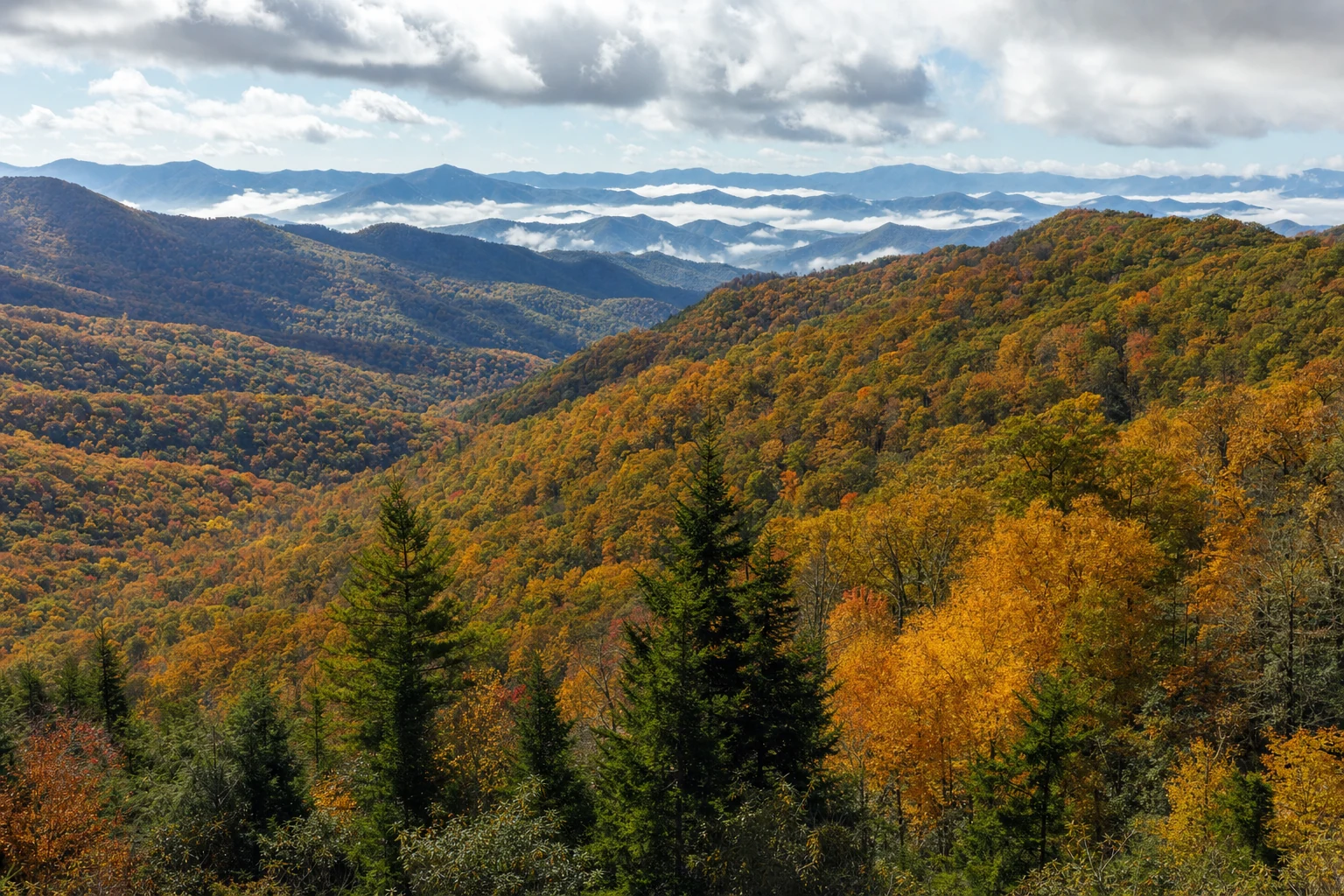

About Birch Spring Gap Trail:
Birch Spring Gap Trail runs 2.7 miles one-way through the Cosby section of Great Smoky Mountains National Park, climbing to a saddle on the main ridge above one of the park's quietest corners. The NPS rates it Strenuous, and that rating is honest: this isn't a trail you wander onto unprepared. But Cosby sees a fraction of the foot traffic that Sugarlands and Roaring Fork draw, so if you want genuine quiet in a park that pulls millions of visitors every year, you're already in the right part of it.
What "Strenuous" Actually Means Here
A 2.7-mile one-way trail with a Strenuous rating means one consistent thing in the Smokies: serious elevation gain packed into a short horizontal distance. The ridgelines here top 5,000 feet in many places, and trails in the Cosby area punch up toward those heights from a relatively low valley. By the time you reach Birch Spring Gap, you've climbed hard. Budget 3-4 hours for the round trip if you're a fit hiker, and more if you're carrying a pack or moving at a relaxed pace; the descent runs over the same steep terrain, and knees register that on the way down.
The "gap" in the name is geographic: in Southern Appalachian usage, a gap is a low point or saddle between two higher ridge sections. Reaching one requires gaining the elevation that separates the valley from it. The "Birch Spring" element suggests a spring near that saddle, a common feature in Smokies backcountry, though any backcountry water source requires filtration before drinking.
Starting from Cosby
Cosby sits at the northeastern end of GSMNP, closer to Newport and Cosby town than to Gatlinburg, though both are within reach. From Gatlinburg, plan roughly 45 minutes by road to reach the Cosby entrance. The campground here is among the most peaceful in the park, and the surrounding trails, including Birch Spring Gap, draw a level of use that feels manageable even on holiday weekends.
Parking anywhere inside Great Smoky Mountains National Park for more than 15 minutes requires a Park It Forward tag: $5 daily, $15 weekly, $40 annual, available at recreation.gov before you arrive or at park kiosks. Don't assume you'll sort this out at the trailhead.
The Cosby Trail Network
Birch Spring Gap Trail sits within a cluster of options ranging from Moderate to Strenuous, making this section of the park worth a multi-day visit if you're serious about hiking. Cold Spring Gap Trail covers 1.5 miles at Moderate difficulty, a reasonable warm-up day if you plan to tackle Birch Spring Gap the next morning. Firescald Ridge Trail at 4.5 miles one-way is the area's most demanding route. Indian Grave Gap and Turkeypen Ridge Trails offer Moderate-rated alternatives for days when you want to move without grinding uphill the whole time.
The trails here don't loop together easily without significant backtracking or shuttle logistics, so most day hikers treat each as a standalone out-and-back. That structure suits the area; there's no single circuit you feel obligated to complete.
What You'll Encounter on the Trail
The Cosby drainage holds some of the park's oldest recovering forest. The area was selectively logged before the park's establishment, and the trees have had nearly a century to fill back in; the canopy is dense and the light is filtered through most of the lower route. As you approach the ridgeline the corridor opens up. The understory here supports significant wildflower populations in spring, and the moisture-loving species that favor north-facing slopes persist through much of summer at higher elevations.
Wildlife behaves in Cosby exactly as it does everywhere else in GSMNP. Black bears are present and active, particularly in late summer when they're feeding heavily before winter. You maintain 50 yards of distance at minimum. Food storage regulations in the backcountry are not suggestions; carry a bear canister or use designated cables if you're camping overnight, and keep snacks zipped away even on day hikes. Stream crossings, depending on season and recent rainfall, may require careful footing. The Smokies receive significant precipitation annually at higher elevations, and trail conditions after heavy rain shift quickly.
Cell coverage in the Cosby backcountry is poor to nonexistent. Download offline maps before you leave. Let someone know your itinerary before you go. The quiet here is part of the appeal, but it also means fewer other hikers around if something goes wrong.
When to Go
Spring (late March through May) brings the park's wildflower season, with trillium, phacelia, and fire pink appearing in sequence as elevation increases. Summer heat makes the strenuous rating bite harder; start before 8 a.m. in July or August and carry at least two liters of water per person. Fall delivers dry, stable weather and the foliage color the region is known for, with peak color in the Cosby area typically landing mid-October at lower elevations and somewhat earlier at ridge height. Winter hiking on strenuous trails here is for experienced hikers who know what they're doing: ice forms on steep sections, traction devices are often necessary, and the park doesn't maintain regular backcountry patrols in cold months.
Gear and Preparation
This trail demands more than its 2.7-mile one-way distance suggests. Boots with ankle support and meaningful grip are the right footwear, and a trekking pole or two makes the steep descent considerably easier on your joints. Rain gear should be in your pack regardless of the morning forecast, because Smokies weather is genuinely unpredictable; afternoon thunderstorms build fast in summer, and a clear morning can turn wet by 2 p.m. without much warning.
Pack more water than you think you'll need. On a strenuous climb in warm months, two liters per person is a floor, not a target. Snacks that don't require prep are easier to manage on a trail where stopping to cook isn't the point.
Pairing This Trail
If you're spending multiple days in the Cosby area, the Cosby Nature Trail at the campground gives you an easy 1.0-mile loop for a morning stretch without committing to elevation. Chestnut Branch Trail at 2.0 miles Moderate offers a gentler option for a recovery day. For hikers working toward a longer backcountry loop, several Cosby-area trails connect to the Appalachian Trail on the main ridge, though any overnight plan requires advance reservations through the NPS backcountry permit system.
The Cosby section also sits within reasonable distance of Big Creek on the park's north side, where Mount Sterling Trail climbs 5.7 miles one-way to a historic fire tower. Between the two areas, you can put together a long weekend that stays almost entirely off the tourist-facing side of the park.
Frequently asked questions
- Do I need a parking tag?
- Yes — a Park It Forward parking tag is required for vehicles parked more than 15 minutes anywhere inside Great Smoky Mountains National Park. Daily ($5), weekly ($15), or annual ($40) tags are available via recreation.gov or park kiosks.