
About Brightwater Loop Trail:
The Brightwater Loop Trail covers half a mile in an easy loop through the Deep Creek corridor on the North Carolina side of Great Smoky Mountains National Park. It's short enough to finish in under 30 minutes at a relaxed pace, which makes it useful for visitors who want genuine park trail experience without committing a half-day, or who are threading it into a broader Deep Creek itinerary that includes longer routes.
What a Half-Mile in a Creek Drainage Actually Feels Like
Half a mile in a creek corridor is different from half a mile in a parking lot. The Deep Creek area runs along a wooded drainage where the sound of moving water is constant and the tree canopy stays dense enough in summer to make the trail feel removed from the road, even though the trailhead isn't far. This isn't a demanding walk; the NPS rates it Easy because that's accurate. The terrain is gentle, the loop format means no navigation decisions once you're on the path, and there are no exposed ridges or significant climbs to negotiate.
What it offers instead is immersion at low effort. For visitors who spend most of their Smokies trip on Gatlinburg's main strip or in Cades Cove traffic, this is a quick recalibration, a reminder that the national park surrounding the towns is legitimately wild.
The trail also sits within a cluster of routes of varying difficulty, so it can serve as a warm-up before longer miles or as the low-key closing stretch of a harder day.
The Deep Creek Corridor
Deep Creek is one of the better-organized trail hubs on the park's North Carolina side. Several routes share the same general corridor, which lets visitors calibrate effort without changing locations. The Creek Walk Trail, also 0.5 miles and rated Easy, runs nearby; combining both gets you a full mile of creek-side walking with no extra driving or logistics. For anyone who finishes both and still wants more, the Deep Creek Horse Trail extends the corridor to a 5.0-mile moderate loop with considerably more distance and terrain variation.
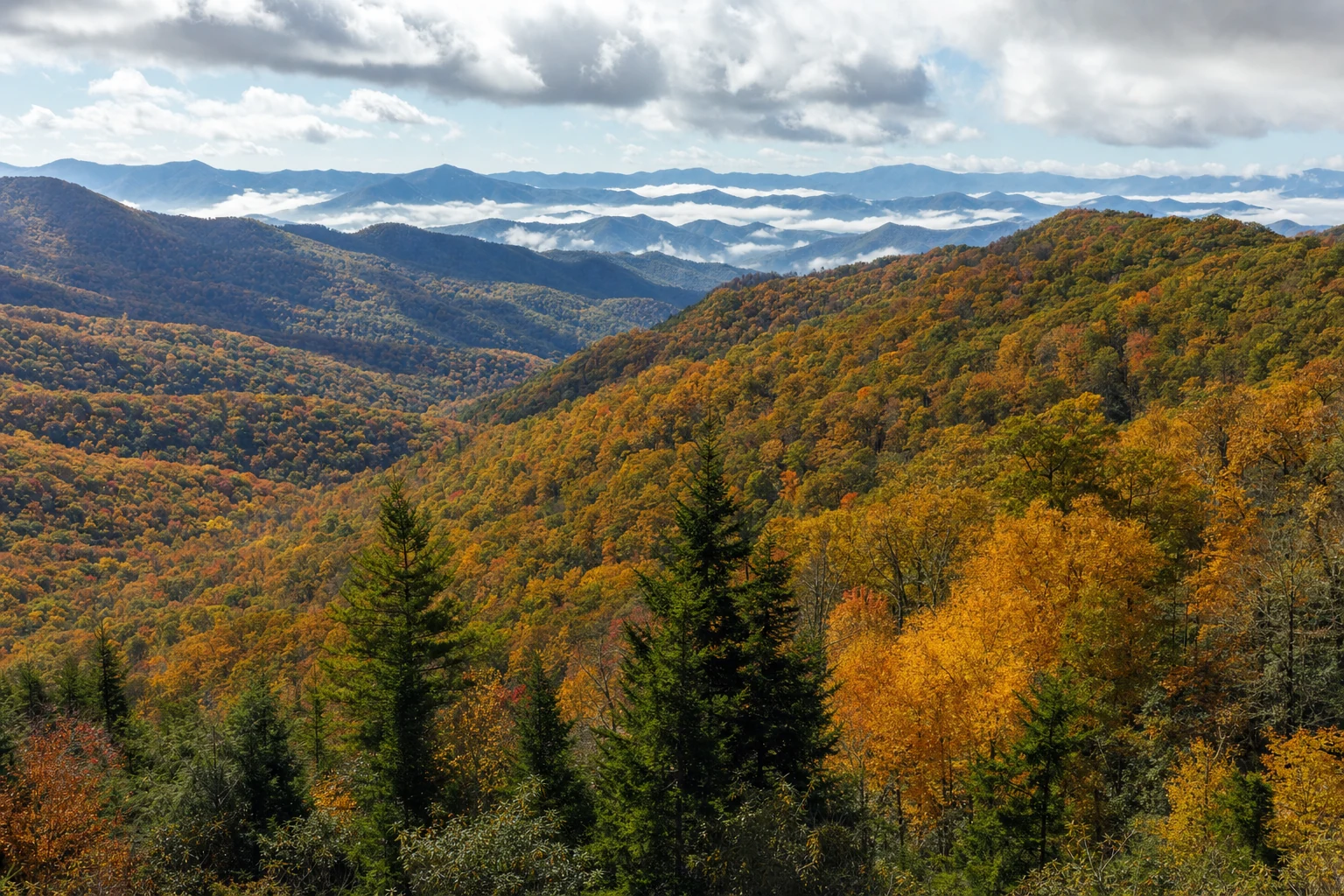
Trails throughout this drainage share a recognizable character: hardwood canopy, consistent proximity to moving water, light that changes quality through the seasons. Spring pushes creek volume up and makes the sound of the water louder from well off the trail. Summer fills the shade with cool air that doesn't quite reach the towns below. Fall is the strongest season visually, with hardwood color typically peaking around mid-October and reflecting in the creek on calm mornings. Winter brings near-empty trails and sharper sightlines through bare canopy; the lower elevations here rarely close from snow the way high-ridge routes do.
Getting to the Trailhead
The Deep Creek trailhead is accessed from Bryson City, NC. If you're based in Gatlinburg, the drive runs roughly 45 to 60 minutes depending on your route through the park and traffic on US-441 through the Newfound Gap corridor; plan for that when building your day, especially if you're pairing Deep Creek with stops on the Tennessee side.
Parking inside Great Smoky Mountains National Park requires a Park It Forward tag for stays over 15 minutes: $5 daily, $15 weekly, or $40 annually, purchased at recreation.gov or from kiosks at major park entrances. GSMNP charges no general admission fee; the parking tag is the only cost for day visitors. The Deep Creek parking area fills by mid-morning on summer weekends, particularly in July and August when tubing draws additional crowds to the lower creek sections. Arriving before 9 a.m. on those days sidesteps the problem entirely.
Seasonal Timing
Spring is one of the more rewarding seasons for the creek drainages. Wildflowers appear at lower elevations from late March through May, with timing shifting year to year based on winter conditions; the trail stays accessible while elevations above 5,000 feet are still dealing with mud season or lingering snow. Waterfall volume throughout the corridor runs highest during this period.
Summer is busy. The Deep Creek area draws day visitors from both Bryson City and the wider park, and the combination of short, easy loops with nearby tubing means the trailhead area sees more traffic than some of the quieter corners of GSMNP. Early morning or late afternoon visits change the experience considerably.
Fall is consistent: color, cooler air, lower crowds after Columbus Day weekend, and better parking odds throughout October and into November. Winter offers the quietest conditions of the year, with hardwood sightlines and the creek sound carrying farther through leafless trees.
Who This Trail Makes Sense For
The Brightwater Loop works for visitors who don't usually hike but want something more than a roadside photo stop inside the national park. Families with young children still building trail confidence, older visitors who want genuine park time without significant elevation gain, and anyone tight on time but unwilling to skip the woods entirely will all find it fits. The half-mile loop format also removes the decision-fatigue of out-and-back timing; you complete the circuit and end up back at the car, which matters more than it sounds on a first-ever national park trail visit.
It's not the right trail if your goal is a summit, a destination waterfall earned by climbing, or long mileage with a full pack. GSMNP has all of those elsewhere, many of them within an hour of Deep Creek. The Brightwater Loop does something more specific and narrower, and it does that thing well.
Before You Go
Cell coverage is limited throughout GSMNP and largely absent in the creek drainages. Download an offline map before you leave the parking area; both the NPS app and AllTrails offer offline functionality.
Black bears are active throughout the park year-round. Keep 50 yards of distance if you encounter one, make enough noise while walking that you don't surprise a bear on the trail, and never leave food or scented items unattended at the trailhead or on the path. Day hikers should keep food secured in the car or in a properly closed pack throughout.
Carry water, even on a short trail. Humidity in the creek drainages during July and August can catch first-time mountain visitors off guard, and creek water isn't safe to drink without treatment. For a half-mile walk this isn't a survival issue; for anyone combining the Brightwater Loop with the Creek Walk Trail and then the Deep Creek Horse Trail, it's worth having a full water bottle from the start.
The trail's easy rating and loop format make it a reliable introductory hike with very little that can go wrong; that's not faint praise in a park where even moderate trails can present real challenges to visitors who underestimate elevation gain or distance.
Frequently asked questions
- Do I need a parking tag?
- Yes — a Park It Forward parking tag is required for vehicles parked more than 15 minutes anywhere inside Great Smoky Mountains National Park. Daily ($5), weekly ($15), or annual ($40) tags are available via recreation.gov or park kiosks.