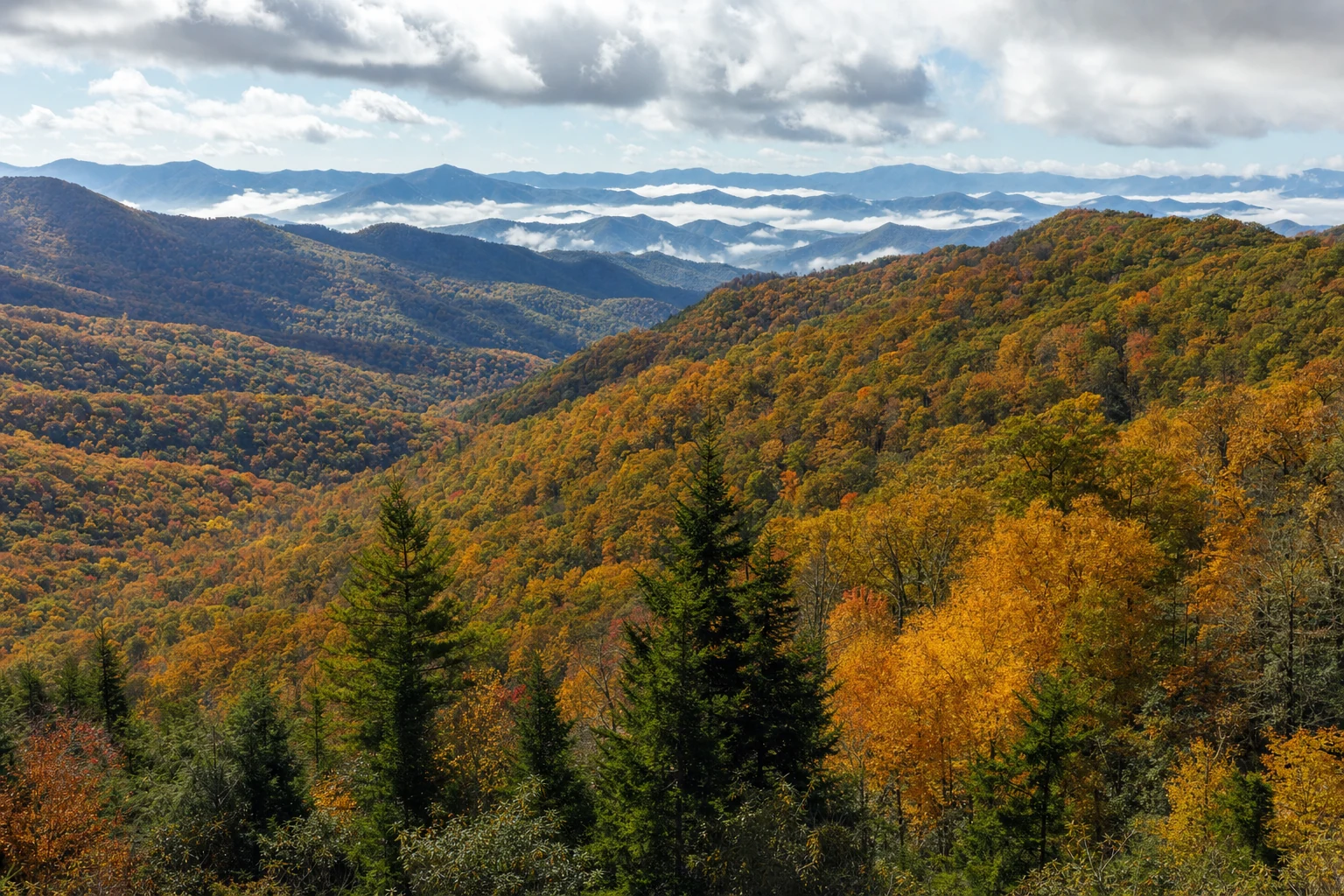

About Buckhorn Gap Trail:
Buckhorn Gap Trail doesn't pull the crowds that gather at Alum Cave or Laurel Falls. At 4.3 miles one-way with a strenuous NPS rating, it asks more than most visitors are willing to give, and that keeps things quieter at the trailhead. The Greenbrier area sits east of Gatlinburg off US-321, and the drive in already signals a different kind of park visit than the main Sugarlands corridor offers.
Trail Basics
The 4.3-mile one-way distance puts a full out-and-back at 8.6 miles. That's a legitimate full-day commitment, and the strenuous rating means those miles won't come easy. Expect sustained elevation gain, rougher footing than you'd find on a maintained nature loop, and stretches where the trail demands real attention rather than casual forward motion.
Most fit, experienced hikers will want to budget 5 to 7 hours for the round trip. Slower parties, or anyone who plans to rest at the gap, should pad that estimate rather than cut the turnaround short. The NPS assigns strenuous ratings based on actual terrain, not out of caution; this classification is honest.
This is not the right trail for young children or for hikers who are out of regular practice. If your recent experience is mostly easy or moderate loops, spend a day on something like the Porters Creek Trail first to gauge your footing in this area, then return for Buckhorn Gap when you have a better read on what the terrain demands.
Access and Parking
The Greenbrier entrance to GSMNP sits east of downtown Gatlinburg along US-321. Follow Greenbrier Road into the park; the road narrows as it traces the creek corridor, so give oncoming vehicles room. Trailhead parking is limited.
On spring and fall weekends, the lot fills well before 9am. Arriving by 7:30am gives you a reasonable margin; arriving at 10am on a foliage weekend does not. Midweek visits are reliably less crowded and the trade-off in scenery is zero.
A Park It Forward parking tag is required for any vehicle staying more than 15 minutes inside the park. Tags cost $5 per day, $15 per week, or $40 for an annual pass, available through recreation.gov, the NPS app, or self-pay kiosks at major trailheads. If you're planning multiple hikes during a stay in Gatlinburg, the weekly pass covers the trip without the daily math.
What Strenuous Actually Means Here
It means you should be genuinely comfortable with multi-hour mountain hiking before committing. Not gym-fit, not "I walked a lot on vacation" fit. Sustained climbing on uneven ground for several miles is a specific kind of physical output, and the descent on tired legs asks something different again.
Trekking poles help considerably on the way down, especially on any loose or rooted sections. Waterproof footwear is worth it regardless of the weather forecast; the Greenbrier area stays wet near the creek corridor even after dry spells, and the upper trail can hold moisture long after rain has stopped. Wear shoes that grip, not sneakers you're trying to spare.
When to Go
Spring is the strongest season for the Greenbrier area. Wildflowers come through reliably, typically peaking in April at lower elevations, with higher ground extending the window into early May. Waterfalls run hard in spring, fed by snowmelt and rain, and the creek corridor looks entirely different in April than it does in August. This is the time of year that rewards an early start most: cool air, full flow, fewer people.
Fall brings the familiar calculus of Smokies hiking: better views as leaves drop, peak color typically landing in mid-October at mid-elevations, and considerably more company on weekends. The Greenbrier area still draws fewer people than the Sugarlands or Cades Cove corridors, but don't expect solitude on a Saturday in October.
Summer is viable but demanding on a strenuous trail. July and August build heat and humidity fast, and afternoon thunderstorms develop with little warning at elevation. Most experienced summer hikers are on the trail by 7am and off high ground before early afternoon. On a strenuous 8.6-mile round trip, that means an early alarm and no dawdling at the trailhead.
Winter offers real solitude and honest difficulty. Ice on steeper sections and shortened daylight compress your options, but hikers with cold-weather experience and appropriate gear find the park in January and February genuinely rewarding. Go later in the morning after temperatures lift slightly, and turn around conservatively if conditions change.
What to Carry
Two liters of water is a starting point, not a ceiling. Strenuous hiking in mountain terrain burns significantly more than most people plan for, and the park's water sources require treatment before drinking. In summer, carry more. Running short of water at mile 7 of a strenuous out-and-back is a bad situation.
Pack a rain layer and an insulating layer even in summer. Mountain weather in the Smokies changes faster than most visitors expect; a clear sky at 8am and a wet, cold afternoon at 2pm is a routine combination, not a worst-case scenario. The elevation gain on Buckhorn Gap means the top of the trail runs cooler than the trailhead.
Cell coverage inside the park is unreliable. Download an offline map before you leave town. Tell someone your planned route and your expected return time. These aren't overcautious suggestions for a trail with a strenuous rating; they're standard practice.
Bears and Trail Conduct
Black bears are present throughout GSMNP, including the Greenbrier area. The rules are consistent: maintain at least 50 yards of distance, never approach a bear for a photo, and store all food in your vehicle or a bear canister. Don't leave snacks unattended at the trailhead while you're gearing up. If a bear approaches, stand tall, speak firmly, and give the animal room to move away.
Stay on the marked trail throughout. The park's fragile plant communities recover slowly from foot traffic off-trail, and the terrain off the path is harder to navigate than it looks. Cell service won't bail you out if you get turned around.
Pairing with Porters Creek
The Greenbrier entrance gives you access to two trail systems worth combining if you're staying for a few days. Porters Creek Trail leaves from the same general area, runs 3.7 miles one-way at a moderate rating, and passes Fern Branch Falls. The two trails make a logical two-day pairing: Porters Creek on day one to get calibrated on Greenbrier terrain and conditions, Buckhorn Gap on day two when you know what you're working with. Both share limited parking, which is another reason to plan for an early arrival on either day.
Frequently asked questions
- Do I need a parking tag?
- Yes — a Park It Forward parking tag is required for vehicles parked more than 15 minutes anywhere inside Great Smoky Mountains National Park. Daily ($5), weekly ($15), or annual ($40) tags are available via recreation.gov or park kiosks.