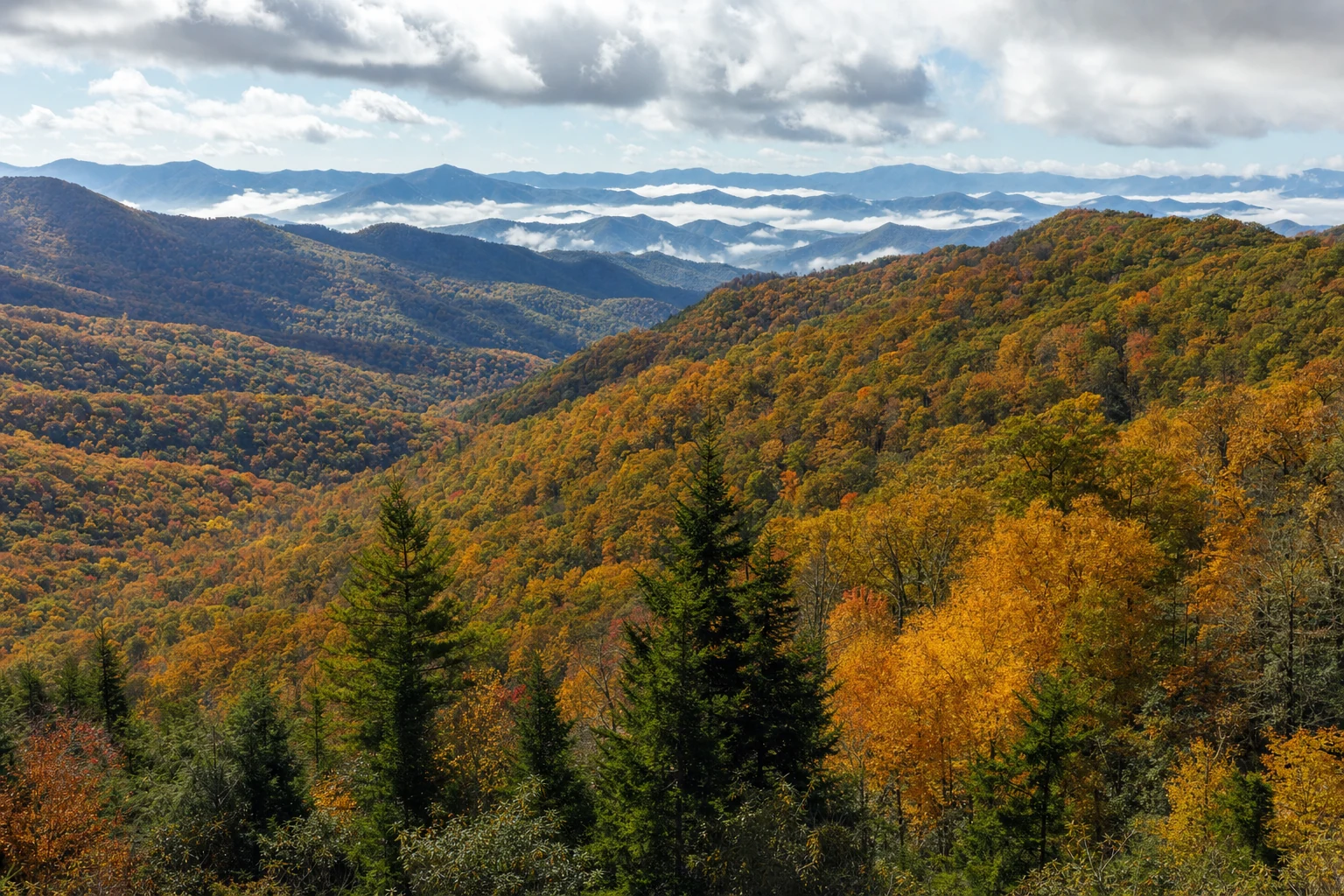

About Bullhead Trail to Mount LeConte
Bullhead Trail to Mount LeConte earns its strenuous rating honestly: 13.8 miles one-way from Cherokee Orchard Road to the summit, with 3,800 feet of elevation gain accumulated over terrain that doesn't level off for long. The full out-and-back covers 27.6 miles, which puts this firmly in the category of trails that require serious commitment before you set foot on it. For those who do, the payoff includes views back down into Gatlinburg, rock formations at elevation, and a summit connection to other LeConte routes that make loop options possible for those who've planned ahead.
What you're actually taking on
The distance alone separates Bullhead from almost every other trail in the park. Twenty-seven miles round trip with nearly 4,000 feet of climbing is a marathon-distance effort with substantial altitude mixed in, and that's on a good-weather day at a solid pace. Hikers who attempt this in a single day typically need 10 to 12 hours, which means a pre-dawn start from the trailhead isn't dramatic — it's just math. Many people split the round trip over two days by staying at LeConte Lodge at the summit, which operates seasonally and requires reservations well in advance; check availability through the park's official resources at nps.gov/grsm before building an itinerary around it.
The sustained nature of the climb is what defines Bullhead. There's no single brutal section where you grind up a fixed pitch and then coast; elevation accumulates across the full distance, and the trail keeps asking for more even when your legs have an opinion about it. What this does mean is that the forest you move through changes substantially as you ascend, which is one of the things that makes the trail worth doing rather than just enduring.
The route and what changes as you climb
The trailhead at Cherokee Orchard Road sits well below the summit, so the first miles feel manageable — a mix of hardwood forest typical of lower Smokies elevations, where tulip poplar and oak give the canopy its summer density. As you gain altitude, the composition shifts. By the upper sections, you're walking through spruce and fir, which have an entirely different atmosphere: quieter, cooler, the light filtered differently, the air noticeably colder even on warm days. The transition happens gradually enough that you can miss it if you're not paying attention.
Rock formations become more prominent in the upper elevations, where exposed ledge and bouldering gives the trail visual contrast against the forest. On clear days, views toward Gatlinburg open up, the town visible in the valley far below — a perspective you don't get from most Smokies trails, which tend to top out in ridge forest rather than genuine summit clearings. At the top, Bullhead connects to other trails approaching LeConte from different directions, which gives experienced hikers the option to descend via an alternate route if they've arranged transportation.
Spring brings the most flower activity along the lower portions of the trail, particularly in April and May when the canopy hasn't yet filled in and light reaches the forest floor. Wildflower coverage in the Smokies is dense and well-documented; Bullhead's lower miles share in that without being exceptional compared to designated wildflower routes.
When to go
Spring is the most forgiving season for the climb itself: temperatures stay cool, the forest is actively changing, and crowds are lighter than summer — though trailhead parking at Cherokee Orchard Road can still fill on weekend mornings if you arrive after 8am.
Summer is busy across the park, and Bullhead is no exception. The heat and humidity in the lower elevations can be rough before you gain enough altitude to feel the shift. Start early, mean it, and drink more water than you think you'll need. The payoff is that the summit stays substantially cooler than the valley, which can feel genuinely restorative after several hours of climbing.
Fall draws the most visitors, and mid-October typically marks peak foliage at elevation — the color contrast between the changing hardwoods below and the evergreen fir zone near the top rewards anyone paying attention. Parking competition on fall weekends rivals August. Plan for it.
Winter changes the character of the trail completely. Ice accumulates on rock faces and exposed sections near the summit, which means traction devices belong in your pack from November onward if conditions are cold. The crowds are gone, long-range views open up once the leaves drop, and the summit can be severe in ways the lower trailhead won't warn you about. Check trail and road status through the park service before going; closures at high elevations happen.
Getting there and parking
The trailhead is on Cherokee Orchard Road in Gatlinburg, coordinates 35.6980° N, 83.4830° W. From downtown Gatlinburg, follow signs toward the national park — Cherokee Orchard Road branches off the lower park road network on the Gatlinburg side of the boundary.
The Park It Forward fee applies to all stops over 15 minutes anywhere inside Great Smoky Mountains National Park. Day passes are $5, weekly passes $15, and annual passes $40. Buy online at recreation.gov before you leave or at entrance kiosks on the way in; the kiosks can have lines on busy mornings, which is an argument for buying ahead.
What to bring and what to know
Cell coverage on Bullhead is poor across most of the route and unreliable near the summit. Download an offline map through AllTrails, Gaia, or a comparable app before you leave, and consider carrying a paper backup for a trail this long. Tell someone your plan and your expected return time.
Weather at LeConte summit can be completely different from conditions at the trailhead; the park averages among the highest precipitation rates in the eastern US, and the summit sits in clouds frequently. Pack a real rain layer and something genuinely warm regardless of what the valley forecast says. Hypothermia risk is real even in summer if conditions turn and you're soaked and tired at 6,000 feet.
Bears are active throughout the park year-round. Keep 50 yards between yourself and any bear you see, never approach, and store food in bear boxes at the trailhead areas. This isn't ceremonial — the park's bear population is healthy and habituated to hikers.
Trekking poles reduce knee stress meaningfully on descents of this length; the return trip on tired legs is where most people feel the miles. Traction devices and an extra warm layer belong in the pack during any shoulder or winter season attempt.
Frequently asked questions
- How long is Bullhead Trail to Mount LeConte?
- Bullhead Trail to Mount LeConte is 13.8 miles one-way (27.6 miles round-trip), with 3,800 feet of elevation gain. It is rated strenuous.
- Do I need a parking tag?
- Yes — a Park It Forward parking tag is required for vehicles parked more than 15 minutes anywhere inside Great Smoky Mountains National Park. Daily ($5), weekly ($15), or annual ($40) tags are available via recreation.gov or park kiosks.