
About Chasteen Creek Trail:
Chasteen Creek Trail runs 2.2 miles one-way from the Smokemont area of Great Smoky Mountains National Park, following its namesake creek through a shaded hollow on the park's North Carolina side. The NPS rates it Moderate, which in the Smokies means sustained rather than brutal. Most visitors do it as an out-and-back, covering roughly 4.4 miles total.
What the Trail Is Like
The creek is the dominant feature. You'll hear Chasteen Creek running before you see it on most bends, and it stays close to the trail through much of the route. The forest in this hollow has the dense, layered character of the park's lower NC elevations: tall hardwoods, heavy understory, and enough canopy to keep things shaded even when summer temperatures climb in the open. Rooted sections and stone underfoot are standard for GSMNP creek trails, but nothing here demands scrambling or technical footwear.
Moderate on the NPS scale means steady elevation gain spread across the distance rather than a single punishing pitch. It's a trail that asks for sustained attention, not exceptional fitness. Compare it against what's available in the park: if Charlies Bunion or Rocky Top sounds like too much, Chasteen Creek is a better fit. If you've only done flat nature loops and want to step up, this is a reasonable next move.
Getting to Smokemont
Smokemont sits on Newfound Gap Road (US-441) on the park's North Carolina side, most naturally accessed from Cherokee. From Gatlinburg, take US-441 southeast through the park, crossing the state line; the Smokemont Campground is your landmark after you pass the Oconaluftee Visitor Center, and the trailhead is accessible from that area.
Traffic on US-441 backs up badly near both park entrances on summer and fall weekends, particularly late morning through mid-afternoon. Earlier starts pay off in driving time as much as trail conditions.
A Park It Forward parking tag is required for all stops inside GSMNP over 15 minutes: $5 daily, $15 weekly, $40 annually. Buy at recreation.gov before you arrive or at kiosks near the entrance. Smokemont's lots fill on busy weekends. Having a tag in hand before you leave home is simpler than sorting it out at a crowded kiosk.
Nearby Trails to Combine
Smokemont has a real cluster of trails worth knowing before you commit to a single plan:
- Bradley Fork Trail (6.5 miles one-way, Moderate) runs through the same valley and follows the larger creek drainage in this part of the park. Adding Bradley Fork turns Chasteen Creek into part of a much longer day.
- Smokemont Loop Trail (6.1 miles loop, Moderate) circles the campground area. If you're staying overnight at Smokemont, the loop gives you a second distinct hike the next morning without relocating.
All three share the same general staging area and creek-valley character, which makes Smokemont a practical base for a full day or a night.
When to Go
Spring is the strongest season for creek trails in this part of the park. Water runs high through April and into May after winter snowmelt, and wildflowers cover the forest floor before the canopy closes them out. Summer brings the park's peak visitation; get to Smokemont before 9 a.m. on weekends or plan to find a full lot. Afternoon thunderstorms are a real factor from July through August, building quickly and with little warning. Morning starts are the practical choice.
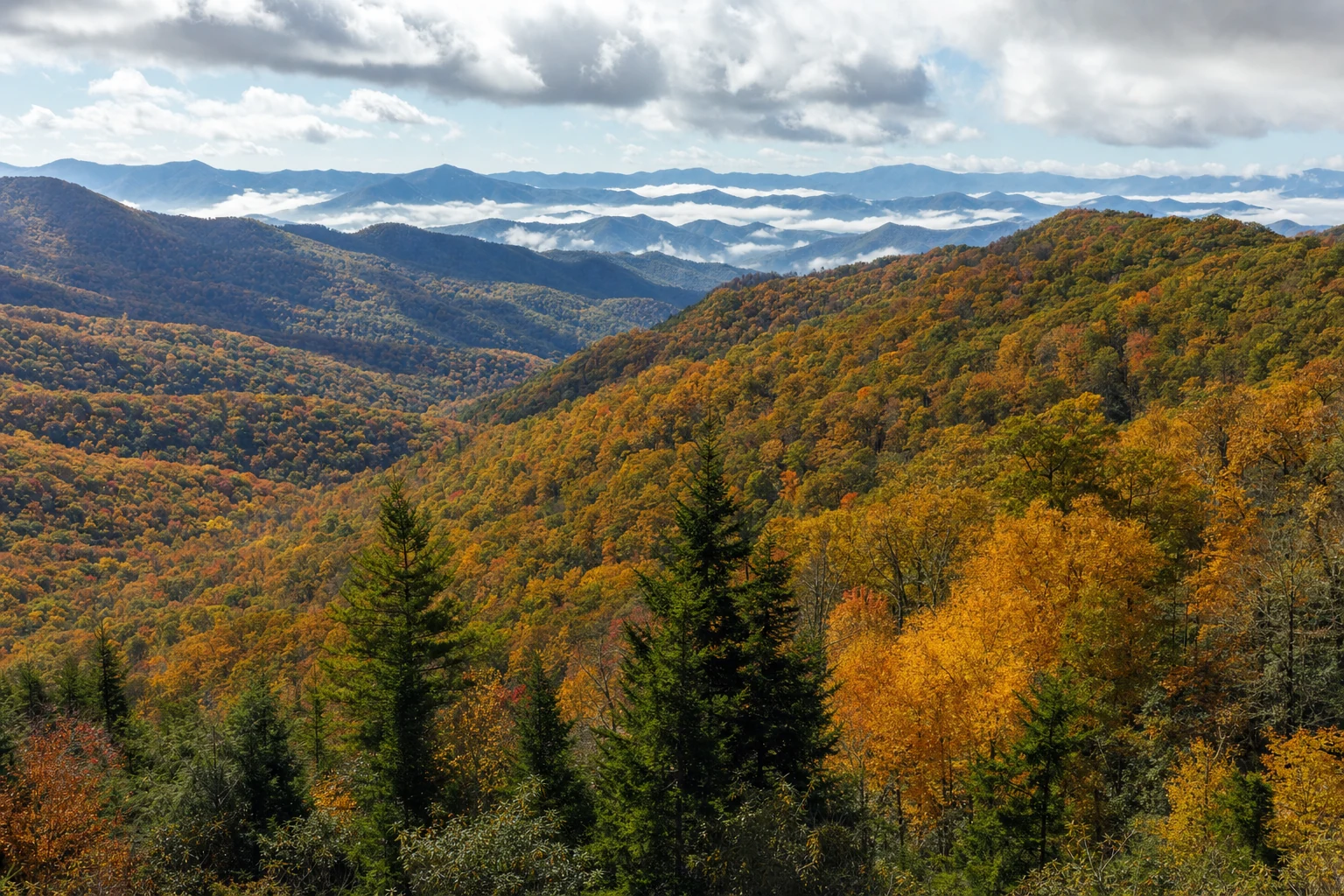
Fall draws the heaviest crowds to the NC side. Hardwood color peaks around mid-October in most years, though weather pushes that window by a week or two either direction. Arrive early on fall weekends; the trail sees company all day regardless.
Winter empties the crowds entirely, bares the understory so you see farther through the trees, and leaves the creek to you. Newfound Gap Road can close temporarily during serious snow or ice events, so check conditions before you drive in from either side.
What to Pack
Mountain weather in the Smokies changes fast. A rain layer and a warm layer make sense even on clear summer mornings; the trail is shaded and temperatures at Smokemont can feel different from what you left behind in Cherokee or Gatlinburg. Carry more water than the mileage suggests; moderate hiking in Appalachian humidity burns through it faster than flat-trail habits predict.
Cell service through most of GSMNP is poor to nonexistent in the creek valleys. Downloading an offline map before you leave solves that problem before it starts. Stay on marked trails, both to protect the park's fragile ecosystems and because the dense terrain off-trail in these hollows disorients quickly without a clear signal or landmark.
Bears
Black bears are active throughout the park, and the creek valleys around Smokemont see regular bear activity. The NPS standard is 50 yards of distance from any bear. Don't leave food or scented items in your car at the trailhead; bears here have learned that parking areas and campgrounds pay off, and they will break into vehicles. If you're camping at Smokemont, use the bear boxes. On the trail, give bears space and make yourself visible rather than trying to squeeze past on a narrow section.
White-tailed deer and wild turkeys are common at lower elevations on this side of the park. The creek holds trout; fishing in GSMNP requires a valid license and compliance with current NPS regulations for the specific drainage.
Frequently asked questions
- Do I need a parking tag?
- Yes — a Park It Forward parking tag is required for vehicles parked more than 15 minutes anywhere inside Great Smoky Mountains National Park. Daily ($5), weekly ($15), or annual ($40) tags are available via recreation.gov or park kiosks.