
About Chimney Rock State Park Trails
Chimney Rock State Park is in western North Carolina, a step outside the Great Smoky Mountains National Park boundary but well within the broader Appalachian corridor that draws most visitors to this region. The park's trail network covers a range of difficulty levels, from easy to strenuous, but the two most visited routes are the Hickory Nut Falls Trail and the Four Seasons Trail: the first leads to a 404-foot waterfall, the second to the Chimney Rock formation and a panoramic view of Lake Lure. The Hickory Nut Falls Trail runs 1.4 miles out-and-back and is rated easy; the Four Seasons Trail covers 0.6 miles one-way. Together they make a solid half-day itinerary.
What you're actually hiking
The Hickory Nut Falls Trail runs along the floor of Hickory Nut Gorge, shaded and moist for most of its length, with the sound of the creek building steadily as you get closer to the falls. At 404 feet, Hickory Nut Falls drops in a near-vertical plunge rather than a stepped cascade, and the scale of it doesn't fully register until you're standing at the base looking up. The trail is rated easy and the 1.4-mile distance (2.8 miles total round trip) keeps it accessible for most fitness levels, including families with young children.
The Chimney Rock formation is the park's second major draw. From the summit, Lake Lure spreads across the valley below in a view that reads completely differently from the waterfall: where the falls are vertical and close, the summit is open and horizontal, with the lake and surrounding ridgelines filling the full frame. The Four Seasons Trail, at 0.6 miles one-way, provides access to this viewpoint.
One important note on the trail system: the park also includes routes rated strenuous, so if your group has mixed experience levels, identify your specific trail before arriving rather than sorting it out at the trailhead. The easy rating applies to the Hickory Nut Falls Trail; the overall park network covers considerably more demanding terrain.
Trail logistics and park access
The trailhead is at the Chimney Rock State Park entrance (35.4340° N, 82.2510° W). This is a fee-based North Carolina state park — unlike the trails inside Great Smoky Mountains National Park, which charge no separate entry fee — so check ncparks.gov/chimney-rock-state-park/trails for current admission prices and hours before making the drive. Seasonal hours mean the park can close earlier in winter than in summer, and the page also posts alerts for trail or road closures.
Parking is at the entrance. The gorge road narrows in places and the main lot fills quickly on busy weekends; arriving before mid-morning is a practical move any time between spring and late fall. Summer weekends and the heart of October foliage season see the heaviest traffic, with limited overflow options nearby.
If you're planning to combine this with hiking inside GSMNP on the same trip, note that the Park It Forward parking requirement applies within GSMNP boundaries (daily $5 / weekly $15 / annual $40, via recreation.gov or park kiosks), but Chimney Rock State Park runs its own separate admission system.
Best time to visit
Spring brings the falls at their fullest, fed by snowmelt and seasonal rain, and the gorge vegetation starts actively greening in April and May. Crowds are manageable except on holiday weekends. Unlike some higher-elevation Smokies hikes, the gorge trail doesn't typically carry meaningful ice risk by mid-spring.
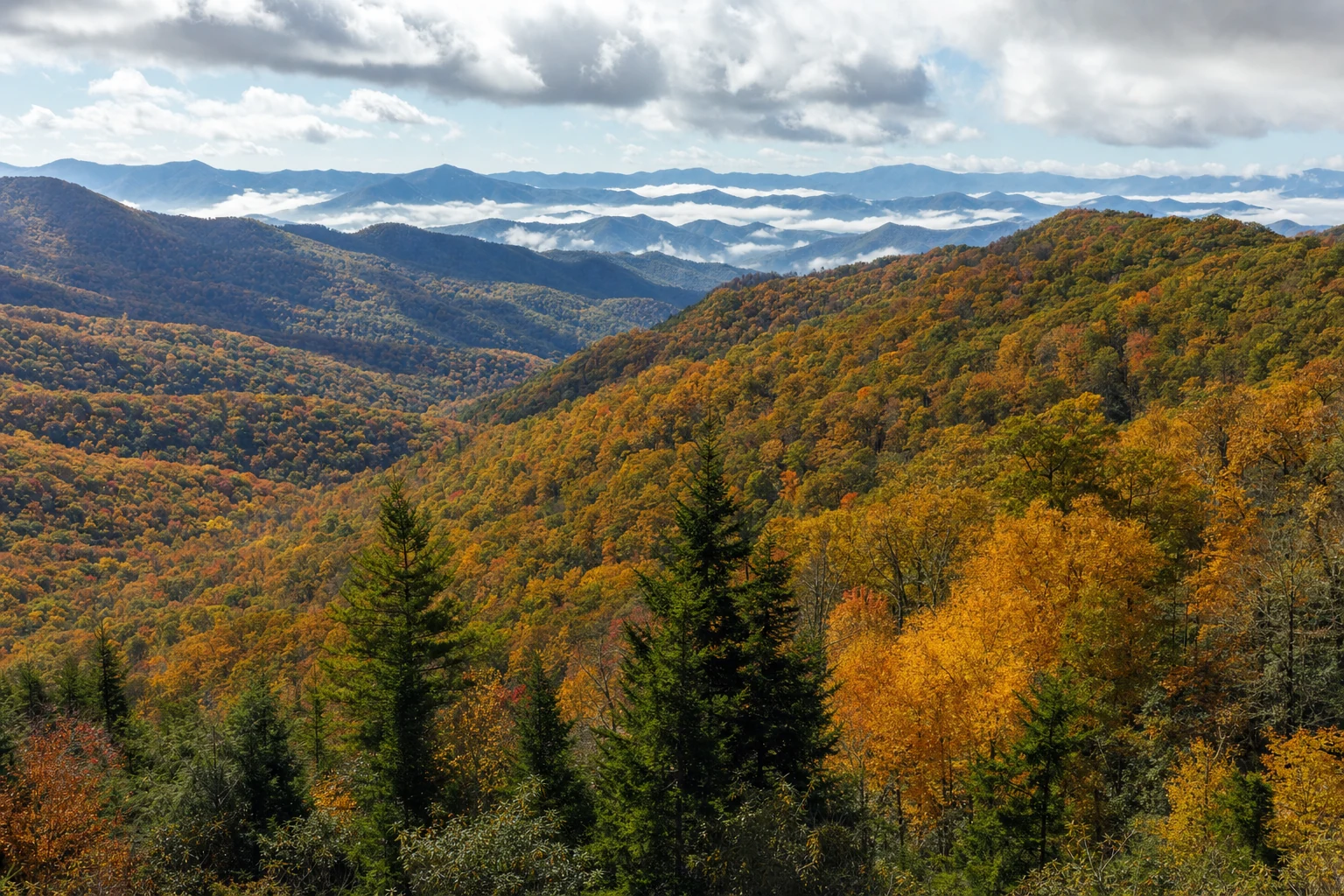
Fall is peak season for this part of the Appalachians. Foliage in the gorge usually peaks in mid-to-late October, and the panoramic view of Lake Lure from the Chimney Rock summit carries particular impact when the surrounding ridgelines are in color. That said, October weekends bring large crowds throughout the region, and this park is no exception.
Summer means heat in the gorge and the park's busiest weekend traffic. The falls can also run lower during a dry summer, reducing visual impact at the base. If you're visiting July through August, the earlier you arrive in the morning, the better your experience is likely to be.
Winter is quiet. Visitation drops sharply and you'll often have the trail to yourself. The bare-limbed forest opens up views through the canopy that disappear once the trees leaf out. The main hazard in January and February is ice on rocks and steps near the waterfall; footwear with actual traction matters more than usual.
What to bring
The easy rating and short distance encourage people to treat this like a casual walk, and the gorge will correct that assumption quickly. The trail floor holds moisture, the air near the falls stays consistently damp, and rocks remain slick from spray even on sunny days; trail runners or hiking footwear with grip are worth wearing rather than sneakers or sandals.
Carry water even on a hike this short. Mountain gorge weather changes faster than forecast apps capture, so a lightweight rain shell is worth keeping in your pack regardless of the morning forecast. Cell signal is unreliable inside the gorge, which means turn-by-turn navigation won't work reliably once you're on trail; download a map or take a screenshot before you start.
If you're bringing young children, the Hickory Nut Falls Trail is one of the more manageable waterfall hikes in the region at this distance and difficulty level. Just stay aware that the strenuous trails elsewhere in the park are genuinely strenuous; research any routes beyond the main two before you go.
Getting there from the Smokies
The park entrance and trailhead sit at 35.4340° N, 82.2510° W, and most navigation apps route accurately to this location from the Gatlinburg and Cherokee areas. Chimney Rock is further from the Smokies core than any trail inside GSMNP, so build the additional drive time into your day rather than treating it as a quick add-on to an already-full itinerary.
It works well as a dedicated day trip, or paired with time in the Lake Lure area — the lake visible from the Chimney Rock summit is just down the gorge road, and the two locations complement each other naturally. If you're based on the North Carolina side, the drive is more direct than from Gatlinburg; either way, confirm current hours at ncparks.gov before you leave.
Frequently asked questions
- How long is Chimney Rock State Park Trails?
- Chimney Rock State Park Trails is 1.4 miles one-way (2.8 miles round-trip), with modest feet of elevation gain. It is rated easy.
- Do I need a parking tag?
- Yes — a Park It Forward parking tag is required for vehicles parked more than 15 minutes anywhere inside Great Smoky Mountains National Park. Daily ($5), weekly ($15), or annual ($40) tags are available via recreation.gov or park kiosks.