
About Clingmans Dome Bypass Trail:
Now I'll write the guide using the confirmed facts (0.5 miles one-way, Moderate, Kuwohi location) and verified general knowledge about the peak and area.
---
The Clingmans Dome Bypass Trail exists because the standard route to the top of Kuwohi is a half-mile of poured concrete ramp, steep enough that many visitors turn back before they reach the observation tower. The bypass runs the same distance through the forest instead, reaching the same summit area by an unpaved alternative. It's rated Moderate and is 0.5 miles one-way, which sounds simple enough — but the elevation at this end of the park means you'll feel every step regardless of the route you take.
What This Trail Actually Does
Kuwohi (the peak's restored Cherokee name, as of 2024) sits at 6,643 feet, making it the highest point in Great Smoky Mountains National Park and the highest peak in the eastern United States outside the Appalachian chain in North Carolina and Virginia. Getting to the summit involves driving Clingmans Dome Road to the upper parking area, then hiking the final stretch on foot.
Most visitors take the paved ramp: a continuous concrete walkway that spirals steeply up to the circular observation tower. The bypass is the other option. It's a dirt trail that runs through the forest parallel to the ramp corridor, giving you the summit without the pavement. Both trails start from the same upper parking lot and end at the same place; the bypass just takes a different line through the trees to get there.
For families with kids who resist walking up a concrete slope, or anyone who wants at least a few minutes of actual forest before the crowds at the tower, the bypass is the better choice. It's not a wilderness experience — you're still 0.5 miles from a parking lot on one of the park's most visited peaks — but it's quieter, and the canopy closes over you in a way the ramp can't offer.
The Forest You'll Walk Through
The upper slopes of Kuwohi are covered in a mix of red spruce and Fraser fir, a high-elevation ecosystem that doesn't exist below about 5,500 feet in the Southern Appalachians. The Fraser firs here have been devastated over decades by the balsam woolly adelgid, an invasive insect that has killed a large portion of mature firs across the park. You'll see the gray standing snags of dead trees throughout the canopy, but you'll also see young fir regeneration coming up through the gaps they've left. It's not a dying forest so much as one in a long, complicated transition.
In wet weather — and there's plenty of it up here — the spruce-fir zone smells like a Pacific Northwest rainforest, heavy with moss and cold air. The bypass trail stays in this cover for essentially its entire length, which is a different sensory experience than spending the same 0.5 miles on open concrete.
Wildflowers are sparse at this elevation compared to lower elevations in the park. The appeal here is the forest character itself: the density of the trees, the fog that moves through frequently, the way the light filters differently than it does at 3,000 feet.
Driving Up and Parking
Clingmans Dome Road branches off Newfound Gap Road (US-441) and climbs to the upper parking area. The road is paved but narrow, with limited passing room on curves. During peak season — primarily summer weekends and October foliage — the parking lot fills early, often before 10 a.m. Arriving before 9 a.m. is a reasonable strategy if you want a parking spot without circling.
The Park It Forward tag is required for all parking inside GSMNP for stays over 15 minutes: $5 daily, $15 weekly, or $40 annually, available at recreation.gov or park kiosks. The parking area at the top has no services beyond restrooms.
Clingmans Dome Road closes every year from December 1 through March 31, or later if conditions require. Snow and ice at this elevation can persist well into spring, and the road is not maintained for winter driving. If you're visiting between December and March, you cannot drive to the trailhead at all; the trail itself would be inaccessible unless you were willing to hike the entire road distance from the closure gate, which is a serious undertaking.
When to Go
June and July bring rhododendron bloom at various elevations below the summit zone, though the peak itself is above the main rhododendron band. Summer is the busiest period; expect full parking lots by mid-morning on weekends and a crowded observation tower.
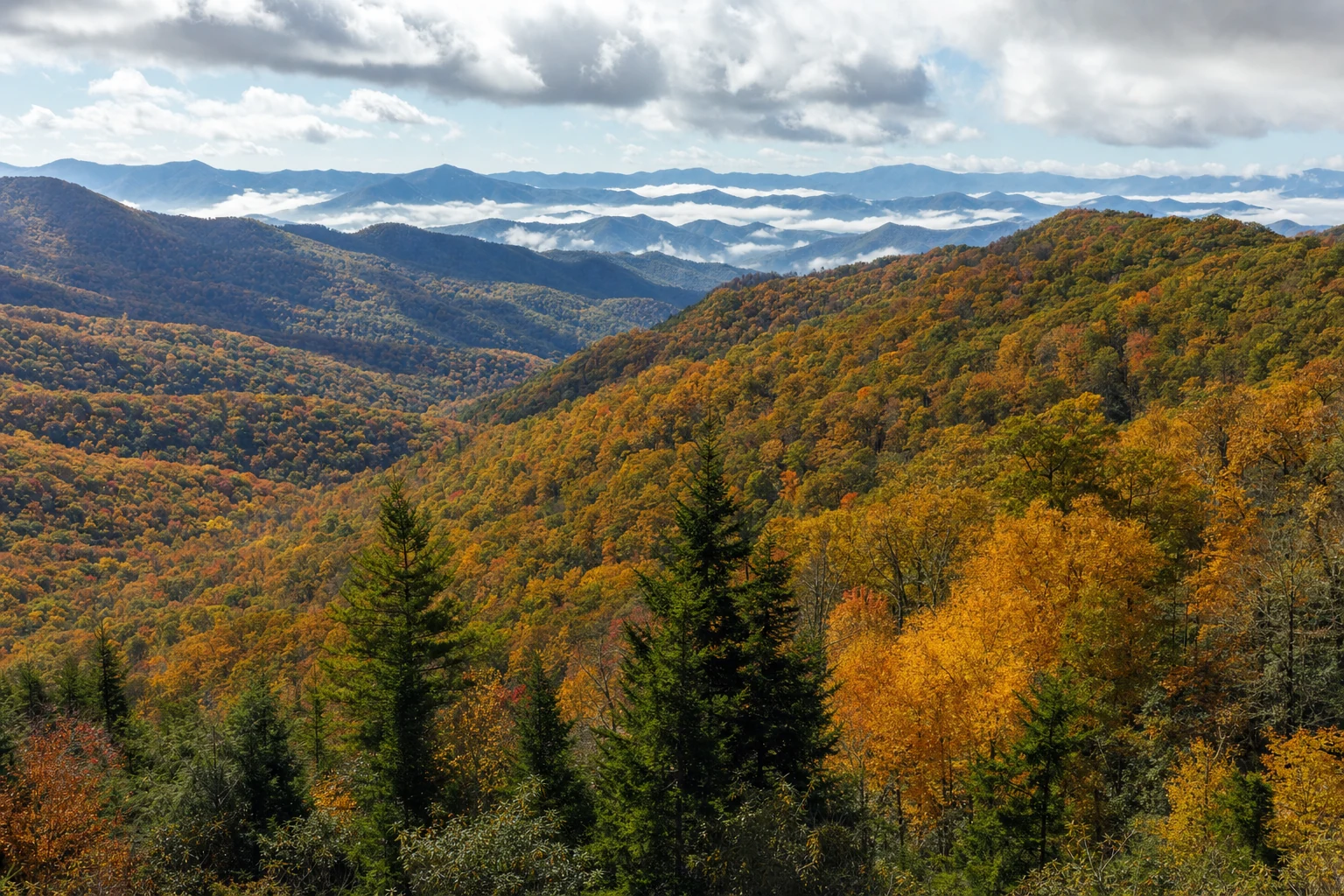
October is the foliage peak for the broader Smokies region, and the views from Kuwohi in clear weather are extraordinary — 100 miles of ridgelines stacked to the horizon on both the Tennessee and North Carolina sides. The tower sits above the forest canopy, so the panorama is unobstructed in any direction. That said, October weekends are the most congested of the year. Weekday visits in mid-October are the practical compromise.
Spring is cold at this elevation. Snow in April is not unusual. The road doesn't open until December's closure lifts, so early spring access depends entirely on NPS road conditions. Once it's open, late April through May is genuinely good: fewer visitors, cool air, and the chance to stand above a cloud deck when fog fills the valleys below.
Winter access on foot from the road closure gate is possible in theory but adds substantial distance and elevation change. This is not a casual add-on; plan accordingly and check trail conditions before attempting it.
What You'll Find at the Top
The observation tower at the summit is a concrete structure with a spiraling ramp of its own that corkscrews up to an enclosed platform above the trees. On clear days the views justify every step of the hike; on foggy days, which are frequent, you're standing in a cloud with visibility measured in feet. Both experiences are worth having, for different reasons.
The tower gets crowded. There's no way around it — Kuwohi is one of the most visited spots in one of the most visited national parks in the country. But the bypass trail at least gives you the walk up in relative quiet, and if you time your arrival for early morning, you may reach the tower before the parking lot rush.
Other Trails Starting Near Kuwohi
The bypass isn't your only option from this end of the park. Fork Ridge Trail (rated Strenuous, 4.9 miles one-way) also departs from the Kuwohi area and drops into the backcountry, a genuine contrast to the summit day-hike experience if you're looking for solitude. Miry Ridge Trail (5.0 miles one-way, also Strenuous) gives you another option for extending a visit into less-trafficked terrain. Neither is a casual add-on to a summit trip; treat them as separate objectives.
For the bypass trail itself, plan on a short outing: 0.5 miles out and the same back, with time at the tower. The elevation makes the pace feel slower than the distance suggests. Most people are at the summit and back at the car in under two hours.
Frequently asked questions
- Do I need a parking tag?
- Yes — a Park It Forward parking tag is required for vehicles parked more than 15 minutes anywhere inside Great Smoky Mountains National Park. Daily ($5), weekly ($15), or annual ($40) tags are available via recreation.gov or park kiosks.