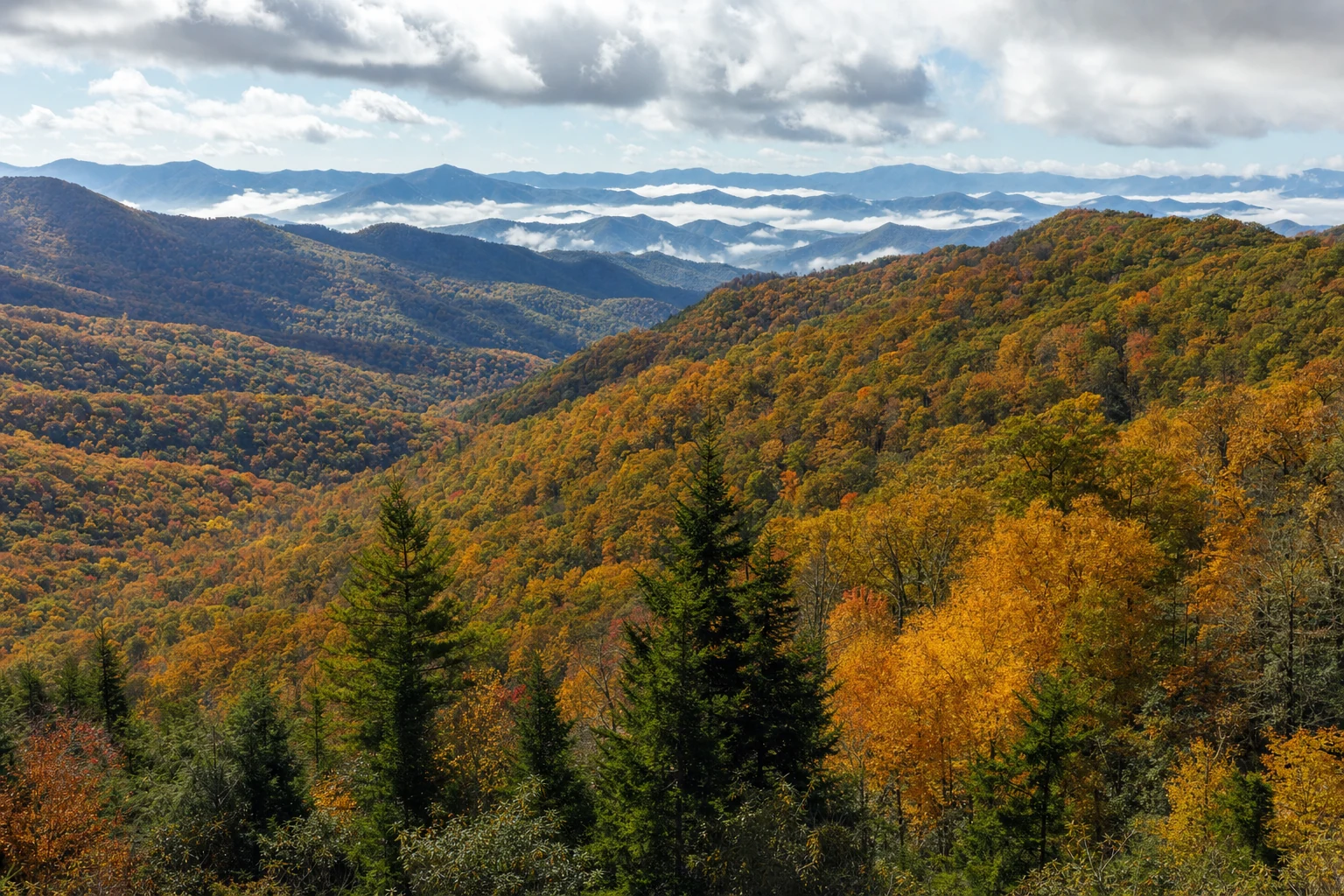

About Cold Spring Gap Trail:
Cold Spring Gap Trail runs 1.5 miles one-way through the Cosby section of Great Smoky Mountains National Park, making it a 3-mile round trip at moderate difficulty. The Cosby area sits on the park's northeastern edge, well clear of the main tourist corridor along Newfound Gap Road, and trailhead parking here rarely becomes the logistical ordeal it is at more prominent trailheads. If you've spent a morning circling the Alum Cave lot while cars queue onto the road, Cosby is a different experience entirely.
What to Expect on the Trail
The NPS moderate rating reflects genuine Appalachian terrain: rock, root, and shifting grade throughout the 3-mile round trip. You're not scrambling, but worn trail shoes won't do you any favors. Hiking boots with ankle support and grip handle the surface changes far better than road runners.
The trail's name is actually informative. In Appalachian geography, a "gap" is a saddle or pass in a ridgeline, historically used as a travel corridor through terrain that would otherwise require going over the full crest. Cold Spring Gap is one such passage, and the cold spring for which it's named sits near the high point of the route. Springs at elevation run notably cold even in July, when valley temperatures in Gatlinburg are pushing into the 90s; reaching that gap mid-hike provides a real temperature shift rather than a symbolic one.
The trail is short enough that most hikers finish the round trip well within half a day, which makes it stackable with one or two other Cosby-area trails on the same visit.
The Cosby Area
Cosby occupies the northeastern corner of the park, reached from Gatlinburg by heading east on US-321 and then north on TN-32. The main visitor pipeline follows US-441 through Gatlinburg to Newfound Gap, and the majority of park visitors stick to that corridor. Cosby gets a fraction of the foot traffic, which has practical consequences: parking is manageable, the forest sounds like forest rather than a trailhead, and you can actually spread out.
Cosby Campground anchors the area and serves as the launch point for several trailheads nearby. If you're building a multi-day trip around hiking this part of the park, camping at Cosby saves you the daily drive from Gatlinburg and puts you within walking distance of the trailhead network. Cosby Campground is also consistently quieter than Elkmont or Cades Cove, consistent with the area's overall character.
Connecting Trails
Cosby concentrates a solid cluster of NPS trails, which makes it worth a dedicated visit rather than a single out-and-back excursion. For moderate options nearby, Salt House Branch Trail (2.0 miles one-way) and Indian Grave Gap Trail (2.0 miles one-way) are both accessible from the same general area. The Cosby Nature Trail (1.0-mile loop, easy) near the campground works well as an opener or a wind-down walk.
If you want to push harder, the area also has genuinely strenuous trails. High Rocks Trail and Roundtop Trail are both 2.0 miles one-way and rated strenuous. Firescald Ridge Trail goes 4.5 miles one-way and is the serious all-day option in this section of the park. Chestnut Branch Trail (2.0 miles one-way, moderate) and Turkeypen Ridge Trail (3.0 miles one-way, moderate) round out the mid-range options. The density of routes here means you can build a full Cosby day without driving between multiple entrances.
Best Time to Visit
Cold Spring Gap Trail is accessible across most of the year, with the standard high-elevation caveats.
Spring runs March through May and brings wildflowers through the hollows and streams running fast from snowmelt. Trail surfaces can be muddy in early spring and stream crossings higher than expected; waterproof boots earn their keep. The forest is actively waking up, which makes it worth the mud.
Summer mornings are the window. Start before 9 a.m. if possible; heat builds through the afternoon even at Cosby's elevations, and the trail gets more comfortable the earlier you start. The cold spring at the gap provides a genuine break on the return leg.
Fall peaks around mid-October at this elevation, when the hardwoods turn. The Cosby corridor's forest mix produces good color with far fewer people than the Newfound Gap Road viewpoints. For anyone who's been to the Smokies in October and spent more time sitting in traffic than looking at leaves, this side of the park is worth knowing about.
Winter is workable but requires preparation. The trail doesn't reach the highest elevations where ice closes roads and creates serious hazards, but wet rock and root surfaces ice without warning, and the cold is real. Proper layering and microspikes in the pack are reasonable precautions from December through February.
Getting There and Parking
From Gatlinburg, take US-321 East to TN-32 North and follow TN-32 into the Cosby area of the park. Trailhead parking in this section is connected to the Cosby Campground area; check nps.gov/grsm for current access information before your visit, as trailhead details can change seasonally.
A Park-It-Forward parking tag is required anywhere in Great Smoky Mountains National Park for stays over 15 minutes. Daily tags run $5, weekly $15, annual $40; buy via recreation.gov or park kiosks. The tags apply to all GSMNP trailheads, Cosby included. Cell service in Cosby is unreliable, so purchasing your tag before you leave town is the practical move.
Know Before You Go
Carry more water than you expect to need, and plan to treat or filter any water from the spring at the gap rather than drinking it directly. Mountain weather in the Smokies shifts quickly, often without the forecast signaling it; a rain layer and warm layer belong in your pack regardless of morning conditions. Cell coverage in the Cosby area is poor to absent, which affects navigation and emergency communication both.
Black bears are present throughout the park and relatively common in lower-traffic areas like Cosby. Maintain at least 50 yards of distance, make noise on the trail to avoid surprise encounters, and store all food in a bear canister or hard-sided container. Leaving anything scented in your vehicle is not a safe alternative.
The surface conditions on this trail reward traction. Hiking boots handle the wet rock and root far better than trail runners, and trekking poles reduce knee strain on the descent without adding meaningful weight to your pack.
Frequently asked questions
- Do I need a parking tag?
- Yes — a Park It Forward parking tag is required for vehicles parked more than 15 minutes anywhere inside Great Smoky Mountains National Park. Daily ($5), weekly ($15), or annual ($40) tags are available via recreation.gov or park kiosks.