
About Conasauga River Trail (Cohutta Wilderness)
The Conasauga River Trail is 13.5 miles of river-level hiking through the Cohutta Wilderness, where the trail stays close to the water for essentially the entire route. That kind of minimal elevation gain sounds deceptively easy until you realize what replaces the climbs: a continuous series of river fords, rated moderate primarily because you'll cross the Conasauga multiple times and there's no footbridge anywhere on the route. Point-to-point logistics add another layer of planning — you'll need two cars or a shuttle arranged before you start.
What you're signing up for
The Conasauga River Trail follows its namesake through some of the most isolated terrain in the southern Appalachians, and because the route sticks to the river corridor rather than climbing ridges, the views stay green and close-in: dense canopy, moss-covered boulders, the constant sound of moving water. This isn't a summit trail. It won't deliver open panoramas. The reward is something else entirely — genuine solitude and a river that biologists consider one of the most fish-diverse waterways in the eastern U.S., home to a striking number of native species in a stream that still runs clear.
The 13.5 miles in a single direction is real hiking. At a normal trail pace with rest stops and ford time, plan on six to eight hours. Anyone who underestimates the crossing count has had a long, wet day.
The river crossings
Multiple fords isn't a softener. The crossings define this route, and they determine whether the trail is passable on any given day. After heavy rain or during snowmelt, the Conasauga rises fast; some crossings can reach thigh depth with real current. Spring is genuinely risky for inexperienced ford-crossers during high water. Summer typically brings the lowest and clearest water, which is exactly when most hikers time their trips.
Bring trekking poles. Wear shoes you don't mind soaking repeatedly — many hikers use trail runners and accept wet feet; others carry lightweight water shoes for crossings and change back on the bank. Sandals alone are a bad idea on the rocky riverbed. If you arrive at a crossing and the water looks too high to read the bottom clearly, that's the signal to turn back.
Point-to-point planning
The trail runs from Betty Gap Trailhead (34.9900° N, 84.5600° W) to the opposite end, which means you finish at a different location than you started. That requires two vehicles parked at each end, or a shuttle arrangement made the day before. Most hikers driving from Gatlinburg sort the vehicle logistics the night prior; confirm both trailhead locations with current USDA Forest Service maps because GPS apps sometimes have outdated road information for this area.
The trail sits within the Cohutta Wilderness, managed by the Cherokee National Forest. No day-use parking fee applies at Betty Gap itself, but verify current access requirements with the Forest Service before you go since wilderness regulations do get updated. There's no cell service on the trail, so download offline maps before leaving the trailhead.
Getting there from Gatlinburg
Gatlinburg is the nearest major hub, and the drive into the Cohutta Wilderness requires navigating a stretch of Forest Service road before reaching Betty Gap. Allow extra time for the approach; these roads are paved in sections and gravel in others, and a vehicle with reasonable ground clearance is strongly preferred. The drive adds time that many hikers don't account for when planning start times.
Start early regardless. River crossings are easier to judge in morning light, afternoon thunderstorms are a steady pattern through summer, and you don't want to be finishing a 13.5-mile point-to-point after dark.
When to go
Summer — June through early September — is the most reliable window for passable crossings and clear water. The trail is quieter than any park frontcountry, but weekends in July and August still draw hikers who know about it. Arrive at the trailhead by 7 a.m. if you want a relaxed pace.
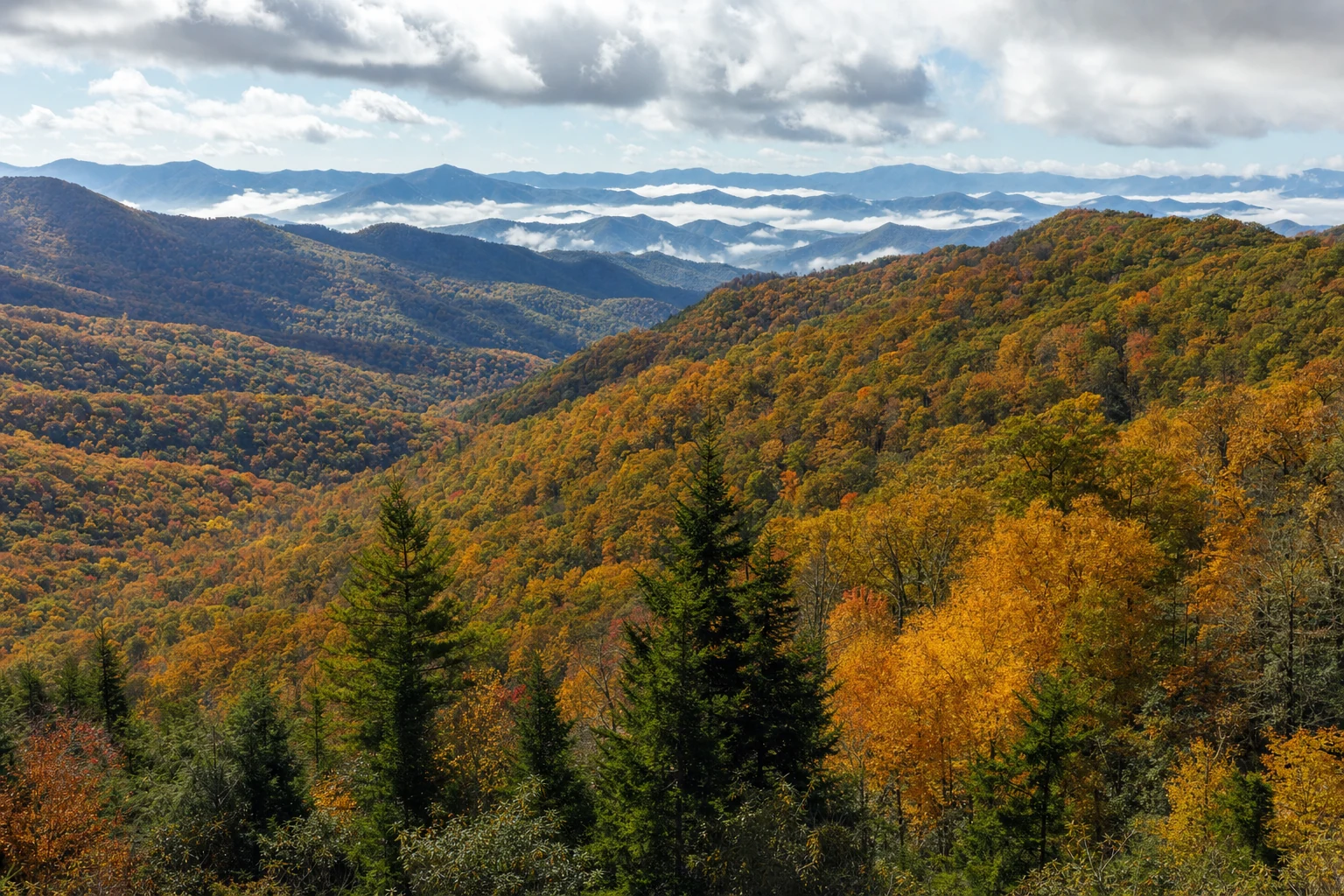
Fall brings lower water and cooling temperatures that make the miles feel shorter. Foliage in this river corridor runs a week or two behind the upper-elevation Smokies peaks, typically hitting mid-to-late October. The color is dense and close, the kind you walk through rather than look at from a distance.
Spring is complicated. April wildflowers along the river are worth the drive, but snowmelt runoff can make crossings unpredictable week to week. Check flow data for the Conasauga at the nearest USGS gauge before committing.
Winter visits belong to experienced hikers only. Water temperatures become a serious risk at a crossing slip, ice forms on rocks at every approach, and the Forest Service roads to the trailhead may be closed or require chains. The solitude is total, though.
What to carry
Water from the river is abundant but requires treatment; bring a filter rated for multiple fills over a full day. Pack food beyond what you think you'll need. The flat terrain makes it tempting to move faster than your body is actually working, and bonking at mile nine of a 13.5-mile point-to-point is a miserable situation.
A dry bag or waterproof liner for your electronics and dry layers isn't optional on a trail with this many crossings. A basic first aid kit, a whistle, and a paper map round out the essentials. The nearest cell signal is well off the trail, and the wilderness designation means no motorized rescue access on first response — self-sufficiency here isn't a talking point, it's the actual situation.
Frequently asked questions
- How long is Conasauga River Trail (Cohutta Wilderness)?
- Conasauga River Trail (Cohutta Wilderness) is 13.5 miles one-way, with modest feet of elevation gain. It is rated moderate.
- Do I need a parking tag?
- Yes — a Park It Forward parking tag is required for vehicles parked more than 15 minutes anywhere inside Great Smoky Mountains National Park. Daily ($5), weekly ($15), or annual ($40) tags are available via recreation.gov or park kiosks.