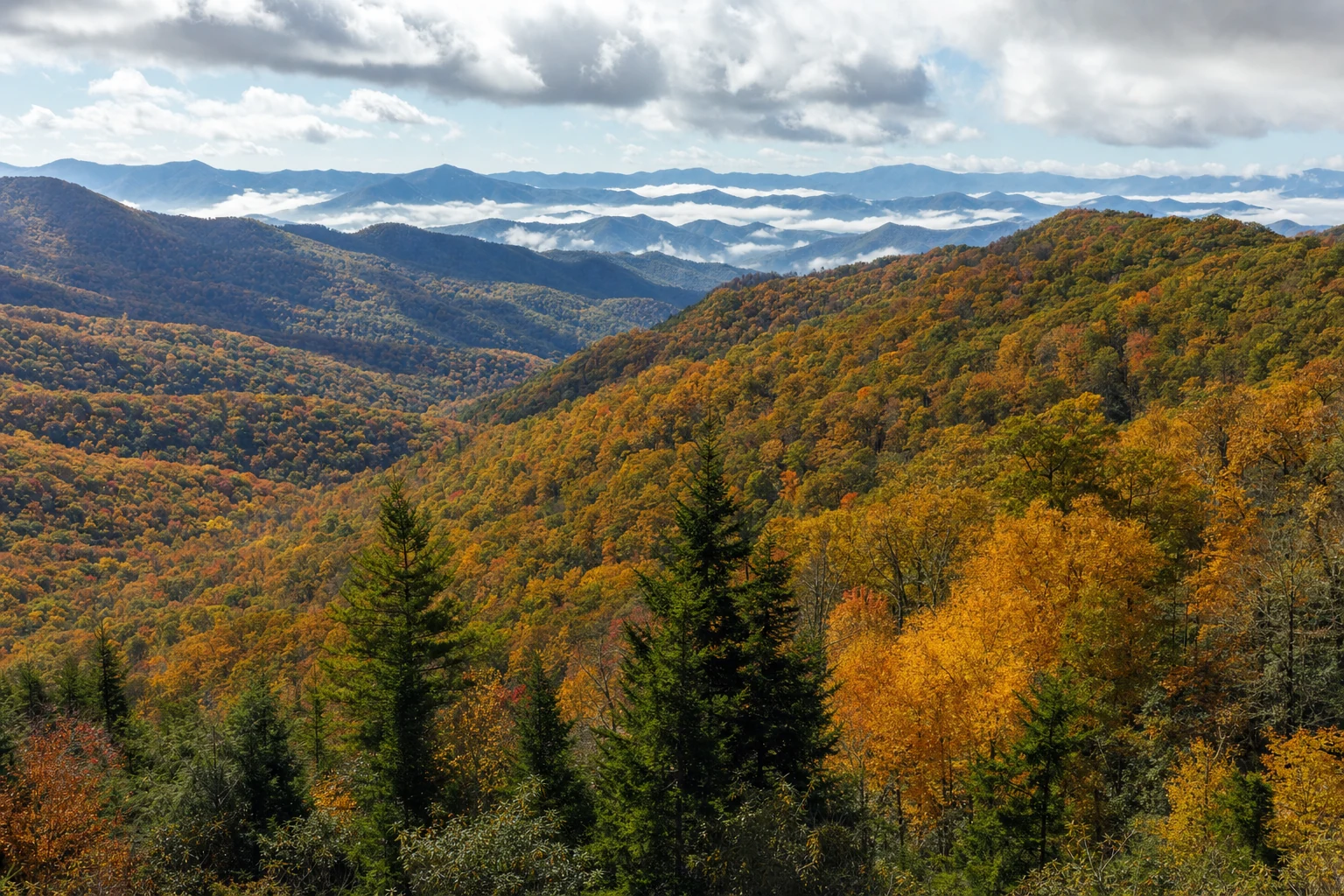

About Dry Sluice Gap Trail:
The Dry Sluice Gap Trail is a 2.5-mile one-way climb from the Newfound Gap Road corridor to the main Appalachian Trail ridge on the Smokies spine. The strenuous rating is earned — the route packs real vertical into those miles, making the round trip a committed half-day or full-day effort. It draws hikers willing to work for ridgeline access and the relative solitude that comes with a trail that asks something real of you.
What the Trail Is Like
The trail climbs through the high-elevation forest typical of this part of the park, where spruce and fir take over from the lower hardwood zones as the grade steepens. At 2.5 miles one-way, the full round trip runs 5 miles, and the strenuous classification means you should be honest about your fitness before committing. This is not a trail where the first mile fools you into thinking it stays easy. The grade is sustained, and by the time you reach Dry Sluice Gap at the AT, the climb has made itself fully known.
The gap sits on the main Smokies ridgeline, where the Appalachian Trail runs the boundary between Tennessee and North Carolina. Reaching that crest gives a tangible sense of the range's scale — long views when weather cooperates, the kind that remind you how much ground you've covered vertically.
Who This Trail Suits
Fit hikers with experience on strenuous mountain terrain will get the most out of this route. A 5-mile round trip with sustained climbing demands solid conditioning and footwear with real ankle support. Casual walkers or families with young children are better served by other trails in the Newfound Gap Road corridor — Kephart Prong Trail (4.2 miles out-and-back, moderate, with a historic CCC camp along the way) and Cataract Falls (0.25 miles, easy) are both accessible from the same general area and offer genuine reward with far less physical demand.
For experienced hikers, Dry Sluice Gap is a solid option when you want genuine backcountry feel without committing to the full Charlies Bunion route (8 miles out-and-back from Newfound Gap, also strenuous). It also works as a connector for those putting together longer ridge walks on the AT.
Getting to the Trailhead
The trailhead accesses from the Newfound Gap Road corridor, the main road that cuts through the park between Gatlinburg and Cherokee, North Carolina. A Park It Forward parking tag is required for any stay over 15 minutes inside Great Smoky Mountains National Park — daily tags are $5, weekly $15, and annual $40, available through recreation.gov or park kiosks. The park charges no entrance fee, but the parking requirement is mandatory and enforced.
Parking along Newfound Gap Road fills early on summer weekends and fall foliage weekends. Arriving before 9 a.m. gives you a real margin. If you arrive mid-morning and the nearest pullout is full, you may end up adding distance just to reach the trailhead.
What to Carry
Newfound Gap Road sits at high elevation, and the trail climbs higher still. Mountain weather along the Smokies crest shifts fast — a clear morning can turn to a full storm in under an hour, particularly in summer. Pack a rain layer and an insulating layer regardless of the morning forecast, and carry more water than you think you'll need. There are no reliable water sources on a day hike of this length, and sustained climbing depletes hydration faster than flat walking.
Trekking poles are genuinely useful on the descent, especially when footing is wet. Wear boots or shoes with real grip and ankle support. Cell coverage is poor to nonexistent along much of Newfound Gap Road and the adjoining trail system, so tell someone your plan and your expected return time before you go.
Bears and Wildlife
Black bears are active throughout the park year-round. Keep at least 50 yards of distance from any bear you encounter, and do not approach or attempt to feed them under any circumstances. Store food, trash, and scented items out of sight inside a hard-sided vehicle — not in the trunk, but locked inside the cab — or use a bear canister if you're camping. Bear sightings in the Smokies are frequent enough that treating bear awareness as routine trail preparation, rather than an edge case, is the right frame.
The high-elevation spruce-fir zone also hosts bird species not commonly found at lower elevations. The ecology near the ridgeline is distinct from the cove hardwood forests closer to the valley, and the transition from one zone to the other is one of the things this trail does well.
Best Times to Go
Late spring brings wildflowers to the lower approach and the full force of snowmelt keeps streams high. Early summer offers long daylight and full canopy, though afternoon thunderstorms are common from June through August — plan to reach the trailhead before midday if you're hiking during storm season. Fall is peak season for the park overall, but strenuous trails see substantially less pressure than accessible overlooks and loop roads; the hardwood color on the main ridge peaks a bit earlier than at lower elevations.
Winter returns the trail to the few who seek it out. Ice is a real hazard on steep sections, and Newfound Gap Road can close temporarily after snow or ice events. Check NPS road conditions at nps.gov/grsm before heading out in cold months. In return, winter hikers get uncrowded trails and, on the right days, ice-rimed trees along the crest that look nothing like any other season.
Nearby Trails Worth Pairing
The Newfound Gap Road corridor gives you a range of options within close range:
- Charlies Bunion (via AT from Newfound Gap): 8 miles out-and-back, strenuous — the landmark rocky promontory on the AT ridge, reached directly from the Newfound Gap parking area.
- Sweat Heifer Creek Trail: 4.5 miles one-way, strenuous — another demanding route in the same corridor.
- Kephart Prong Trail: 4.2 miles out-and-back, moderate — stream-side walking through forest with visible remnants of a CCC camp; a good option if the group includes mixed abilities.
- Road Prong Trail: 2.7 miles one-way, strenuous — nearby and similarly demanding for hikers who want variety on a longer day.
Frequently asked questions
- Do I need a parking tag?
- Yes — a Park It Forward parking tag is required for vehicles parked more than 15 minutes anywhere inside Great Smoky Mountains National Park. Daily ($5), weekly ($15), or annual ($40) tags are available via recreation.gov or park kiosks.