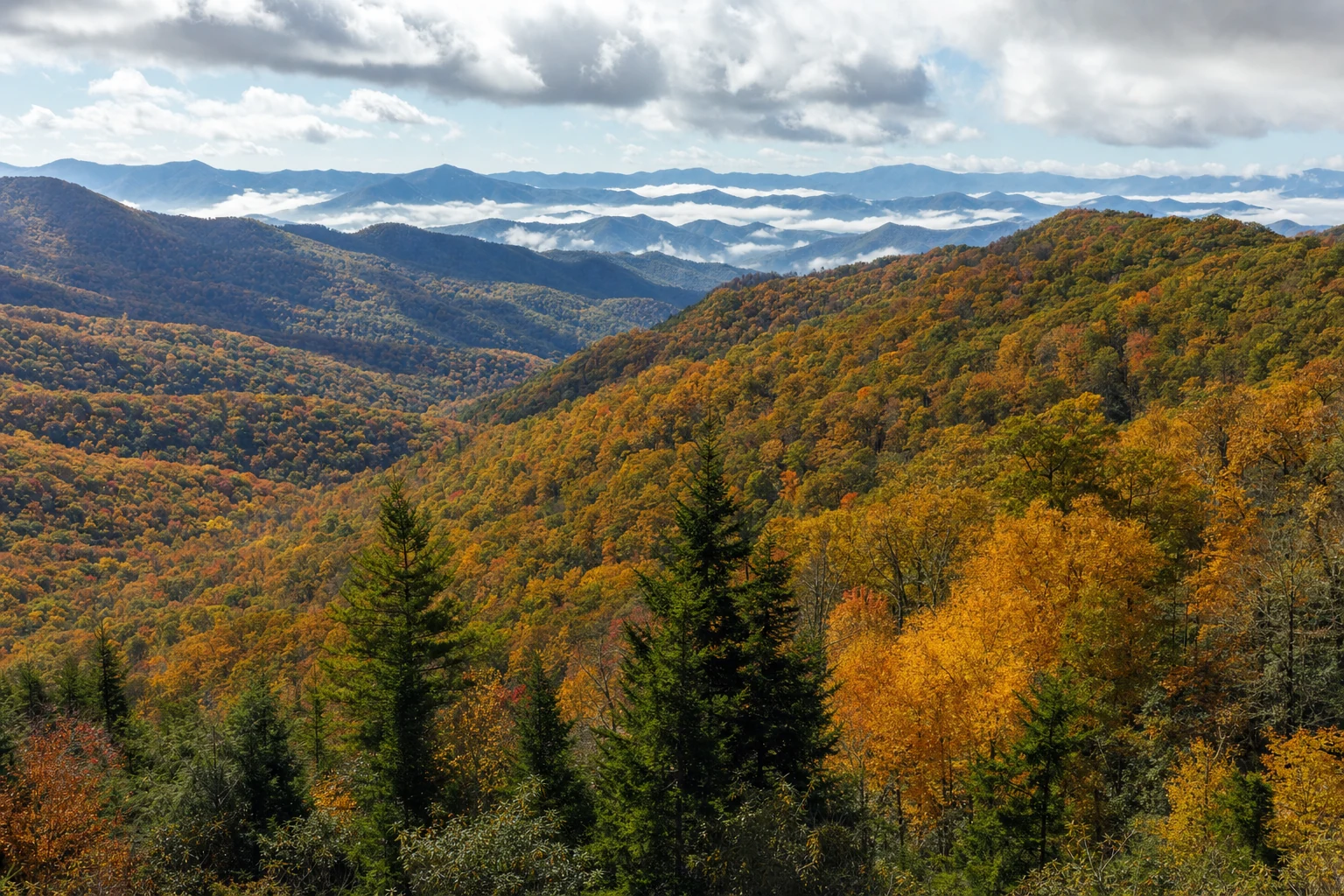

About East Fork Trail:
East Fork Trail runs 3.5 miles one-way through the Cataloochee drainage on the eastern end of Great Smoky Mountains National Park, rated Moderate by the NPS. Getting here takes more effort than most park trails — the access road is narrow, winding, and long enough to filter out the casual day-trippers who fill the western entrances — and that's a meaningful part of the appeal.
Trail at a Glance
Distance: 3.5 miles one-way (7.0 miles out-and-back if you retrace the route) Difficulty: Moderate (NPS rating) Location: Cataloochee area, GSMNP Managed by: National Park Service
What the Hike Is Actually Like
The trail follows the East Fork of Cataloochee Creek through a shaded hardwood drainage — you're hiking alongside moving water for most of the route, with a forest floor that stays cool even in August. The terrain is natural earth and rock throughout; there are stream crossings, and in late winter or spring when snowmelt keeps the creek running hard, those crossings require careful footing. Trekking poles help on the wet stretches.
At 3.5 miles one-way, a full out-and-back takes most hikers between three and four hours depending on pace. The Moderate rating is accurate: the elevation gain is real but not relentless, and the footing is demanding in spots without crossing into technical territory. What you get is sustained forest walking in a drainage that doesn't see nearly the foot traffic of the park's popular Tennessee-side trails.
The Cataloochee Context
Cataloochee is one of the more remote sections of GSMNP, and the access road reflects that. Plan for slow driving on the final miles regardless of what your map app shows; some routing software picks roads that aren't suitable for standard vehicles in wet conditions. Leave extra time.
The valley itself holds a collection of standing historic structures from the farming families who lived here before the park was established — barns, farmsteads, a church that still stands. These aren't on East Fork Trail directly, but they're worth a walk-through before or after the hike, and they add weight to what could otherwise be a purely athletic day.
Cataloochee is also one of the few places in the eastern United States where elk roam in significant numbers. The herd uses the open meadows in the valley, particularly at dawn and dusk. If elk are on your list, build time into your day for sitting still in the meadows, not just walking trail; hiking past at midday and expecting to see them is usually a miss.
Combining East Fork with Other Cataloochee Trails
Making the drive out here for one trail is worth it on its own merits, but the valley has several other NPS routes that can turn a half-day into a full one:
- Flat Creek Trail — 2.0 miles one-way, Moderate. A shorter, complementary route at the same difficulty level that works well as a second option.
- Bearpen Hollow Trail — 1.8 miles one-way, Moderate. Short enough to tack onto either end of East Fork without significantly extending your day.
- Hog Camp Gap Trail — 3.5 miles one-way, Moderate. Matches East Fork in length and effort; combining both makes for a long day, but it's doable for fit hikers who want to maximize the drive.
None of these connect to East Fork as a formal loop, so you're looking at out-and-back combinations rather than a circuit. That said, doubling up on two moderate routes here means fewer shared trail sections than a comparable day on the more crowded western side of the park.
When to Go
Fall is when Cataloochee earns its reputation. Peak foliage in this part of the Smokies typically runs mid-October, and the elk rut overlaps with the color peak — bulls are vocal and visible in the meadows, the hardwoods are turning, and the parking situation is still manageable compared to overlooks on Newfound Gap Road. A weekday visit during October is worth rearranging a schedule for.
Spring brings wildflowers through the creek drainage before the canopy fully closes, allowing light to reach the forest floor where trout lily and trillium appear. The stream runs full from snowmelt, which means the crossings are more demanding than later in the season; plan accordingly.
Summer hiking along East Fork is genuinely comfortable relative to open-ridge routes because the tree cover is dense and the creek keeps temperatures down. Still, arrive early on weekends; Cataloochee sees less traffic than Cades Cove, but summer still fills the limited parking.
Winter brings near-complete solitude and long sightlines through the bare forest. The catch is that the Cataloochee access road can be gated during snow events or hazardous conditions. Check NPS road status before making the drive — arriving to a locked gate after 40 minutes of winding mountain road wastes a day.
Getting There and Parking
Cataloochee is accessed from the east, off Interstate 40, not from Gatlinburg or the Sugarlands entrance. GPS will get you there, but double-check the specific road it selects; some alternatives involve unpaved sections that aren't reliable in all conditions. Budget more driving time than the map estimate suggests for the final approach.
Parking at the trailhead is limited. A Park It Forward tag is required for any vehicle staying more than 15 minutes anywhere in GSMNP. Purchase one at recreation.gov, park entrance kiosks, or the Oconaluftee Visitor Center: $5 daily, $15 weekly, $40 for an annual pass. On busy fall weekends, arriving before 8 a.m. is the practical difference between parking at the trailhead and walking an extra mile before your hike even starts.
What to Bring
Cell coverage in Cataloochee is poor to nonexistent. Download offline maps before you leave and share your trailhead arrival time with someone back home.
Carry more water than you expect to need. The creek runs alongside the trail, but untreated backcountry water requires filtration, and stopping to filter mid-hike adds time you may not have budgeted. A rain layer and a warm layer belong in the pack regardless of the morning forecast; afternoon thunderstorms are common in summer, and temperatures drop faster at elevation than most first-time visitors expect.
Footwear with ankle support and real traction matters here more than on paved park roads. Creek crossings and wet rock are where rolled ankles happen, and Cataloochee's remoteness means help is not nearby if something goes wrong.
Black bears are active throughout GSMNP, and East Fork's creek drainage is exactly the habitat they use. Keep 50 yards of distance, store food properly, and make enough noise on the trail that a bear hears you coming first. Encounters are possible; situational awareness is not optional.
Frequently asked questions
- Do I need a parking tag?
- Yes — a Park It Forward parking tag is required for vehicles parked more than 15 minutes anywhere inside Great Smoky Mountains National Park. Daily ($5), weekly ($15), or annual ($40) tags are available via recreation.gov or park kiosks.