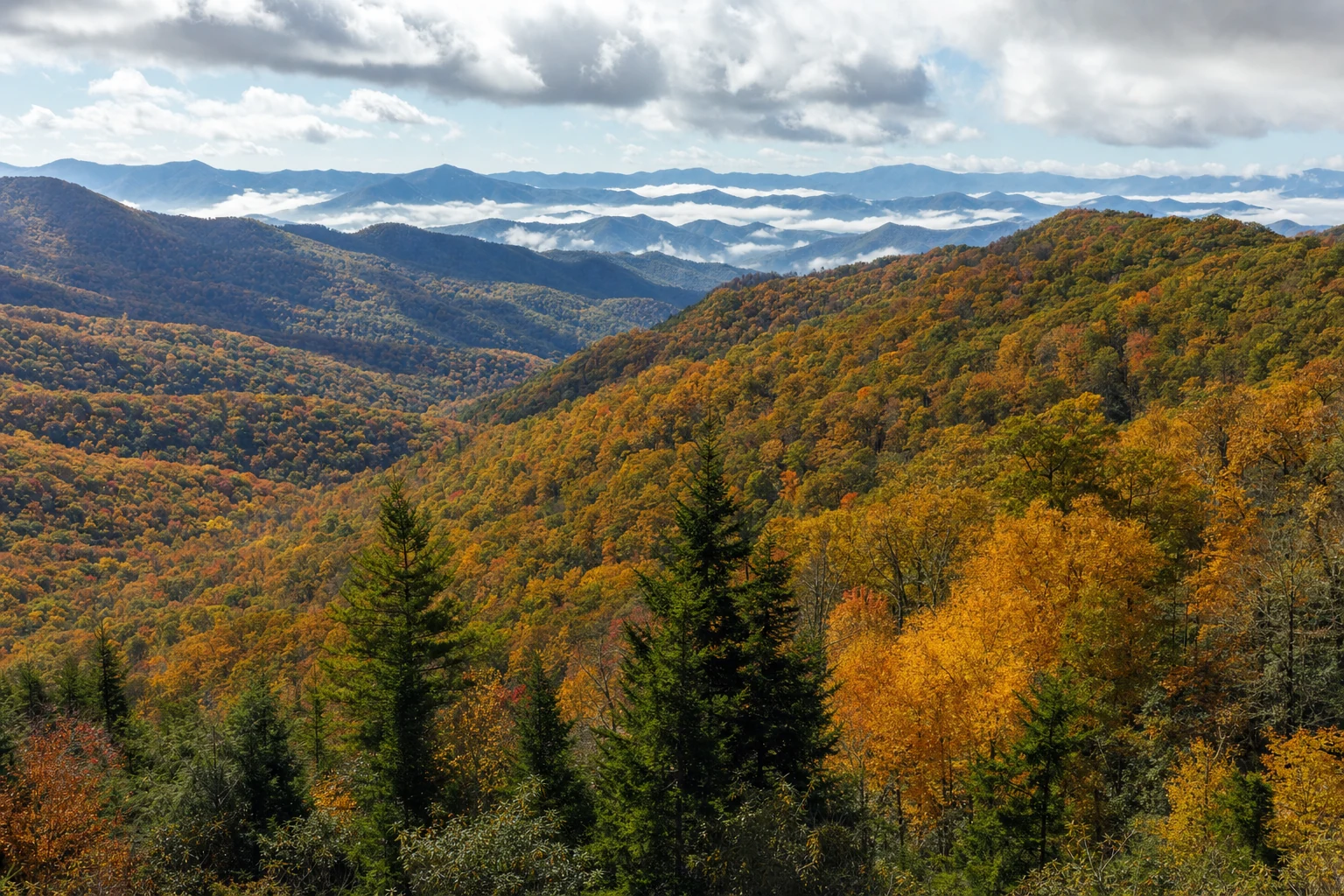

About Ekaneetlee Gap Trail:
Ekaneetlee Gap Trail pushes into one of the least-traveled corners of Great Smoky Mountains National Park, starting from the Twentymile area along the park's southwestern edge. The trail runs 3.0 miles one-way and earns its Strenuous rating honestly — this is a climb, not a stroll, and the remoteness of the Twentymile district means you'll share the trail with far fewer people than you'd encounter near Gatlinburg or Sugarlands.
The Trail at a Glance
The fundamentals: 3.0 miles one-way, Strenuous, managed by NPS, accessed from the Twentymile area. For a round-trip, budget 6 miles total with the elevation gain concentrated on the way out. The gap itself gives the trail its destination — you're climbing through forested ridgeline terrain toward a saddle between peaks, the kind of hike where progress is measured in altitude as much as distance.
The difficulty is real. Strenuous in the Smokies typically means sustained grade with little flat relief, and Ekaneetlee Gap follows that pattern. Fit, experienced hikers with good footwear will manage it well. Casual walkers looking for a shorter forest walk should consider the nearby Panther Creek Trail instead — also in the Twentymile area, 2.0 miles one-way, rated Moderate — which covers similar terrain without the demanding climb.
Twentymile: The Park's Quiet Corner
Twentymile sits at the southwestern end of GSMNP, far removed from the Gatlinburg tourism corridor. Where Sugarlands and Roaring Fork draw steady traffic, Twentymile operates at a different pace. On a weekday in any season outside peak fall color, you may see only a handful of other cars at the trailhead. That solitude is the primary reason to choose this trail over more accessible options with similar character elsewhere in the park.
NPS documents three trails in this district: Ekaneetlee Gap Trail (3.0 mi, Strenuous), Wolf Ridge Trail (3.0 mi, Strenuous), and Panther Creek Trail (2.0 mi, Moderate). Hikers who want a longer day can combine routes, though connector navigation requires a current NPS topo map and some backcountry experience. Check with the Twentymile Ranger Station for current conditions before linking trails.
What the Hike Feels Like
The Smokies' southwestern slopes receive heavy rainfall, and that moisture shows in the vegetation. Expect old-growth forest character: thick canopy, dense understory, and the kind of damp quiet that makes distance feel different from exposed ridgeline hikes elsewhere in the park. The climb toward the gap moves through this forest before reaching gap terrain, where the mix of hardwoods and higher-elevation conifers shifts as you gain altitude.
Stream crossings may be present depending on season and recent rainfall — water levels run highest in spring and after significant rain. Crossing on slick, wet rock when flow is high is the kind of hazard that turns straightforward situations serious. Check trail conditions at a park visitor center or ranger station before heading out if there's been recent precipitation.
The gap itself serves as the natural turnaround for out-and-back hikers. Views from mountain gaps in the Smokies vary widely — some open onto long ridgeline sightlines, others stay forested. Plan for the climb and the quiet to be the reward, rather than counting on a specific overlook.
Getting There and Parking
Access is via the Twentymile Ranger Station area in the park's southwestern corner. The drive from Gatlinburg takes roughly 45 minutes to an hour depending on your approach through the park or around it via US-74 and US-129 on the North Carolina side.
A Park-It-Forward parking tag is required for any stay over 15 minutes inside GSMNP. Tags cost $5 per day, $15 per week, or $40 for an annual pass — available at recreation.gov, park entrance kiosks, and some visitor centers. Keep the tag visible on your dashboard. Twentymile is a backcountry-oriented area with minimal developed infrastructure; cell service is effectively nonexistent, so download the NPS trail map and any navigation files before leaving the car.
If you're planning an overnight, NPS requires a free backcountry permit obtained in advance through the park's permit system online or at a visitor center. Day hikers need no permit beyond the parking tag.
Best Time to Go
Spring is strong here. The Twentymile watershed runs high with snowmelt and April rainfall, wildflowers are genuine in the forest understory, and trailhead crowds are the lightest of any high-use season. The tradeoff is muddy, sometimes slippery conditions underfoot — especially on the steeper sections.
Summer brings full leaf-out and shade on the ascent, which matters on a sustained climb. The downside is afternoon thunderstorms that develop fast in the Smokies. Start early and aim to be back at the trailhead before the weather builds, typically early afternoon.
Fall foliage peaks around mid-October at park elevations. The Twentymile corridor gets genuine color, and the difference from Sugarlands is that you'll be looking at it without competing for trail space. It's the best combination of scenery and solitude the park offers.
Winter is viable for experienced hikers with appropriate gear. Ice on higher sections near the gap is possible from December through February, and temperatures at elevation drop well below what you'll see at the trailhead. Microspikes or traction devices are worth packing. The trail sees almost no traffic in winter, which adds both appeal and risk — plan accordingly.
Pairing This Trail
If you're making the drive to Twentymile specifically, it's worth maximizing the day. Panther Creek Trail (2.0 miles, Moderate) uses the same access point and gives you a lower-stakes option to run first before tackling Ekaneetlee Gap, or to wind down afterward. Wolf Ridge Trail (3.0 miles, Strenuous) matches Ekaneetlee Gap in distance and difficulty and suits hikers who want a full-effort day in this corner of the park.
For a different experience on the same trip, Deep Creek — with its waterfall walks and summer tubing — is within driving distance and offers a contrast to the hard climbing of the southwestern trails.
Safety and Preparation
Black bears are active throughout GSMNP, including Twentymile. Keep at least 50 yards of distance, make noise on the trail so you don't surprise animals, store all food and scented items properly, and never feed or approach wildlife. The Twentymile area's remoteness means any rescue response takes significantly longer than at developed park areas — let someone know your planned route and expected return before heading out.
Carry more water than you think you'll need. The climb will push your effort beyond what 6 miles might suggest, and mountain humidity doesn't make it easier. Pack a rain layer and a warm layer regardless of the forecast — conditions at gap elevation can shift fast from what you see at the trailhead.
Frequently asked questions
- Do I need a parking tag?
- Yes — a Park It Forward parking tag is required for vehicles parked more than 15 minutes anywhere inside Great Smoky Mountains National Park. Daily ($5), weekly ($15), or annual ($40) tags are available via recreation.gov or park kiosks.