
About Foothills Parkway Trails (various sections, e.g., Look Rock)
Now I'll write the page body using the anti-slop directive with the loaded banned words list.
---
Look Rock Tower Trail is not a hike you choose when you want a workout. You choose it when you want the view, and you want it without spending half a day earning it. One mile round-trip, 100 feet of total elevation gain, rated easy, with an observation tower waiting at the turnaround point — it's the trail that actually delivers what people picture when they imagine standing above the Smokies.
Trail at a glance
The trail runs from Look Rock Campground (35.6800° N, 83.8200° W) to an observation tower, then back out the same way. One mile out-and-back, 100 feet of gain, easy. The route type is worth noting: no loops, no alternate exits, no navigation decisions. There's nothing to figure out — the path leads to the tower and back again, which makes it a solid choice for anyone uncomfortable with route-finding in the backcountry, as well as families with young children or hikers managing a physical limitation.
The 100-foot gain is spread across the full mile, so the climbing is gradual enough that it's rarely noticeable. Kids who can walk a mile on flat ground will handle this fine. Trekking poles aren't necessary, though they help on the descent after rain when the surface gets slick.
At the top, the overlook gives you a view across the main Smokies ridgeline and into the park interior. The observation tower adds height to what the terrain alone would offer — which matters on the Foothills Parkway, where the elevated ridge is your primary vantage point.
The Foothills Parkway and Look Rock
The Foothills Parkway runs along ridgelines outside GSMNP's northern boundary in Tennessee, designed as a scenic road corridor that parallels the park without entering it. Look Rock sits on the parkway's western section and is one of the few spots along this stretch where a short trail takes you off the road to a fixed elevated position above the tree line.
Because the trail connects to other paths in the area, it's worth checking the NPS site at nps.gov/grsm before you go to see what else is accessible from the same trailhead. The parkway itself has pullouts and overlooks along the drive, so many visitors treat Look Rock as one stop on a longer loop rather than a standalone destination. That's a reasonable approach; the road rewards slow driving.
What you'll actually see
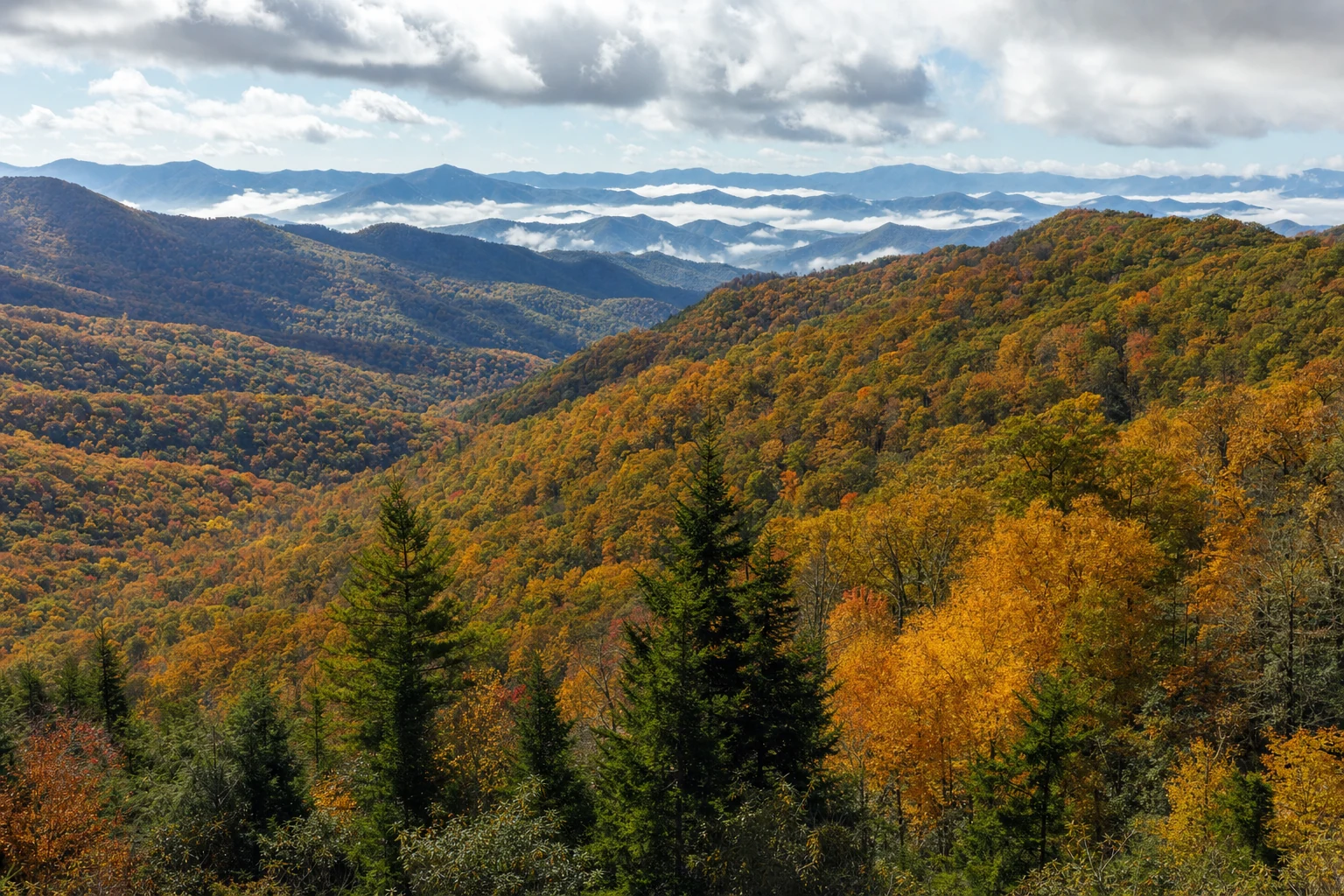
On a clear day, the view from the observation tower looks south across forested ridges into the park. The Smokies take their name from the blue-gray haze that settles over the valleys between ridgelines — from Look Rock, on mornings when conditions cooperate, you can watch that fog shift and thin in real time, pooling in the gaps between peaks before the sun burns it off. It's the kind of thing that photographs badly and registers strongly in person.
The trail itself passes through woodland typical of the Foothills Parkway corridor, with overlook points along the route before you reach the tower. There are no waterfalls, no dramatic cliffs, no creek crossings. What the trail offers is a long sight line across one of the largest wilderness areas in the eastern United States, held comfortably from a short walk out of the parking lot.
In fall, the elevation difference between your vantage point and the valley floor means you can sometimes see two distinct stages of foliage color simultaneously — the higher ridges turning ahead of the lowlands. That layered effect is genuinely worth planning around.
Best time to go
Mid-October is the answer most years for fall color, though it shifts by a week or two depending on the season. A high ridgeline viewpoint like Look Rock is exactly the right place to be for it. Traffic on the Foothills Parkway spikes hard during October weekends; if a weekday is possible, take it.
Spring is the quieter alternative. Late April and early May bring wildflowers to the lower elevations and enough new leaf to soften the landscape without blocking the long views. Humidity is still manageable. Summer fills in afterward, and while the trail itself is short enough that crowds don't compound the way they do on popular backcountry routes, parking at Look Rock Campground can fill by mid-morning on peak weekends. Getting there before 9 a.m. solves it.
Winter is the season people underestimate. Bare canopy opens up sight lines that summer obscures completely, and on cold clear days you can see farther from the tower than any other time of year. Ice forms on the observation structure and surrounding rock, so appropriate footwear matters. Check road conditions before heading out — sections of the Foothills Parkway close after winter weather events, and the NPS site posts current status.
Getting there and parking
The approach from Gatlinburg involves working around to the Foothills Parkway's western section rather than entering the park through Sugarlands. The NPS site has current directions and road status, and it's worth checking before you commit, since the parkway does close periodically for maintenance and weather. GPS for the trailhead is 35.6800° N, 83.8200° W at Look Rock Campground.
Parking inside Great Smoky Mountains National Park requires a Park-It-Forward tag for any stay over 15 minutes. Daily tags are $5, weekly $15, annual $40; buy through recreation.gov or at park kiosks. The fee applies to day visitors and campers alike.
Know before you go
The trail is short and the terrain is manageable, but a few things are worth knowing before you arrive.
Water: A one-mile round-trip sounds like it requires almost none, but the Smokies run hot in summer and the observation tower offers no shade. Bring more than you expect to drink.
Weather: Mountain conditions shift faster than phone forecasts update. A rain layer in a daypack weighs almost nothing and matters when the temperature drops and the fog moves in, which can happen even in July. Pack one.
Bears: Black bears are active throughout Great Smoky Mountains National Park. Keep at least 50 yards of distance from any bear you encounter, never approach for a closer look or a photograph, and don't leave food or scented items unattended at the trailhead. This applies to your car as well as your pack.
Cell coverage: Unreliable along the Foothills Parkway and within the park generally. Download an offline map before leaving the valley. If something goes wrong on trail, don't count on a signal.
Footwear: "Easy" doesn't mean conditions are always forgiving. Wet rock on the approach to the tower can be slick after rain; trail shoes with grip perform meaningfully better than sandals or flat-soled sneakers.
Frequently asked questions
- How long is Foothills Parkway Trails (various sections, e.g., Look Rock)?
- Foothills Parkway Trails (various sections, e.g., Look Rock) is 1 miles one-way (2.0 miles round-trip), with 100 feet of elevation gain. It is rated easy.
- Do I need a parking tag?
- Yes — a Park It Forward parking tag is required for vehicles parked more than 15 minutes anywhere inside Great Smoky Mountains National Park. Daily ($5), weekly ($15), or annual ($40) tags are available via recreation.gov or park kiosks.