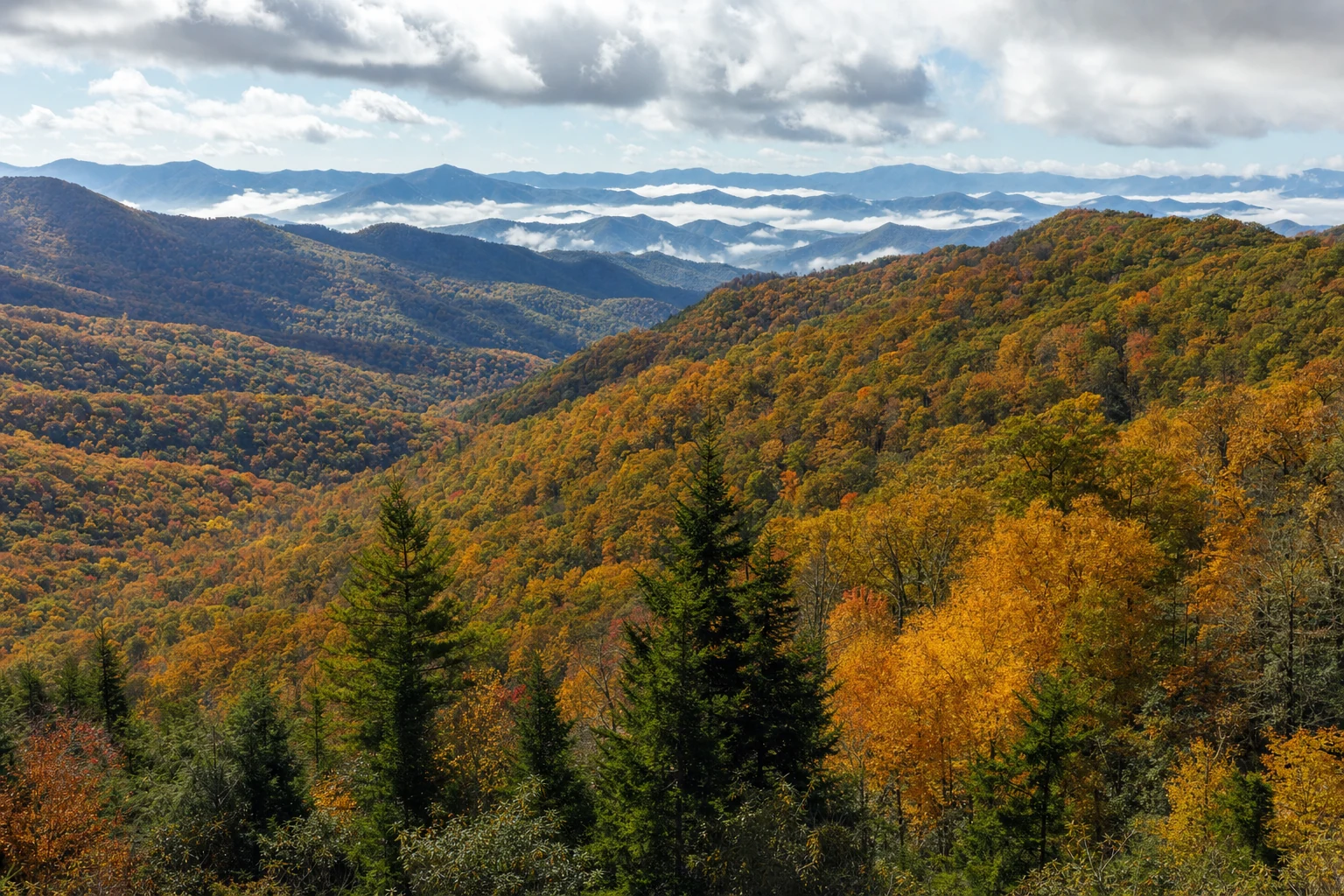

About Fork Ridge Trail:
Fork Ridge Trail drops off the high-elevation plateau near Kuwohi into the park's interior, running 4.9 miles one-way at a strenuous rating the NPS assigns with full intention here. The Kuwohi area sits above 6,600 feet, and any trail heading away from it sheds elevation fast. This one does not let up.
What the trail actually involves
The one-way designation matters for planning. Coming back up what you just came down would turn a difficult day into a very long, punishing one; nearly five miles of strenuous descent doesn't reverse easily. Most people either arrange a two-car shuttle or build Fork Ridge into a longer backpacking loop using the park's backcountry site network. Day hikers who want the full experience without an overnight typically do the shuttle, leaving one car at the lower end before driving a second to the Kuwohi trailhead.
You start in the red spruce and Fraser fir forest that only survives at the extreme high elevations of the Southern Appalachians. The understory runs dense with ferns; the light comes in cold and green even on warm days. As you lose elevation, the forest shifts into the mixed hardwoods that cover most of the park's lower terrain, and the air warms noticeably as you descend. Those two distinct forest types within one hike are part of what makes this trail worth the logistics.
Getting to the trailhead
Fork Ridge Trail accesses from the Kuwohi area, reached via Kuwohi Road off Newfound Gap Road (US-441). From Gatlinburg, take US-441 south through the park to Newfound Gap, then turn onto Kuwohi Road; the total drive from downtown takes around 45 minutes depending on traffic at the park entrance. From Cherokee, North Carolina, the route is US-441 north to Newfound Gap, then the same turn.
Kuwohi Road closes in winter, typically from around December through late March or early April, with the NPS adjusting the exact dates based on ice and snow conditions each year. Check current status on the NPS site before any cold-weather trip, since the closure is strictly enforced. A Park-It-Forward parking tag is required for any stay over 15 minutes inside GSMNP: $5 daily, $15 weekly, $40 annual, purchased at recreation.gov or the park entrance kiosks.
Doing it as a shuttle or backpacking route
The shuttle question is the first logistical problem to solve; it determines whether Fork Ridge is practical for your group on a given day. Two cars and a willing driver to run a shuttle makes it straightforward. One car makes it a nearly 10-mile out-and-back on strenuous terrain, which is a serious undertaking.
For backpackers, Fork Ridge works as a connector within a longer loop, taking advantage of backcountry sites in the surrounding drainages. NPS backcountry permits are required for all overnight stays in GSMNP and are available through recreation.gov. Sites fill quickly during fall foliage and spring wildflower season; book well ahead if your trip falls anywhere near peak periods.
The strenuous rating is accurate
"Strenuous" on an NPS trail marker usually signals significant elevation change, rough footing, or both. Fork Ridge delivers on that consistently. The descent from Kuwohi-area elevations is sustained, and the trail surface keeps you honest the whole way down; roots and wet rock are standard in this part of the park, and narrow sections require attention. Your knees will feel it before you reach the end.
Trekking poles help, especially on the descent. Footwear matters: trail runners with good grip handle it fine, but boots with ankle support are the more conservative choice for anyone less certain on wet, uneven ground. Don't underestimate the cumulative toll of continuous downhill on a strenuous trail.
When to go
Spring is the strongest option. High-elevation wildflowers arrive later here than in the valley, often well into May, and the spruce-fir forest at the top of the trail is fully lush before the summer heat builds below. The practical spring window starts when Kuwohi Road opens, typically late April, and runs through early June.
Fall is the other clear choice. Because Fork Ridge transitions through two distinct forest types, it offers two separate color shows as leaves turn: the high-elevation conifers shifting ahead of the hardwoods lower on the trail. Peak color on the high ridges generally runs a week or two earlier than the valley towns, which puts the optimal window somewhere in early-to-mid October, though it varies by year.
Summer crowds pack the Kuwohi parking area and observation tower, but they thin out quickly once you're moving on foot. The elevation keeps temperatures cooler than anywhere in Gatlinburg, which is a real advantage if you're hiking in July or August. Winter, when the road is open, offers solitude and ice-rimed spruce forest that looks unlike anything in the summer park, but route conditions can be serious and the road closure cuts the season short.
What to bring
Carry more water than you expect to need. High-elevation air and sustained physical effort combine to create dehydration faster than people anticipate, particularly in summer when the temperature gap between the Kuwohi summit and the lower trail can be 15 degrees or more. A water filter or purification tablets extend your options if you need to resupply from streams along the route.
Mountain weather at this elevation can shift from clear to socked-in within an hour; pack a rain layer and a warm layer even on summer mornings that look stable. Neither takes much space, and both matter when you're on a ridge in a cold fog.
Black bears are active throughout GSMNP. Keep 50 yards of distance from any bear you encounter, store food and scented items in bear canisters (required for backcountry overnights in the park), and don't leave anything in your car that could attract attention at the trailhead. Cell coverage on this trail is effectively nonexistent; someone who isn't hiking with you should know your planned route and expected return time.
Related trails in the Kuwohi area
Several other strenuous trails access the Kuwohi sector. Miry Ridge Trail runs 5.0 miles one-way through comparable high-elevation terrain. The Appalachian Trail route to Rocky Top from Kuwohi (5.6 miles out-and-back) draws larger crowds and is probably the best-known trail in this part of the park. Fork Ridge, by contrast, tends to see fewer people, partly because the shuttle logistics filter out casual visitors. If you want a look at the spruce-fir ecosystem without the elevation commitment, the Clingmans Dome Bypass Trail covers half a mile and shows you the forest type without demanding much in return.
Frequently asked questions
- Do I need a parking tag?
- Yes — a Park It Forward parking tag is required for vehicles parked more than 15 minutes anywhere inside Great Smoky Mountains National Park. Daily ($5), weekly ($15), or annual ($40) tags are available via recreation.gov or park kiosks.