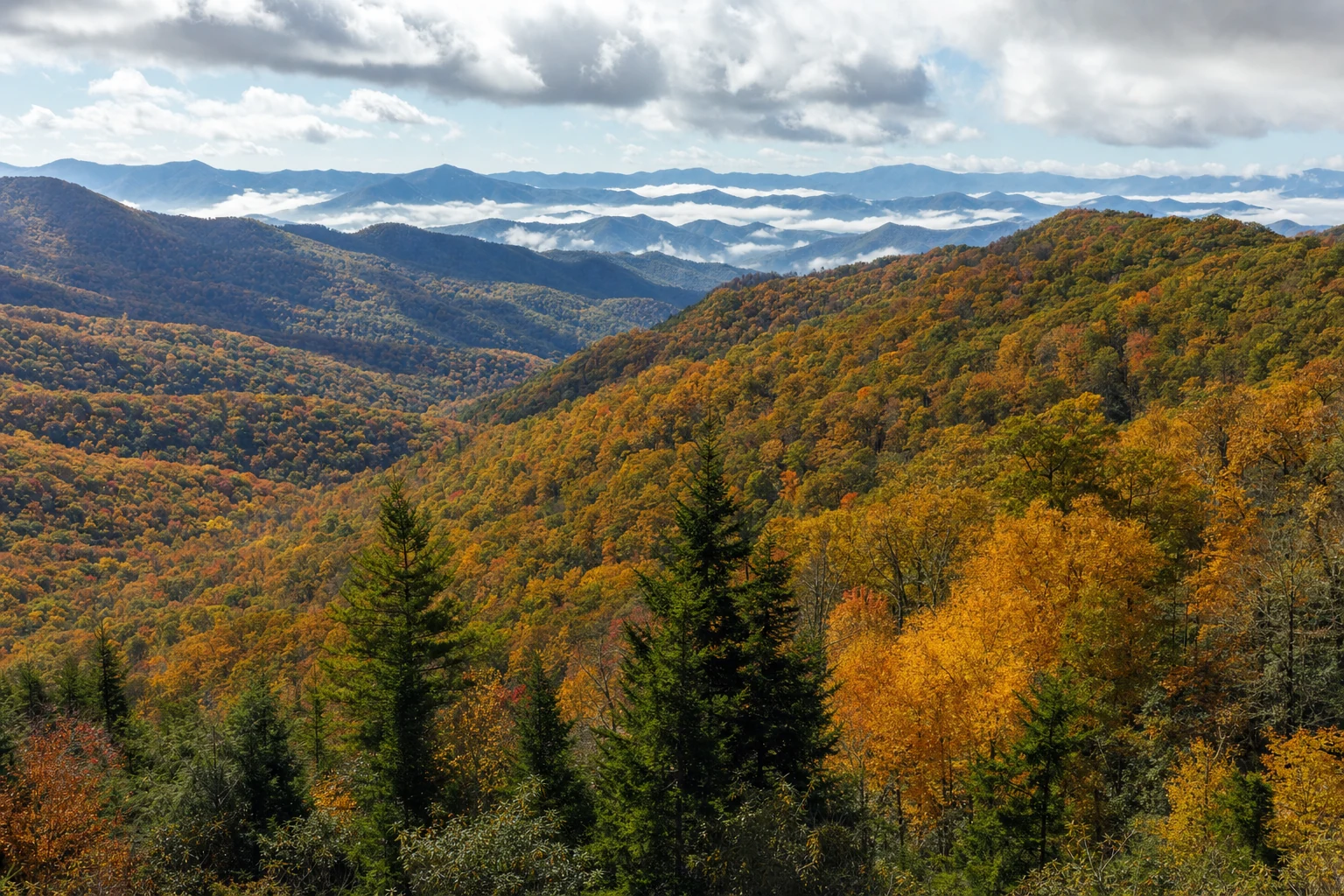

About Gabes Mountain Trail
Gabes Mountain Trail runs 6.4 miles one-way from Cosby Campground to the Maddron Bald Trail junction, gaining 2,000 feet through remote forest in one of the quieter corners of Great Smoky Mountains National Park. Rated strenuous, it's a point-to-point route that rewards advance planning. Most day hikers aim for Hen Wallow Falls at 2.1 miles and turn back; the full trail to the Maddron Bald junction is a different proposition, one that requires a car shuttle and a long day.
The Cosby Trailhead
Cosby Campground sits on the northeast edge of the park, well removed from the Gatlinburg commercial strip and the crowds that saturate the more central trailheads on summer weekends. The Gabes Mountain trailhead is right at the campground, so logistics are straightforward if you're camping there. If you're driving in just for the trail, you'll still find far less congestion here than at the Alum Cave or Chimney Tops trailheads.
The northeast corner of the park is serious hiking country. From Cosby, the Low Gap Trail climbs steeply 2.7 miles to the Appalachian Trail at Low Gap, opening the door to extended backcountry routes in either direction. Gabes Mountain Trail runs a different line, threading south through the watershed before connecting to the Maddron Bald system. Together these trails make Cosby a natural base for backpackers who want multi-day routes without the crowds of the more popular zones.
What to Expect on the Trail
The lower trail follows Gabes Creek through dense forest, crossing the creek at multiple points. Log bridges are in place at most crossings, but after heavy rain the water can climb over them. Wet feet are a real possibility after recent precipitation; waterproof footwear or a plan for wet socks both work, depending on your preference.
At 2.1 miles you reach Hen Wallow Falls. The creek drops 90 feet over a rock ledge, widening at the base into a broad, fan-shaped cascade. Flow is strongest in spring and after autumn rains; in dry summer stretches it can slow to a trickle. The descent to the base of the falls is steep. Going up on the return is manageable, but in winter that section ices over and traction devices become worth the weight. Mid-morning to early afternoon gives the best light on the falls face.
Continue past the falls and, roughly 1.5 miles further, look for the Burchfiel Cabin on the right. Built around the 1890s, it's one of the few surviving homestead structures in the Cosby watershed, a log cabin representing what a typical mountain home looked like before the park displaced its residents. The exterior is viewable; you can't go inside. It doesn't announce itself with a large sign, so pay attention or you'll walk past it.
Above the cabin the trail climbs harder, gaining elevation toward the Maddron Bald Trail junction at 6.4 miles. The upper sections thin out in autumn and winter, offering long views through the canopy. In summer they're green and enclosed, which keeps temperatures manageable but removes any sense of exposure.
Planning the Point-to-Point
A point-to-point trail requires either a car shuttle or a willingness to retrace your steps. For the full 6.4-mile route, arrange a vehicle at the Maddron Bald Trail end, or accept a 12.8-mile out-and-back with the full elevation gain in each direction. That's a legitimate option for strong hikers, but budget eight or more hours and go in knowing what you're committing to.
Backpackers can work this trail into multi-day itineraries through the northeast park. All backcountry camping in Great Smoky Mountains National Park requires a permit, which is free and bookable through recreation.gov. Reserve before your trip; the northeast corner fills on weekends with hikers who've figured out how much quieter it is than the park's western side.
If you're only going to Hen Wallow Falls and back, the 4.4-mile roundtrip is a moderate day by Smokies standards. It's the most straightforward use of this trail for people without a shuttle plan, and honestly a rewarding one on its own.
When to Visit
Spring is the strongest season for the waterfalls on this trail. Gabes Creek runs full through April and May, and the lower trail picks up wildflowers into early May. The falls look their best when there's been rain in the preceding few days; check recent precipitation before you go rather than locking in a date months out.
Fall foliage peaks in mid-October in this elevation band. The Cosby area draws smaller crowds during color season than the Clingmans Dome road or the Roaring Fork Motor Nature Trail, which means weekday hikes in October stay genuinely uncrowded by park standards. Weekend mornings still fill fast; arrive by 8 a.m. to be safe with parking.
Winter turns Hen Wallow Falls into something worth seeing specifically for the season. Cold stretches build ice columns on the rock face and along the cascade edges. The trail is passable, but the steep descent to the falls base needs traction gear when temperatures have stayed below freezing overnight. Microspikes are the practical choice, not a luxury.
Summer hikers should start early. Afternoon thunderstorms develop regularly from June through August, and the upper ridges above the falls are no place to be when they roll in. A 7 a.m. start gives you the lower trail in cool air and keeps the full hike clear of afternoon weather.
Getting There and Parking
Cosby Campground is approximately 18 miles northeast of Gatlinburg via US-321. Follow signs to the Cosby area and then to the campground; the trailhead is within the campground itself, at coordinates 35.7730° N, 83.2180° W.
A Park It Forward parking tag is required for any vehicle inside Great Smoky Mountains National Park for longer than 15 minutes. Rates are $5 per day, $15 per week, and $40 for an annual pass. Buy in advance at recreation.gov or at the park kiosk near the campground entrance. The kiosk isn't always staffed at first light, so online purchase the night before saves time if you're planning an early start.
Who This Trail Is For
Day hikers targeting Hen Wallow Falls will find the 4.4-mile roundtrip worth the drive to Cosby, particularly in spring or winter when the falls are running strong or carrying ice. The trail is substantially quieter than the park's western corridors, and that matters if you've hiked Alum Cave on a July Saturday and sworn never again.
The full 6.4-mile point-to-point suits people comfortable with sustained climbing who carry the right gear and have a shuttle in place. There are no facilities past the campground and no cell service on the trail. Once you're past the falls, you're committed; rescue isn't a quick call away. Bring more water than you think you need, and filter from Gabes Creek if you run low. Budget six to eight hours for the complete route.
Frequently asked questions
- How long is Gabes Mountain Trail?
- Gabes Mountain Trail is 6.4 miles one-way, with 2,000 feet of elevation gain. It is rated strenuous.
- Do I need a parking tag?
- Yes — a Park It Forward parking tag is required for vehicles parked more than 15 minutes anywhere inside Great Smoky Mountains National Park. Daily ($5), weekly ($15), or annual ($40) tags are available via recreation.gov or park kiosks.