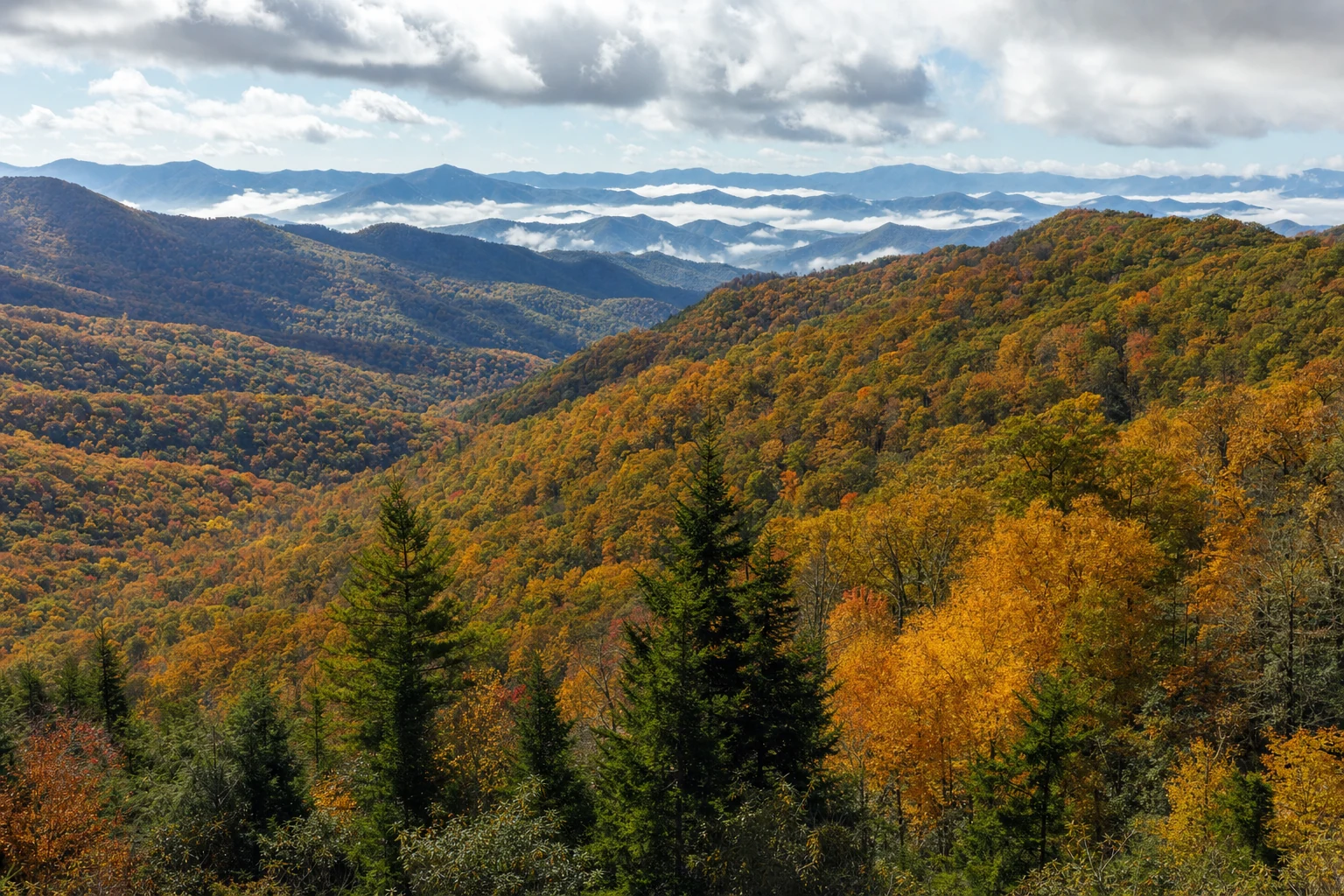

About Gatlinburg Bypass Trail:
The Gatlinburg Bypass Trail runs 2.5 miles one-way through Great Smoky Mountains National Park, rated Moderate by the NPS. For visitors who want genuine forest hiking close to town without driving deep into the park, this trail does what its name suggests: it gets you out of the commercial strip and into the trees quickly, on foot.
What the trail delivers
At 2.5 miles one-way, this is a half-day commitment at a moderate pace — plan on two to three hours for the out-and-back, longer if you move slowly or take breaks. The Moderate rating reflects real elevation change and forest terrain, not the groomed, paved loop experience you'll find at some gateway trails. Expect a natural footpath, roots and rocks underfoot, and the kind of forest quiet that Gatlinburg proper doesn't offer.
The trail sits within the NPS boundary, which means it shares the same ecosystem — and the same rules — as the more celebrated routes deeper in the park. What it offers that those routes don't is accessibility. You don't need to commit to a long drive on Newfound Gap Road or Roaring Fork Motor Nature Trail. The trailhead is reachable from town.
Difficulty and fitness expectations
Moderate on the NPS scale at GSMNP means something real. The park's terrain rises sharply; even trails classified below Strenuous can include several hundred feet of climbing over short distances. If you hike regularly and handle hills without issue, this trail should feel comfortable. Casual walkers who rarely hike should expect to work.
Trekking poles help on descents. Trail shoes or lightweight hiking boots with ankle support are better choices than sneakers, particularly in wet conditions — and in the Smokies, wet conditions are common year-round. The park averages among the highest rainfall of any national park east of the Rockies.
Parking and fees
A Park It Forward parking tag is required anywhere inside Great Smoky Mountains National Park for stays over 15 minutes. Tags run $5 per day, $15 per week, or $40 annually. Purchase at recreation.gov in advance or at park kiosks. There is no general park entrance fee, but parking enforcement is active throughout the system. Plan to have a tag before you arrive.
The parking situation in Gatlinburg and at popular trailheads can be tight, especially from late June through October and on fall weekends. Arriving before 9 a.m. consistently beats the crowds and parking crunch at almost every Smokies trailhead.
Best time to hike
Spring (mid-March through May) is when the forest floors along the park's lower and mid-elevation trails come alive. Wildflowers push up through leaf litter, streams run full, and temperatures stay manageable. This is a legitimate top-tier window for Smokies hiking — the crowds are present but not at their summer peak.
Summer means full foliage and warm temperatures, which translate to shade on the trail but also higher humidity. Arrive early; by late morning, Gatlinburg-area trailheads fill fast. Afternoon thunderstorms are common from July through early September — build your hike around a morning start.
Fall draws the heaviest visitation of the year to the Smokies. Foliage typically peaks mid-October at mid-elevations. The color is real and worth seeing, but expect every popular access point to be crowded. Weekdays in October are significantly quieter than weekends.
Winter brings solitude and clear, long views through bare trees. Some high-elevation roads close seasonally, but lower-elevation trails near Gatlinburg generally remain accessible. Layers are essential; temperatures drop fast after midday, and ice can form on shaded sections of trail.
Wildlife and safety basics
Black bears live throughout the park, including the areas near Gatlinburg. Encounters are possible on any trail at any time of year. Keep at least 50 yards of distance from bears and 25 yards from other large wildlife. Never feed or approach animals. Store all food, scented items, and garbage in your vehicle or the bear boxes provided at trailheads — not left in packs on the ground.
Carry more water than you think you need. Mountain weather shifts without much warning; a clear morning can turn to rain within an hour. Pack a waterproof layer and an extra warm layer regardless of the forecast, even in summer. Cell coverage is limited to nonexistent on most GSMNP trails — download an offline map before you go and let someone know your plan.
Nearby trails worth pairing
If you're spending a full day in this part of the park, several well-documented trails are within easy reach:
- Grotto Falls via Trillium Gap Trail (Roaring Fork Motor Nature Trail, 2.6 miles out-and-back, Moderate) — one of the park's most-visited waterfall hikes, and the only trail where you can walk behind a falls
- Cherokee Orchard Road Trail (Gatlinburg, 3.4 miles one-way, Easy) — a closed road through old orchard land, accessible and family-friendly
- Old Sugarlands Trail (Sugarlands, 3.0 miles one-way, Moderate) — follows an old settlement road through second-growth forest with historical context
Each of these starts from a different access point and requires its own parking plan, but they're all within a short drive of the Gatlinburg area and round out a multi-trail day well.
Who this trail suits
The Gatlinburg Bypass Trail works best for visitors who want actual hiking — not a paved nature walk — but aren't looking to spend a full day in the backcountry. At 2.5 miles one-way, it's substantial enough to feel like a real outing and can be done as a pure out-and-back or used as a connector depending on your route. Hikers comfortable on moderate terrain with some elevation change will find it a rewarding way to get into the park without the long drive.
It's less suited to young children or anyone expecting a flat, easy path. The NPS Moderate designation reflects genuine trail conditions.
Frequently asked questions
- Do I need a parking tag?
- Yes — a Park It Forward parking tag is required for vehicles parked more than 15 minutes anywhere inside Great Smoky Mountains National Park. Daily ($5), weekly ($15), or annual ($40) tags are available via recreation.gov or park kiosks.