
About Grotto Falls Trail (Trillium Gap Trail)
Grotto Falls is the only waterfall in Great Smoky Mountains National Park where you can step behind the cascade. That single feature puts it on a short list of genuinely distinctive hikes in the Smokies, and the old-growth hemlock forest covering the approach earns it a second look even if the falls were ordinary. The Trillium Gap Trail runs 2.6 miles one-way from the Roaring Fork Motor Nature Trail, gaining 500 feet at a steady, manageable grade. It draws enough visitors to make parking and timing real considerations.
The trail
The path starts at the Trillium Gap Trailhead on the Roaring Fork Motor Nature Trail and climbs through dense hemlock and hardwood forest the full 2.6 miles. The elevation gain is distributed evenly enough that no single section feels punishing; the rating of moderate is accurate. Trail surface is maintained but uneven in places, with roots and rocks showing up regularly from the midpoint onward.
The hemlock canopy is worth paying attention to. These are old-growth trees, increasingly rare in the southern Appalachians after years of woolly adelgid pressure, and the park has worked to preserve this stand. The forest floor stays heavily shaded, keeping the trail noticeably cool even in July when exposed sections of nearby routes are already warm.
Round-trip from the trailhead and back is a full 5.2 miles. Families with younger children hike here regularly; the trail is popular with that demographic precisely because there's nothing technical about it. Fit hikers move through it efficiently; kids and slower groups should plan for rest stops and extra time.
Grotto Falls
At 1.3 miles from the trailhead, the trail delivers the falls. Grotto Falls drops 25 feet over a sandstone overhang that curves inward enough to create a grotto; the walkable ledge behind the curtain runs the full width of the cascade. In spring, after snowmelt or heavy rain, the water volume is heavy enough that crossing the ledge gets you wet regardless of how carefully you move. By midsummer the flow lightens, but the structural feature stays the same year-round. This is a reliably flowing creek, not a seasonal trickle that dries out in August.
The rock behind the falls is always wet and usually slick. Tread slowly; a slip here means a fall onto stone, not soft ground.
For photography, morning or early afternoon gives the most workable light. Midday sun creates harsh contrast in the gorge that's difficult to shoot through. Arriving early also cuts down on crowd density, which at this trailhead is a genuinely practical concern. By late morning on a summer weekend, the lot fills and the falls become a queue.
Getting there and parking
The trailhead sits on the Roaring Fork Motor Nature Trail, a narrow one-way scenic road that closes seasonally. NPS publishes exact opening and closing dates each year; check nps.gov/grsm before you go, particularly if you're visiting outside the typical spring-through-fall window. When the road is closed, there's no alternative route to this trailhead. Trailhead coordinates: 35.7010° N, 83.4730° W.
The Roaring Fork Motor Nature Trail enters from Gatlinburg via Historic Nature Trail Road. Because it's one-lane and one-way, once you turn onto it you're committed to driving the full loop; there's no backing out or turning around mid-road.
Parking at the Trillium Gap Trailhead is limited. On summer weekends and fall foliage weekends, cars fill the lot early and overflow onto the road's narrow shoulders. Arriving before 8 a.m. is the most reliable way to get a spot. If the lot is full when you pull in, you'll need to complete the loop and try again; no overflow area exists on this section, and no shuttle serves this trailhead.
A Park It Forward parking tag is required for any vehicle parked inside GSMNP for more than 15 minutes. Passes cost $5 daily, $15 weekly, or $40 annually; purchase at park entrance kiosks, recreation.gov, or the NPS app before you arrive. The fee applies regardless of where on the road you park.
When to go
Spring (April through early June) brings wildflowers along the lower trail and peak water volume at the falls. The hemlock canopy leafs out through May and the forest changes week to week. Crowds build steadily from late April onward.
Summer is the busiest season. Afternoon thunderstorms are common from July through August and develop fast at elevation; plan to be off the trail by early afternoon if storms are in the forecast. The hemlock shade makes this hike more tolerable on hot days than exposed alternatives nearby, but mornings are still significantly more comfortable.
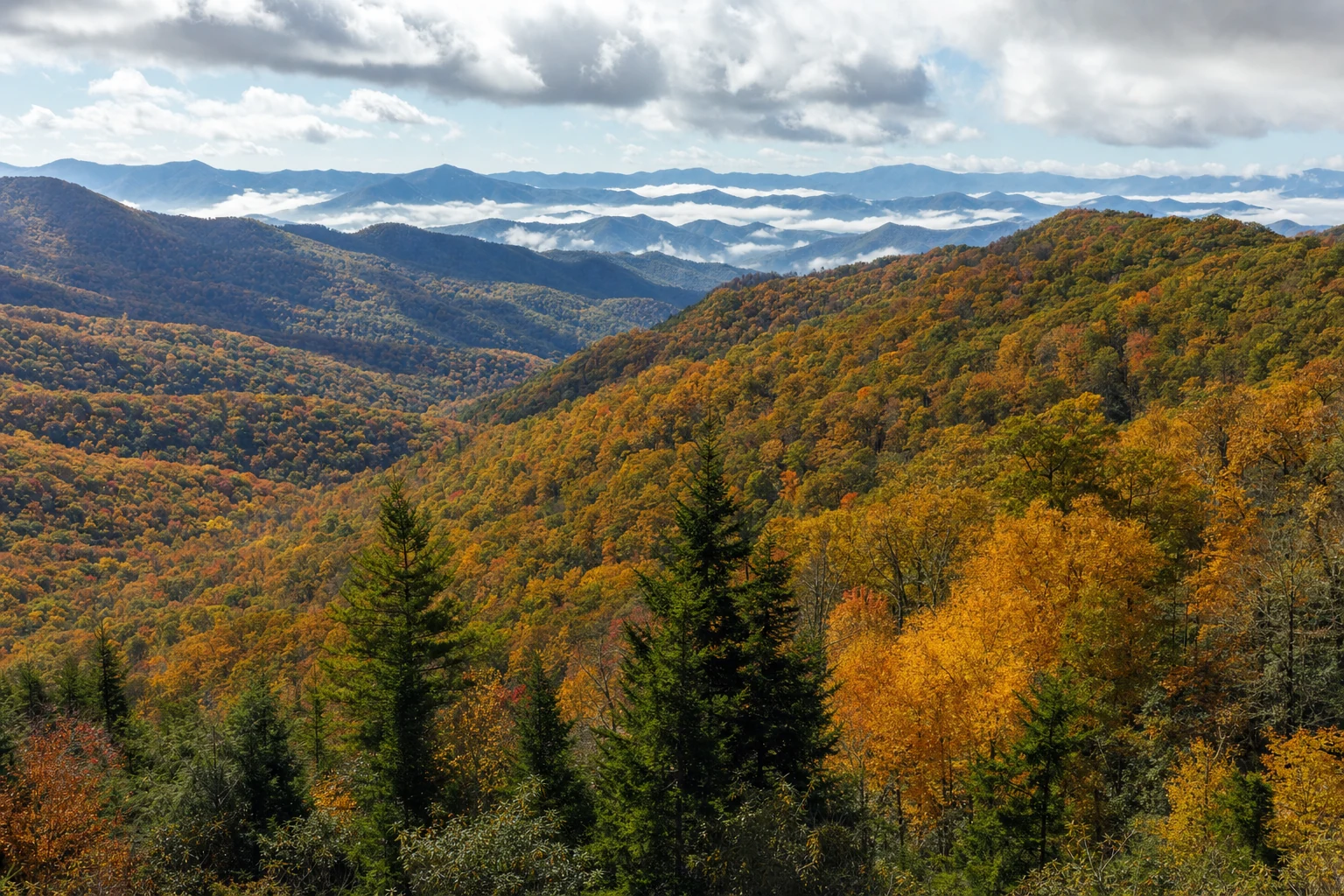
Fall foliage peaks around mid-October at this elevation, which also means peak visitor density. The falls run well into fall after the first significant rains. A weekday visit in October makes a real difference; weekend crowds during foliage season can feel like a different park entirely.
Winter access depends on the Roaring Fork Motor Nature Trail being open, and the road closes for the season each year. On the shoulder ends of that window, late fall or early spring, the trail runs quiet and the falls can develop ice formations on the surrounding rock. The ledge behind the falls becomes genuinely dangerous when iced over. Microspikes are worth carrying in cold conditions whenever the road is accessible. Check trail conditions via NPS before going in winter.
Know before you go
Black bears are active throughout GSMNP year-round. Keep a minimum of 50 yards of distance, don't approach for photos, and secure all food and scented items in your vehicle or a bear canister. The Roaring Fork corridor is well-traveled; bears here are habituated to people, which makes them less predictable, not safer.
Cell coverage is poor to nonexistent along the Roaring Fork Motor Nature Trail and the Trillium Gap Trail. Download offline maps before you park; Gaia GPS and AllTrails both support offline use. Going in without navigation on a device that works without signal is a real risk if you're unfamiliar with the trail.
Carry more water than the distance suggests. The creek at the falls looks like clean mountain water. It isn't reliably safe to drink without treatment. Bring at least two liters per person for a round trip, more in heat. Restrooms are available near the Roaring Fork Motor Nature Trail entrance, not at the trailhead itself.
Frequently asked questions
- How long is Grotto Falls Trail (Trillium Gap Trail)?
- Grotto Falls Trail (Trillium Gap Trail) is 2.6 miles one-way (5.2 miles round-trip), with 500 feet of elevation gain. It is rated moderate.
- Do I need a parking tag?
- Yes — a Park It Forward parking tag is required for vehicles parked more than 15 minutes anywhere inside Great Smoky Mountains National Park. Daily ($5), weekly ($15), or annual ($40) tags are available via recreation.gov or park kiosks.