
About Grotto Falls (via Trillium Gap Trail):
Grotto Falls sits about four miles from downtown Gatlinburg on the Roaring Fork Motor Nature Trail, and it holds a distinction no other waterfall in Great Smoky Mountains National Park can claim: you can walk behind it. The Trillium Gap Trail that leads there is 2.6 miles roundtrip with roughly 500 feet of elevation gain, rated moderate, and it consistently draws some of the heaviest foot traffic on the Tennessee side of the park.
The Walk
The trail runs through old-growth hemlock forest for most of its length, and that detail matters beyond the destination. Old-growth hemlock stands have grown scarce across the Southern Appalachians due to the hemlock woolly adelgid, which has killed trees across the park since the early 2000s. What survives here carries a different quality than secondary-growth forest: the canopy runs high and irregular, light filters down in long shafts, the understory stays open, and the forest floor smells of soil and cold water. It's the kind of walking that rewards slowing down.
The elevation gain is steady but never steep; the hardest section is a short rocky stretch close to the falls themselves. Most hikers in average condition finish the roundtrip in 90 minutes to two hours without pushing. The trail draws families with older children regularly, and it earns that reputation — the distance and payoff are well-matched for kids who can handle a few miles of uneven terrain. The trail surface is natural throughout, all root and rock and packed dirt, and proper footwear matters more here than fitness level.
Crowds are real. On summer weekends the parking lot fills before 9 a.m., and the trail itself gets genuinely congested near the falls. Arrive before 8 a.m. on a weekday, or plan a shoulder-season visit in late April or early November, if solitude matters to you.
Walking Behind the Falls
The 25-foot cascade pours over a wide rock overhang and drops into a pool below, leaving a walkable ledge on the far side; the trail passes through this alcove as a natural continuation of the route rather than as a side trip. The ledge is wide enough for two people to pass, and the ceiling curves just overhead, with the entire wall of moving water close enough that you'll feel the mist without stepping toward it.
The floor is stone, wet, and slick year-round; light trail shoes will have you sliding. In winter, when temperatures drop below freezing overnight, the ledge ices over and the NPS closes access. Trekking poles help considerably for anyone with balance concerns, even outside icy conditions.
Water volume shifts across seasons. The falls run loudest in late winter and spring when snowmelt and sustained rainfall keep the flow high. By late summer the volume thins noticeably, though the falls don't go dry.
Photography
The behind-the-falls perspective is the defining shot here, unavailable at any other waterfall in the park. Framing outward through a moving curtain of water produces patterns of light and motion that forward-facing waterfall shots can't replicate; the dark overhang ceiling and the bright pool outside create contrast that's difficult to expose correctly in direct sun. The old-growth hemlock canopy adds its own character on the approach — long shafts of filtered light through tall trunks that photograph well on overcast days when soft, even illumination replaces the harsh shadows of direct sun.
Overcast days work considerably better than clear ones at this location. Even light lets you hold detail across a wider tonal range and opens up longer exposures without blowing out highlights, which is what produces the smooth water effect characteristic of long-exposure waterfall shots. A tripod is essential; the alcove floor is uneven and permanently damp, so use one that plants solidly on wet rock. A remote shutter release or self-timer eliminates vibration at the exposure moment, and ND filters extend your shutter range further on brighter days.
For shots facing the falls from the front, mid-morning to early afternoon works well when skies are clear. The hemlock canopy cuts off direct sun early and late at this location.
When to Go
The Roaring Fork Motor Nature Trail is closed in winter, and vehicle access to the Grotto Falls trailhead closes with it. The NPS posts current road conditions and exact open and close dates on its website; the trail is typically accessible from roughly late March or April through November, but verify before you make the drive, since closure timing varies by year.
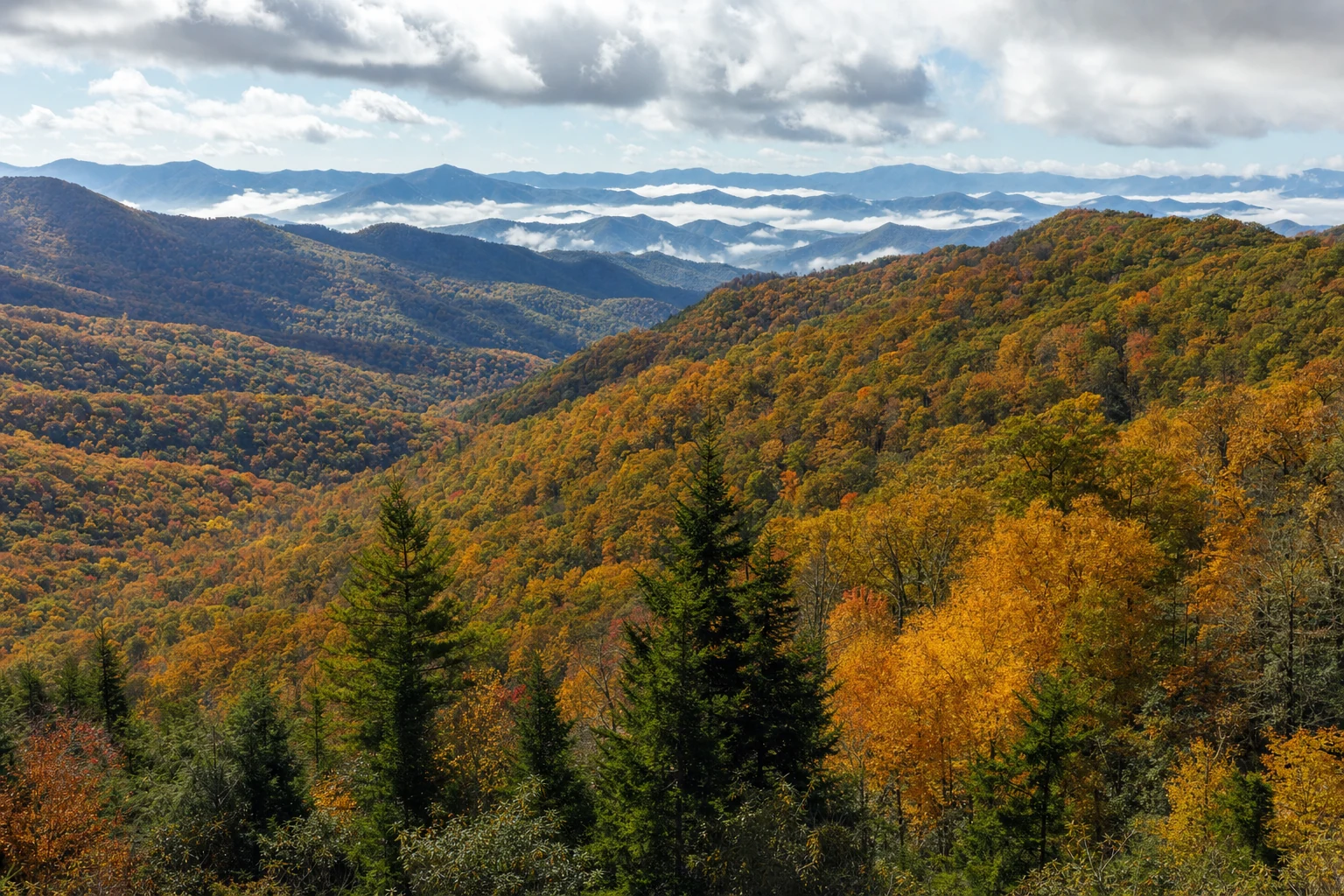
Spring, specifically April through early June, delivers the strongest combination: the falls run high, wildflowers line the trail, and crowds haven't yet peaked. Fall foliage around mid-October is outstanding at this elevation, and October remains one of the more rewarding months despite the traffic. Summer is the most congested period by a wide margin — plan accordingly or accept the crowds.
Getting Here
The Roaring Fork Motor Nature Trail begins at traffic light #8 in Gatlinburg. The road is one-way and narrow; large RVs and trailers can't use it. The Grotto Falls trailhead has a dedicated parking area roughly two miles into the loop, but it's a small lot that fills fast on busy days.
A valid GSMNP parking tag is required for any vehicle parked in the park for more than 15 minutes. Daily tags run $5, weekly $15, annual $40; they're available via recreation.gov before your trip or at park kiosks near the entrance. Buying in advance saves a stop.
Pair It with the Roaring Fork Loop
The Motor Nature Trail itself is worth treating as a destination rather than just the road to the trailhead. Near the entrance, the Noah "Bud" Ogle Place preserves a 19th-century farmstead with original log structures; the walk through takes about 20 minutes. Further along the loop, the Jim Bales Place is another historic homestead with similar character. Roadside and requiring no hiking at all, the Place of a Thousand Drips is a wide rock overhang where water sheers off in dozens of thin rivulets after rain — worth a pullout stop even on a short visit.
All of this runs on the same parking tag you bought for Grotto Falls. A half-day covers the falls hike and the Motor Nature Trail stops without feeling rushed.
Frequently asked questions
- Do I need a parking tag?
- Yes — a Park It Forward parking tag is required for vehicles parked more than 15 minutes anywhere inside Great Smoky Mountains National Park. Daily ($5), weekly ($15), or annual ($40) tags are available via recreation.gov or park kiosks.