
About Hog Camp Gap Trail:
Hog Camp Gap Trail covers 3.5 miles one-way through the Cataloochee section of Great Smoky Mountains National Park, rated Moderate by the NPS. Cataloochee sits well east of the Gatlinburg visitor corridor; getting there requires committing to winding mountain roads, which is exactly why the trailheads in this valley see a fraction of the traffic that stacks up on the park's western side. If you've only seen the Smokies from Highway 441, Cataloochee feels like a genuinely different place.
The Route and What to Expect
At 3.5 miles one-way, this trail is long enough to demand real planning but short enough to complete in a half-day without rushing. Moderate here means sustained climbing: Cataloochee sits in a valley ringed by ridgelines, and most trails heading out of it gain elevation steadily toward the gaps and summits above. Expect a consistent uphill grade going out and a knee-testing return on the way back. Trekking poles pay for themselves on trails like this one.
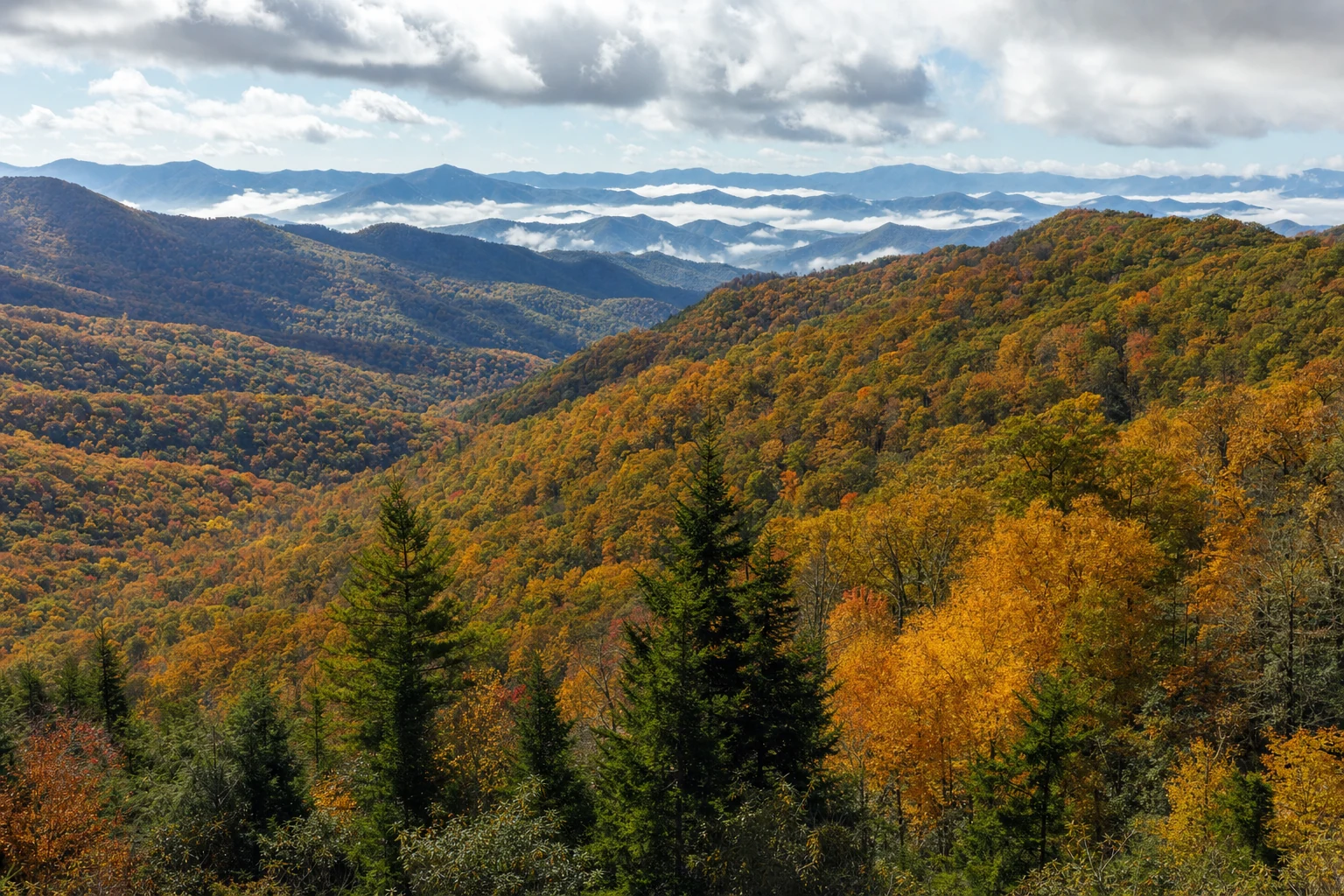
Trail names in the Smokies are usually descriptive, and Hog Camp Gap is no different: you're heading for a saddle on one of the ridges above the valley. Gaps in the park tend to open up the tree canopy and offer looser views of the surrounding terrain, though what you'll actually see depends on season. In late spring and early summer, rhododendron and mountain laurel bloom along Cataloochee's slopes in serious numbers; by mid-October, the hardwood canopy runs from amber through deep red before the leaves drop entirely.
Getting to Cataloochee
Cataloochee is not reached from the main Gatlinburg park entrance. The valley is accessed from the eastern side of the park via a narrow, winding road where single-lane sections are common and pulling over for oncoming traffic is just part of the drive. Factor this into your schedule. The last stretch of road requires attention that doesn't mix well with passengers navigating on a phone, so download offline maps before you leave and verify your route in advance; some GPS routing apps suggest roads that aren't appropriate for standard vehicles.
A Park It Forward parking tag is required for any vehicle parked inside Great Smoky Mountains National Park for more than 15 minutes: daily $5, weekly $15, or annual $40, available via recreation.gov before you leave or at kiosks near park entrances. Buy one ahead of time rather than counting on a kiosk being close to the Cataloochee trailheads.
The Valley Itself
Cataloochee holds two things that have nothing to do with the trail but will likely define your memory of the day. First: elk. The NPS reintroduced elk to the Smokies in Cataloochee, and the herd that's established in the valley is frequently visible in the meadows, especially in early morning and at dusk. You may well see them on the drive in before you reach the trailhead. Park regulations require keeping at least 50 yards of distance; elk are large animals, and during calving season in late spring they're also unpredictable.
Second: the historic structures scattered through the valley. Cataloochee was a settled community before the park was established, and a number of original buildings remain standing and accessible. Walking toward the trailhead, you pass evidence of a real place where people farmed and raised families for generations. None of it is staged or restored for visitors in a museum sense; it's just there, aging into the landscape at its own pace.
Nearby Trails Worth Combining
Cataloochee is far enough from the park's western side that making the drive to do one short hike feels like an inefficient use of the trip. The area has several other NPS trails worth pairing:
- East Fork Trail: 3.5 miles one-way, Moderate. Follows a different drainage out of the valley and matches Hog Camp Gap in both distance and effort; doing both in a day is a full outing.
- Flat Creek Trail: 2.0 miles one-way, Moderate. Shorter and a reasonable second leg if you don't want to repeat the same terrain twice.
- Bearpen Hollow Trail: 1.8 miles one-way, Moderate. The least demanding Cataloochee hike in terms of distance; good for families or as a lower-commitment option alongside a longer trail.
When to Go
Fall is the argument people make for Cataloochee specifically. Elk activity picks up during the rut in September and October, the foliage peaks around mid-October, and the temperatures make a 7-mile day on a moderate trail genuinely comfortable. Expect more company than in other seasons; the valley draws visitors during peak fall, even if "crowded" here is still modest compared to the Roaring Fork Motor Nature Trail on a Saturday.
Spring brings wildflowers and far fewer people, but trails at Cataloochee elevations can stay muddy into April. Summer is the park's busiest season overall, though Cataloochee stays quieter than the western side; afternoon thunderstorms build fast over these ridges from June through August, so start early and set a turnaround time before the weather sets it for you.
Winter delivers the most solitude. The access road can close during snow and ice, so check current NPS road conditions before making the drive. When conditions are stable, bare trees open sightlines through the canopy that aren't visible any other time of year, and the elk herd is often easier to spot against the open ground.
Before You Go
Carry more water than you expect to need; the Moderate rating reflects real effort, and there are no services in the valley once you've arrived. Pack a rain layer regardless of the forecast. Cell coverage is poor throughout Cataloochee. Black bears are active across the park; make noise on the trail, never leave food unattended in a pack at the trailhead, and store everything properly in your vehicle. The NPS requires at least 50 yards of distance from any wildlife, bears included.
Frequently asked questions
- Do I need a parking tag?
- Yes — a Park It Forward parking tag is required for vehicles parked more than 15 minutes anywhere inside Great Smoky Mountains National Park. Daily ($5), weekly ($15), or annual ($40) tags are available via recreation.gov or park kiosks.