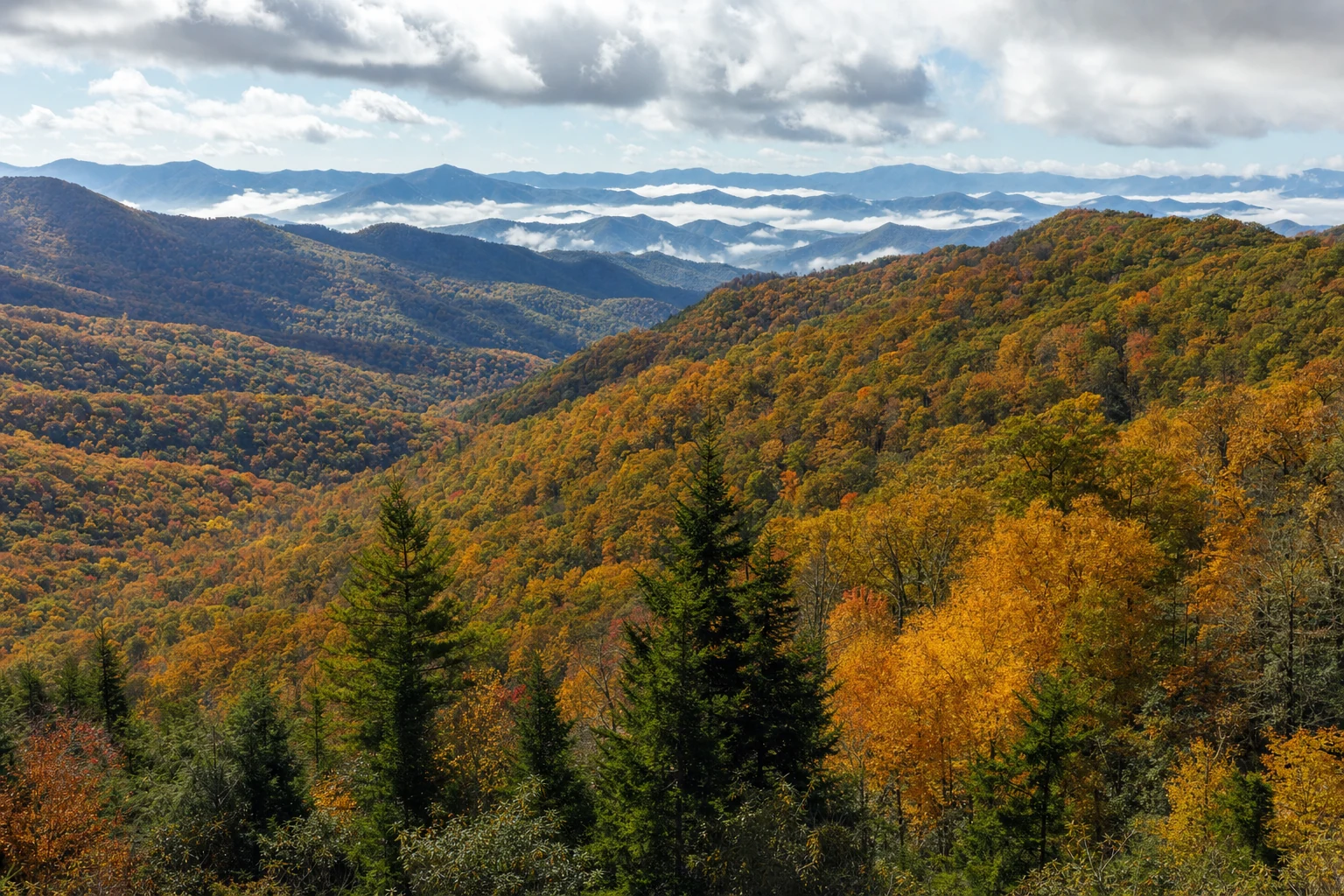

About Indian Grave Gap Trail:
Indian Grave Gap Trail covers 2.0 miles one-way through the Cosby section of Great Smoky Mountains National Park, carrying a moderate NPS difficulty rating. That puts the full out-and-back at 4 miles — long enough to earn the forest but short enough for most fit adults to complete in a half-day without burning out. The Cosby trailhead anchors you to the northeastern corner of the park, well away from the congestion that builds up on the Gatlinburg and Newfound Gap corridors, and that separation alone shapes the whole experience.
Trail Overview
The basic numbers: 2.0 miles one-way, moderate, no fee beyond the park's standard Park It Forward parking requirement. Parking tags cost $5 per day, $15 per week, or $40 annually and can be purchased at recreation.gov or at kiosks near park entrances. Daily tags are the most practical choice for most visitors making a single hike.
The NPS moderate rating reflects real elevation change — Cosby sits at a relatively low elevation on the park's edge, and the gap in the trail name is a ridge saddle above it. Expect a genuine climb on the way out and a sustained descent coming back. It's not a stroll, but anyone comfortable on graded forest trails won't find it overwhelming.
The Cosby Corner of the Park
Cosby gets a fraction of the foot traffic that flows through Sugarlands or the Roaring Fork corridor. The campground here is among the park's less crowded options, the roads approaching the trailheads are narrow and tree-lined, and the general atmosphere runs quieter than what you find on the Gatlinburg side. If you've hiked to Grotto Falls on a busy Saturday and spent half the trail passing other groups, Cosby operates differently — solitude isn't guaranteed, but it's genuinely more available here.
From Gatlinburg, reaching Cosby involves driving east on US-321 and then south into the park. It's a longer approach than simply turning off the Parkway, which is probably the main reason the crowds thin out. For hikers willing to commit to the extra drive, that trade-off consistently pays off.
The Cosby section also gives you a different ecological experience than the mid-elevation or high-elevation park zones. The lower slopes here support mixed hardwood forest, rhododendron thickets, and the kinds of creek-bottom hollows that make spring hiking in the Smokies so productive for wildflowers. The trail network connects into the main ridgeline above, which means you can feel the park's full vertical range even on a trail that starts at a modest elevation.
What the Hike Feels Like
At 2.0 miles one-way, the trail moves through the forested terrain typical of Cosby's lower-to-mid elevations before reaching the gap. The moderate rating implies consistent grade changes rather than flat walking or extreme scrambling. You'll likely work through the kind of trail that demands attention — uneven footing, root-crossed sections, seasonal mud after rain — without requiring technical gear or special footwear beyond solid hiking shoes or boots.
The gap itself is a natural topographic feature: a saddle or notch in the ridgeline where the terrain drops between two higher points. Gaps in the Smokies often mark old travel routes and provide views through the forest canopy where the ridge opens up. The trail name references Indian Grave Gap, a named landmark within the park's documented geography.
Turn around at the gap and retrace your steps for the full 4-mile round-trip. There's no loop option built into this trail on its own, though Cosby's trail network does connect to other routes for those who want to extend.
Pairing Indian Grave Gap with Other Cosby Trails
If you're making the drive to Cosby, the trail network here supports a full day of hiking without repeating ground. Several trails operate from the same general area:
- Turkeypen Ridge Trail (3.0 miles one-way, Moderate) — a longer moderate option for hikers who want to extend their mileage at the same effort level
- Chestnut Branch Trail (2.0 miles one-way, Moderate) — matches Indian Grave Gap in distance and difficulty, offers a different route through the same section
- Cold Spring Gap Trail (1.5 miles one-way, Moderate) — slightly shorter, useful for adding a second trail without dramatically increasing total miles
- High Rocks Trail (2.0 miles one-way, Strenuous) — same distance but a step up in effort, for hikers who want to push further after a moderate morning
- Roundtop Trail (2.0 miles one-way, Strenuous) — another strenuous 2-mile option in the Cosby cluster
- Firescald Ridge Trail (4.5 miles one-way, Strenuous) — for experienced hikers looking for a full-day challenge from the same trailhead area
Combining Indian Grave Gap with one of the shorter moderate trails keeps total mileage reasonable and lets you see two different slices of Cosby's terrain without returning to your car multiple times.
Best Time to Visit
Spring is the most rewarding season in the Cosby section. Wildflowers push through the forest floor from late March into May depending on elevation, and the rhododendron display typically peaks in June. Trail surfaces can be muddy through early spring after rain, but that's a consistent feature of the Smokies and not a reason to stay home — just expect it.
Summer means full leaf-out and maximum humidity. The tree canopy keeps things shaded, which helps, but morning starts are worthwhile to avoid both afternoon heat and the crowds that build up elsewhere in the park. Cosby stays relatively calm, but weekend mornings at popular trailheads fill faster than the average visitor expects.
Fall draws the most visitors to the Smokies overall, with foliage typically peaking in mid-October at middle elevations. The Cosby section's hardwood mix shows well in autumn color. October weekends are among the busiest times in the park — arrive early or plan for a weekday.
Winter brings the quietest trail conditions and occasionally the clearest long views when the leaves are down. The Cosby area's roads remain generally accessible through most winter weather, though the park issues closures during icing or heavy snow events. Check the NPS road conditions page before going in December through February.
Getting There and Practical Logistics
From Gatlinburg, take US-321 East through Pittman Center, then follow TN-32 South into the Cosby section of the park. The approach road narrows and the park's character asserts itself quickly once you're past the boundary. Trail parking areas in Cosby require the Park It Forward tag — have one purchased in advance via recreation.gov to avoid delays at the kiosk.
Cell coverage inside the park is limited to none depending on your carrier and the terrain. Download an offline map before you leave, or pick up a NPS trail map at the Sugarlands Visitor Center on your way through Gatlinburg.
Know Before You Go
Carry more water than you expect to need — the moderate rating doesn't mean easy, and fluid demands climb with the terrain. A rain layer is worth packing even on clear mornings; weather in the Smokies can shift within the span of a single hike.
Black bears are present throughout this section of the park. Keep 50 yards of separation, never approach or feed them, and store all food in a bear canister or your locked vehicle. This applies at the trailhead parking area as much as on the trail itself. The park's bear activity tends to increase in spring when bears emerge from dens and in fall when they build caloric reserves before winter — both seasons when this trail sees good hiking conditions.
Stay on the marked trail. The Cosby forest is dense enough that off-trail travel is disorienting quickly, and the park's ecosystems are fragile at ground level. Wet footing near the gap can make edges feel less stable than they look — take that section at a deliberate pace on the return descent.
Frequently asked questions
- Do I need a parking tag?
- Yes — a Park It Forward parking tag is required for vehicles parked more than 15 minutes anywhere inside Great Smoky Mountains National Park. Daily ($5), weekly ($15), or annual ($40) tags are available via recreation.gov or park kiosks.