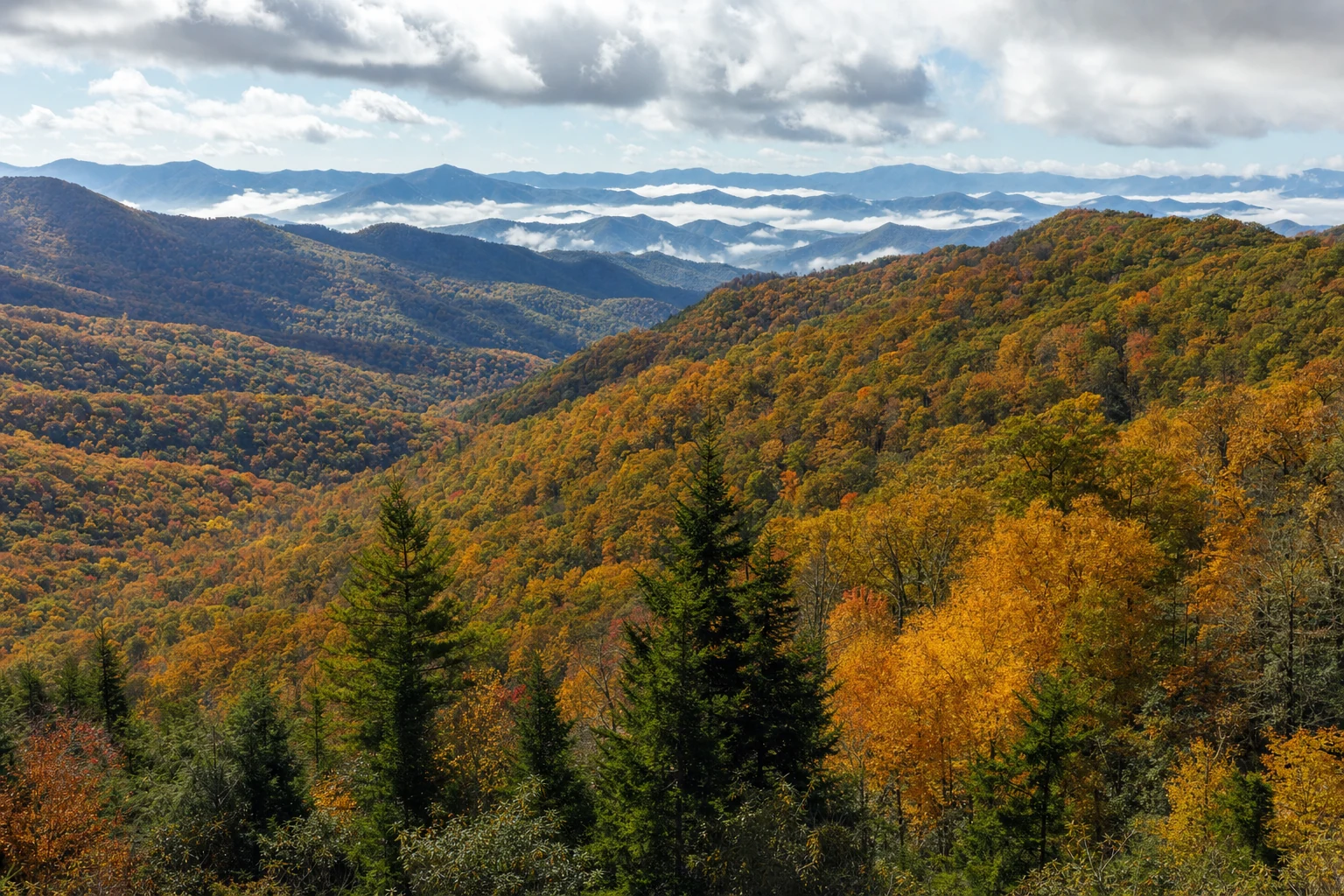

About John Muir Trail (Hiwassee River)
Ten and a half miles with the Hiwassee River beside you and a thousand feet of elevation gain distributed across the route; the catch is that point-to-point routing leaves you ten miles from your car unless you've arranged a shuttle in advance. Plan the logistics before you drive to Childers Creek Road.
Trail at a Glance
The John Muir Trail runs 10.5 miles one-way through the Hiwassee River corridor in Cherokee National Forest, rated moderate. Elevation gain totals 1,000 feet, which sounds low for a 10-mile route — but the grade doesn't run consistently. Bluff climbs interrupt the river-level walking in ways the summary numbers don't fully prepare you for. The trailhead sits at Childers Creek Road (35.1500° N, 84.2900° W). Budget four to six hours of moving time and plan for more if you stop at the viewpoints.
What the Route Feels Like
The Hiwassee is the defining feature. Wide, boulder-studded, and audible long before it comes into view on approach, the river stays close for most of the route's length. You walk at water level rather than above it, which means the sound and the light off the water are part of the experience in a way that differs from ridge hikes where you only glimpse the creek below. The air temperature near the river runs noticeably cooler than the surrounding forest, particularly in summer.
The scenic bluffs are where the elevation gain concentrates. These aren't technical climbs — no scrambling, nothing that demands hands — but they shift the footing and open views across the river valley that the river-level sections don't offer. After a bluff, the route drops back to water level and the rhythm resets. Most hikers find these sections the most memorable part of the day; they break up the flat walking without demanding technical skill.
The trail connects to other routes in the area, making it a natural component of longer multi-day itineraries for backpackers. Day hikers doing the full 10.5 miles should expect to share the corridor with people carrying overnight packs, particularly on weekends and during fall color season.
Shuttle Logistics and Getting There
The most important logistical fact about this trail is that you won't return to your starting point on foot. Build your transportation plan around this before anything else. Two cars with one left at each terminus is the cleanest solution. Solo hikers and groups with a single vehicle should look into shuttle services operating in the Hiwassee corridor, or coordinate with hikers doing the route in the opposite direction who might swap keys.
Navigation on the approach roads can be tricky, and cell signal drops out before you reach the trailhead. Download an offline map while you still have connectivity — Gaia GPS and AllTrails both handle offline navigation reliably without signal. Confirm trailhead coordinates are loaded before you lose coverage.
For hikers based in Gatlinburg or the GSMNP area, note that this trail requires a longer drive than the park's own trails. Build that travel time into your day and confirm your directions while you still have signal.
When to Go
Spring brings the loudest river. Snowmelt and rain push the Hiwassee to its highest and fastest levels, which makes the river sections more dramatic; it also means mud on the trail and occasional short-term closures after severe weather. Wildflowers are reliable along the corridor in April and early May, when the forest canopy is still open enough that light reaches the ground.
Fall is the most stable time to hike this route. October weather in the Tennessee highlands is generally drier and cooler than summer, weekday trail traffic drops sharply, and foliage in the river valley runs about a week behind the high-elevation peaks in GSMNP. Mid-to-late October is typical for peak color, though this varies year to year. Fall weekends during the two or three peak-foliage weeks bring noticeably more people.
Summer requires an early start and more water than the proximity to a river might lead you to believe you need. Get moving before 8 a.m. The river sections stay cooler than any exposed climbing, but 10-plus miles in Tennessee heat is a different proposition than the same distance in spring.
Winter keeps the trail open on most days but reduces the margin for error. Navigation requires more care when ground cover is down and trail markers are harder to spot. River levels after rain can be high. The solitude is genuine — a weekday in January may put you on the route by yourself for hours.
Know Before You Go
Carry more water than the cool weather and nearby river suggest you need. Treating river water is possible with a filter, but it adds time at multiple stops; starting with enough supply is simpler for a day hike.
Footwear with grip and some waterproofing handles the range of conditions here. The river-adjacent sections stay damp through cooler months, and the bluff climbing has uneven rock. Trail runners built for wet conditions work well; a stiffer boot makes more sense after rain or in shoulder seasons.
Black bears are active throughout the Tennessee highlands. Store food properly, keep snacks in a closed pack during breaks, and make noise on low-visibility sections. Standard practice for the region, applicable year-round.
Cell coverage is poor along most of the corridor. Before you lose signal, confirm your trailhead coordinates, download the offline map, and tell someone your planned start location and expected return time. If you're hiking with others and might split up, set a meeting time and stick to it.
Who This Trail Suits
An experienced day hiker who regularly covers eight-plus miles with some elevation won't find this physically demanding. The 1,000 feet of gain over 10.5 miles isn't steep by Tennessee mountain standards. What raises the bar slightly is the point-to-point format, the distance from amenities, and the limited cell coverage — factors that make self-reliance more relevant here than on a short loop at a busy trailhead with a ranger station nearby.
New hikers and younger children may find the full length too much. For fit teenagers, the route is a solid introduction to a genuine river-corridor trail without technical demands. Backpackers using it as one leg of a longer trip will find the connections to adjacent routes worth researching before departure.
Frequently asked questions
- How long is John Muir Trail (Hiwassee River)?
- John Muir Trail (Hiwassee River) is 10.5 miles one-way, with 1,000 feet of elevation gain. It is rated moderate.
- Do I need a parking tag?
- Yes — a Park It Forward parking tag is required for vehicles parked more than 15 minutes anywhere inside Great Smoky Mountains National Park. Daily ($5), weekly ($15), or annual ($40) tags are available via recreation.gov or park kiosks.