
About Laurel Falls Trail
Laurel Falls ranks among the most walked trails in the entire National Park System, and that statistic tells you nearly everything you need to plan around. The falls (80 feet of water split across two tiers along Laurel Branch) are genuinely worth seeing, but the 2.6-mile round trip is as much a logistics exercise as a hike. How you experience it depends almost entirely on when you arrive.
The trail
One-way distance to the falls is 1.3 miles; the full out-and-back totals 2.6 miles with 300 feet of elevation gain. The National Park Service rates it easy, though steep sections of the paved surface make that feel generous if you're pushing a stroller. "Accessible with assistance" is the more honest description. The pavement is weathered in places, cracked and uneven, so calibrate expectations before you load up the jogging stroller.
The trail climbs through second-growth forest along Laurel Branch, with the creek audible beneath the slope for much of the route. Both the upper and lower sections of the falls come into view near the 1.3-mile mark. The upper section is taller; the lower is more accessible from the main path and gets most of the foot traffic. The pool at the base fills fast on any day from May through October — plan to share the space, and resist the urge to scramble onto wet rocks near the drop.
Laurel Branch drains a solid watershed, which means the falls hold good volume year-round. Even in a dry August, you'll find water; spring and early summer just push the volume higher.
Parking
This is where the trail earns its real reputation for difficulty, and elevation gain has nothing to do with it. The trailhead sits on Little River Road between Sugarlands Visitor Center and Cades Cove, and the small lot is often full before mid-morning on summer weekends. Hikers who arrive after that end up parking along the roadside and walking a half-mile or more before they even reach the trail.
All parking inside Great Smoky Mountains National Park requires a Park It Forward tag for stays over 15 minutes. A single day costs $5, a week costs $15, and the annual pass runs $40; purchase at recreation.gov or at park entrance kiosks before you drive in. Cell service along Little River Road is unreliable, so buy the tag at home.
If the lot is full when you pull in, the most practical move is to turn around, head back to Gatlinburg for breakfast, and return around midday when some early hikers have cycled out. Or come back the next morning before 7:30 a.m. Early fall weekdays are the easiest: thinned crowds, cooler air, and the start of leaf color in the maples and tulip poplars along the trail.
When to visit
Spring pushes the highest water volume through Laurel Branch. Snowmelt and April rain make the falls audible from well down the trail, and wildflowers on the slopes add another reason to hike in before May. The paved surface holds moisture after rain, so expect it to be slick. Summer crowds peak from Memorial Day through Labor Day; arriving by 7 a.m. is the realistic target if you want a parking spot without the roadside walk.
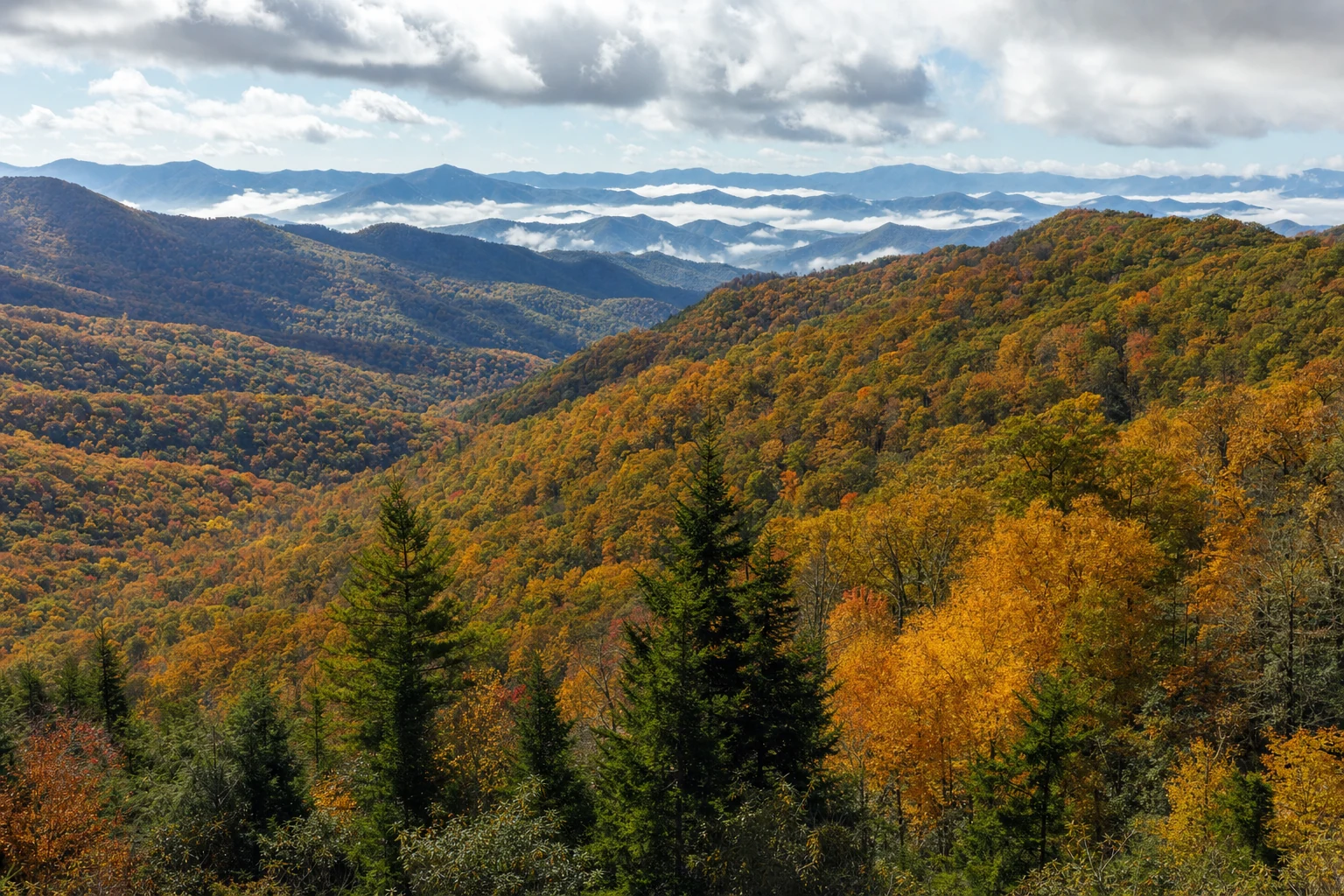
Fall is the easiest season to recommend. Peak color on the Tennessee side of the park typically lands in mid-October, the heat drops, and morning light in October filters through the canopy at a low angle. The falls flow consistently into autumn; Laurel Branch doesn't dry up the way smaller streams do.
Winter stays underrated. The trail remains open, but the paved surface ices over during cold snaps, and black ice on the steep sections is a real hazard; carry microspikes from November through February if there's been any recent freezing weather. In a hard freeze, ice builds around the edges of the falls while the center keeps moving. It's a different version of the place entirely, and significantly quieter than what you'd encounter in July.
Photographing the falls
Morning gives you soft, directional light before the sun clears the ridge to the east. Late afternoon is the second-best window if you can time it after the midday crowd thins. Direct midday sun in summer creates harsh contrast on the wet rock face and overexposes the white water.
The lower section is the default subject because the path puts it at eye level. The upper section is taller and worth framing separately if you have time to work around the other hikers. Getting a clean frame requires either very early arrival or patience; there's no quiet period on a summer weekend between 9 a.m. and 4 p.m.
Safety
Black bears are active throughout Great Smoky Mountains National Park, including along this trail. Keep 50 yards of distance if you encounter one — roughly half a football field. Don't leave food or scented items in your car at the trailhead; the parking area sees regular bear activity, and a locked car isn't a reliable deterrent.
Cell coverage along Little River Road and the trail is poor to nonexistent. Download an offline map before you leave Gatlinburg. Bring more water than you expect to need, and carry a rain layer; summer storms build quickly over the high ridges and reach the trail fast.
Nearby options
Sugarlands Visitor Center sits about four miles east toward Gatlinburg and is worth a stop before the hike. Rangers can tell you whether the Laurel Falls lot is already full, which saves the drive for nothing. The Elkmont area, a few miles west of the trailhead on Little River Road, offers access to longer backcountry routes and the Elkmont campground if you want more trail time after the falls.
Cades Cove operates on its own timescale. The 11-mile loop road takes two to three hours at a relaxed pace, with wildlife viewing and well-preserved historic structures along the way. If you're doing both in a day, hike Laurel Falls in the morning and drive toward Cades Cove after lunch, when the trailhead competition has eased.
Frequently asked questions
- How long is Laurel Falls Trail?
- Laurel Falls Trail is 2.6 miles one-way (5.2 miles round-trip), with 300 feet of elevation gain. It is rated easy.
- Do I need a parking tag?
- Yes — a Park It Forward parking tag is required for vehicles parked more than 15 minutes anywhere inside Great Smoky Mountains National Park. Daily ($5), weekly ($15), or annual ($40) tags are available via recreation.gov or park kiosks.