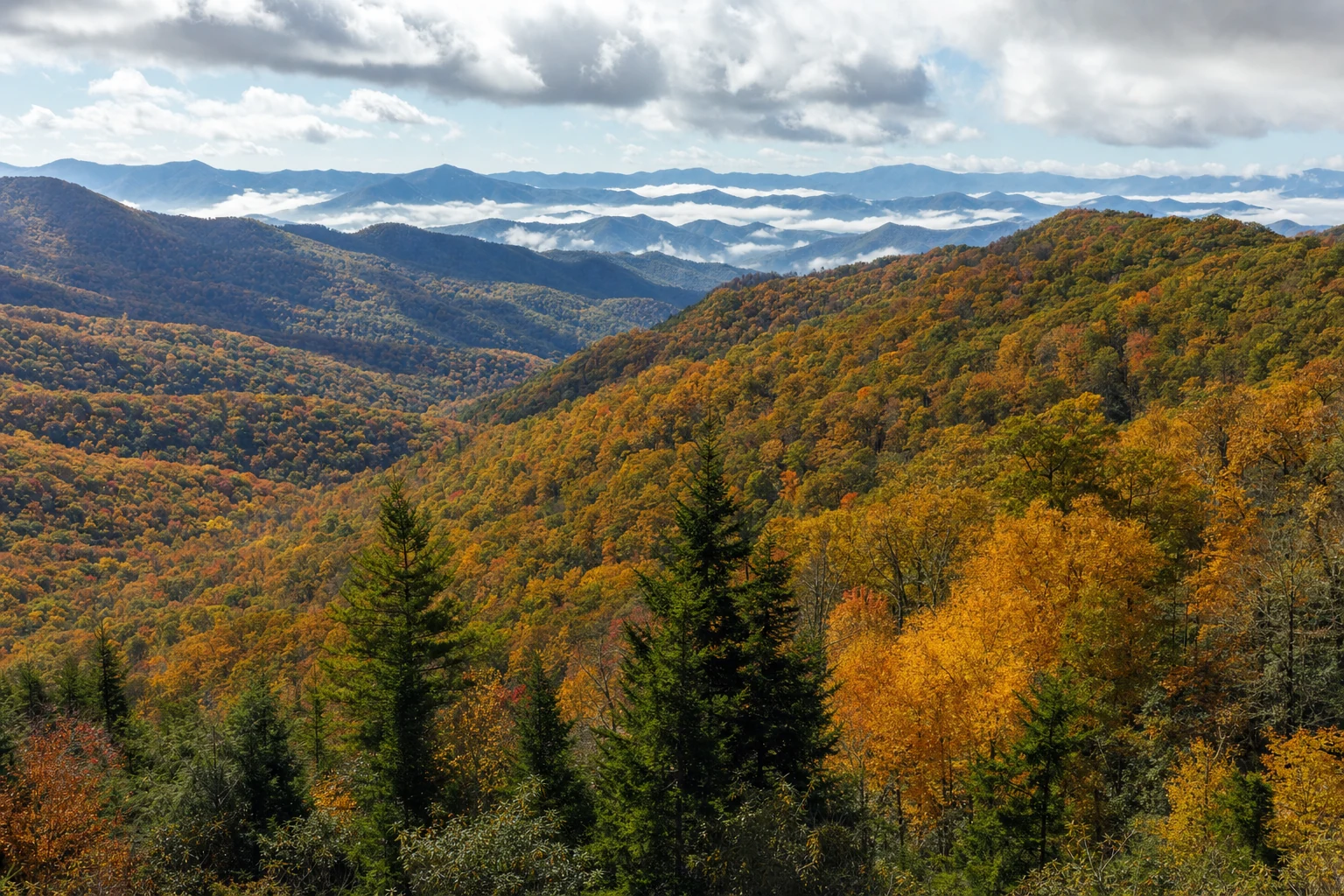

About Lead Cove Trail:
Lead Cove Trail offers one of the quieter ways to escape Cades Cove's loop road traffic without committing to a full-day backcountry push. At 1.8 miles one-way and rated moderate by NPS, it's short enough for a half-day outing but substantial enough that you'll feel like you've actually gone somewhere, not just checked a box.
What the Trail Is
The trailhead sits in the Cades Cove area, one of the most visited sections of Great Smoky Mountains National Park, but Lead Cove Trail itself pulls away from the meadow and into surrounding forest where the crowds thin quickly. The moderate rating reflects steady climbing more than technical difficulty; expect a genuine workout on the uphill sections, but no scrambling, no exposed ridges, no route-finding puzzles.
Round trip is roughly 3.6 miles. Most hikers finish in two to three hours depending on pace and how long they stop along the way. It's a reasonable choice for anyone who finds the Cades Cove Nature Trail (0.8 miles, easy) too short but isn't ready to tackle something like Spence Field via Bote Mountain (6.9 miles one-way, strenuous) from the same general area.
The Setting
Cades Cove occupies the western end of GSMNP, a broad open valley ringed by forested ridges. The 11-mile loop road draws more visitors than almost anywhere else in the park, partly for wildlife and partly for the 19th-century log cabins, barns, and churches preserved along its edge. Lead Cove Trail starts where the pavement ends, in practical terms: you leave the open meadow behind and move into the mixed hardwood forest that covers most of these ridges.
Spring runs earlier here than at higher elevations. Wildflowers come up through April and into May, and the understory is dense enough to hold color for weeks. By midsummer the canopy fills in completely, which matters more than most people expect on a warm day; the trail stays shaded and noticeably cooler than the sun-exposed meadow below. Fall color reaches the ridges around mid-October. Winter access is generally year-round along the loop road, but check conditions; the surrounding high country can freeze hard while the cove itself stays passable.
Parking and Access
Getting into Cades Cove takes planning. The loop road opens at sunrise and parking areas fill early on weekends, especially from June through October. On Wednesday and Saturday mornings before 10 a.m. during summer, the loop road is closed to vehicles and reserved for cyclists and pedestrians; if your visit falls on one of those days, plan accordingly or arrive before car traffic opens.
A Park It Forward parking tag is required anywhere inside GSMNP for stays over 15 minutes. Tags cost $5/day, $15/week, or $40/year through recreation.gov or park entrance kiosks. Get this sorted before you park, not when you return to the lot.
Cell signal inside Cades Cove is unreliable at best. Download the NPS app trail map for offline use or pick up a paper map at the Cades Cove visitor center before you head out. The trailhead does not have restroom facilities; the visitor center does.
What to Bring
Carry more water than you think you'll need. A moderate 3.6-mile round trip in summer heat will drain a single water bottle faster than expected, especially on the return downhill when the effort feels easier but your body temperature stays elevated.
Pack a rain layer even in clear weather. Mountain conditions shift fast in the Smokies, and an afternoon thunderstorm can arrive within an hour of a cloudless morning. A lightweight shell weighs almost nothing and changes a miserable situation into a minor inconvenience.
Trekking poles help on the downhill return, which is steep enough that your knees will know about it by the next morning if you carry any weight at all.
Bears and Wildlife
Cades Cove has one of the highest concentrations of black bear sightings in the park. The open meadow makes them visible, but bears are present on the surrounding forest trails too. Standard protocol: keep 50 yards of distance, never approach for a photo, and store food and scented items in your vehicle or a bear canister. Most surprise encounters happen when hikers move quietly; making noise on the trail is the simplest prevention.
Deer are common throughout the cove and adjacent forest. Wild turkey sightings are frequent enough that you stop finding them remarkable after the first morning. The cove is known for early-morning and late-evening wildlife activity on the loop road; the trail itself is more about the forest than any specific animal encounter.
Who This Trail Suits
Lead Cove Trail works for hikers who want more than a roadside stroll but aren't ready for a full strenuous route. The distance and difficulty make it accessible to most adults in reasonable shape, and children who hike regularly will handle it without trouble. The return downhill is straightforward, though it's steeper than the ascent feels, so keep younger kids moving at a controlled pace on the way back down.
It's not the right choice if you're primarily chasing a single destination: a waterfall, a summit view, a fire tower. This trail rewards the experience of moving through the forest more than delivering one clear payoff at the end. If that's what you're after from a Cades Cove day, the Ace Gap Trail (5.6 miles one-way, moderate) from the same area extends further into the backcountry with more varied terrain.
Pairing With a Full Cades Cove Day
The trail fits naturally into a larger Cades Cove visit. Drive the loop road early, before 9 a.m. if possible, when wildlife activity peaks and traffic hasn't built up; then hike Lead Cove Trail in the mid-morning before afternoon heat arrives. The combination covers both the open valley experience and the forest without requiring a long drive to a separate trailhead.
The Cades Cove visitor center and Abrams Creek picnic area give you a reasonable spot to regroup between the drive and the hike. On a weekday in spring or early fall, you can cover both without fighting for parking or waiting out loop road backups.
Frequently asked questions
- Do I need a parking tag?
- Yes — a Park It Forward parking tag is required for vehicles parked more than 15 minutes anywhere inside Great Smoky Mountains National Park. Daily ($5), weekly ($15), or annual ($40) tags are available via recreation.gov or park kiosks.