
About Little Greenbrier Trail:
Little Greenbrier Trail starts at the Metcalf Bottoms picnic area on Little River Road and runs 3.0 miles one-way to a preserved log schoolhouse, making it one of the park's more satisfying half-day routes for anyone who wants historical context alongside scenery. The access from Gatlinburg is straightforward, the terrain is genuinely moderate without being punishing, and the destination gives you something to think about beyond the tree line.
The schoolhouse
The historic schoolhouse at trail's end is the reason most people choose this route over the dozens of other moderate options in GSMNP. Log construction, hand-hewn timbers, set against a wooded hillside clearing: it gives a concrete sense of what life looked like for the families who farmed and raised children in these coves before the park's establishment in the 1930s. It's not a museum with interpretive signage; it's a structure you can examine up close, in context, and the cleared land surrounding it lets you picture how self-contained this community once was before paved road access arrived.
Community schools like this served a practical function in the Smokies. Literacy mattered to mountain families, and small log schoolhouses let children learn without traveling far from home. This one has stood long enough to outlast most other settlement-era structures in the park, and the NPS has kept it stable.
The hike
From Metcalf Bottoms, the trail gains elevation gradually as it climbs away from the Little River valley. The first mile follows creek drainages and stays relatively flat before the gradient steepens. You'll cross small stream channels; in wet seasons, some of these run fast and cold. The forest cover runs thick all the way — predominantly mixed hardwoods, with rhododendron thickets along the creek margins and scattered hemlocks filling the canopy gaps. Spring pushes wildflowers through the understory before the canopy closes overhead and shuts out the light.
Three miles one-way means 6.0 miles round-trip if you retrace your steps, which is the standard approach since Metcalf Bottoms serves as both trailhead and parking area. Budget three to four hours for the full out-and-back. The moderate rating holds up; there's real climbing, enough to feel like effort, but nothing demanding technical skill or scrambling. Fit beginners can handle it without trouble, and experienced hikers will find the pace comfortable enough to stop often at the creek.
Foot traffic runs lighter than on the park's marquee routes. Grotto Falls and Alum Cave draw the bulk of the day-hikers; Little Greenbrier tends to attract people who've done those and want fewer crowds. Summer weekends at Metcalf Bottoms still get busy (the picnic area is among the most-used in the park), but once you're 15 minutes up the trail, the noise from the parking lot disappears.
Getting there
Metcalf Bottoms sits on Little River Road, roughly midway between Gatlinburg and Townsend. From downtown Gatlinburg, enter the park via Sugarlands Visitor Center, then follow Little River Road west. The Metcalf Bottoms picnic area is on your left; the Little Greenbrier trailhead is at the far end of the picnic lot.
A Park It Forward tag is required for any stay over 15 minutes inside GSMNP. Tags cost $5 per day, $15 per week, or $40 for the full year; purchase at recreation.gov before you arrive or at a park entrance kiosk. On summer and fall weekends, the Metcalf Bottoms lot fills before 9 a.m. Plan for a weekday, arrive before 8:30, or be prepared to wait for turnover.
Cell signal fades once you're past Sugarlands Visitor Center. Download offline maps for the Little River Road corridor before leaving Gatlinburg.
When to go
Spring is the strongest season for this trail. Wildflowers emerge through the leaf litter in early spring and peak through April and into May at these elevations; the forest feels genuinely alive before the canopy closes. The creek crossings run full and cold, adding sound and texture to the hike without being dangerous at normal water levels. Crowd levels stay lower than summer through most of April.
Summer brings heat, humidity, and the full weight of tourist season to Metcalf Bottoms. The canopy keeps the trail cooler than town, but July and August afternoons get oppressive. Arrive early or go on a weekday.
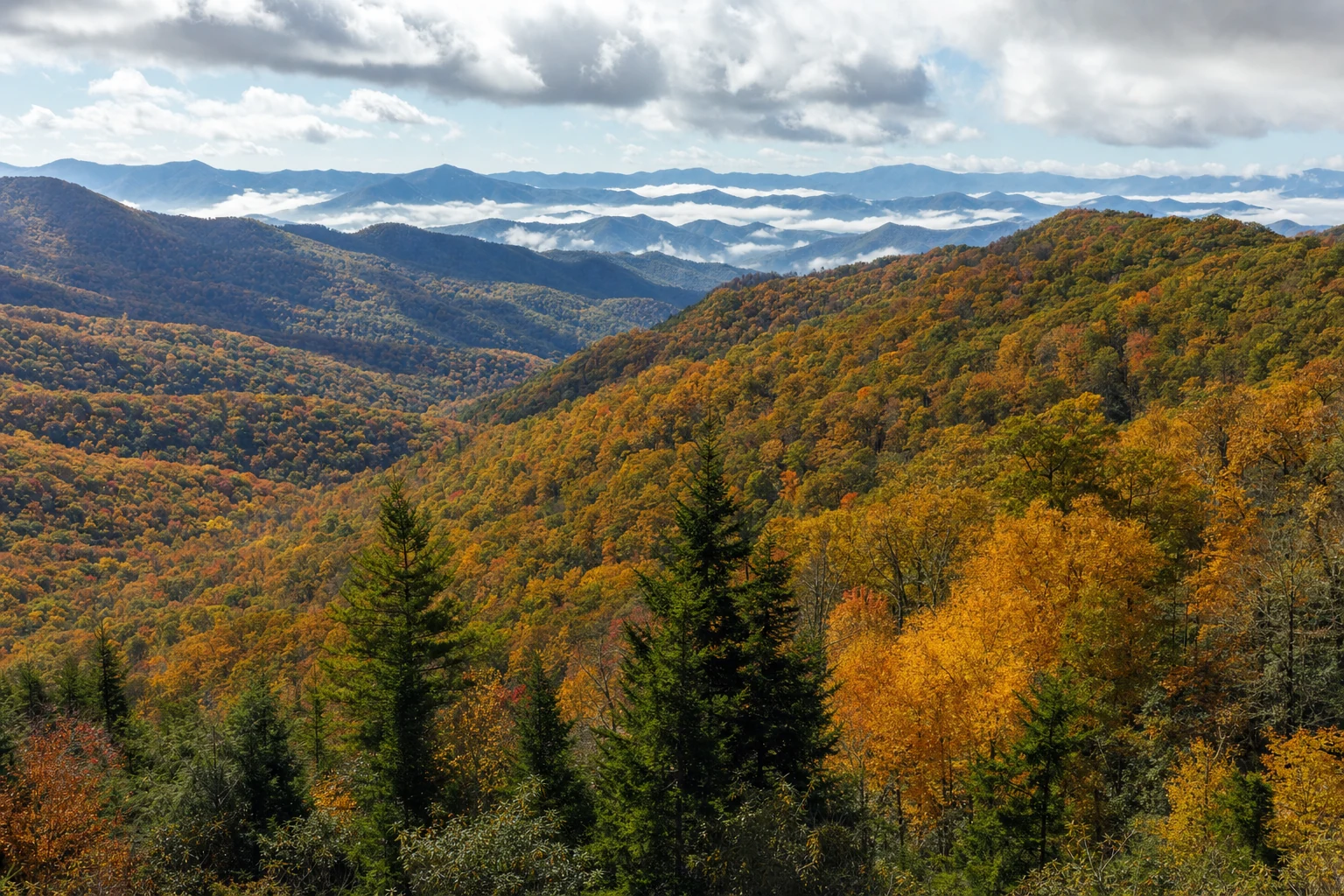
Fall delivers reliable color from mid-October through early November, with cove hardwoods turning gold and orange in the creek bottoms. The schoolhouse clearing looks particularly good in October afternoon light. This is peak season across the park, so expect the lot to fill fast.
Winter quiets things considerably. Ice on the creek crossings requires attention, and snow visits the trail occasionally at this elevation, but the route stays accessible most of the season. The bare canopy opens long views into the hollows that you won't get any other time of year, and the complete absence of other hikers can make the schoolhouse feel genuinely remote.
Nearby trails
Metcalf Bottoms puts you within easy range of several routes worth pairing on the same trip or during a longer stay in the western section of the park.
- Meigs Creek Trail (Little River Road, 3.2-mile loop, Moderate): Multiple stream crossings on a loop that sees a fraction of the picnic-area traffic. Good option if you want more mileage after finishing Little Greenbrier.
- Jakes Creek Trail (Elkmont, 3.3 miles one-way, Moderate): Starts near Elkmont Campground, just a few minutes east along Little River Road.
- Middle Prong Trail (Tremont, 4.0 miles one-way, Moderate): Follows a creek valley through multiple waterfalls. The Tremont area is a short drive from Metcalf Bottoms and worth the detour.
- West Prong Trail (Tremont, 2.0 miles one-way, Easy): Shorter and gentler; works well if you're building a longer day with kids or mixing difficulty levels.
The drive along Little River Road itself rewards a slower pace — the road follows the river for several miles with pull-offs for fishing access and boulder scrambles down to the water.
What to bring
Six miles round-trip at moderate effort in mountain terrain requires more preparation than the distance alone suggests:
- More water than you expect to use; at least 2 liters per person in summer heat
- Waterproof trail shoes or boots for the creek crossings
- Rain layer and warm layer, even in summer — afternoon thunderstorms are routine from June through August, and temperatures drop fast when they move in
- Bear spray or a bear canister; black bears range actively through this section of the park year-round
No day-use permit is required for Little Greenbrier Trail. The only cost is the Park It Forward parking tag, and there's no entrance fee to GSMNP beyond that.
Frequently asked questions
- Do I need a parking tag?
- Yes — a Park It Forward parking tag is required for vehicles parked more than 15 minutes anywhere inside Great Smoky Mountains National Park. Daily ($5), weekly ($15), or annual ($40) tags are available via recreation.gov or park kiosks.