
About Little River Trail
The Little River Trail runs 4.9 miles one-way from the Elkmont Campground parking area, tracking an old logging railroad grade alongside the Little River. It's one of the few trails in Great Smoky Mountains National Park where the word "easy" applies for most of its length: wide, largely flat, and hard to get lost on. Families with younger kids do well here, and so do hikers who want several hours near moving water without grinding up a mountainside.
What the trail is like
The railroad grade built to serve the Little River Lumber Company in the early twentieth century is why the path feels so broad underfoot. Where other Smokies trails switchback aggressively up ridges, this one follows the river's contour with only 500 feet of total gain spread across the full 4.9 miles to the Huskey Gap Trail junction. The surface is packed gravel and dirt, wide enough to walk two abreast, shaded by hemlocks and hardwoods that close in tightly overhead. Little River stays close for most of the route, sometimes visible just off your shoulder and sometimes audible through the trees; the sound of it carries all the way back to the trailhead on quiet mornings.
Several cascades appear within the first few miles. The river drops in steps of five to fifteen feet across worn rock, and the flow runs reliable year-round, fed by the heavy precipitation that falls on the Tennessee side of the divide. In spring, after snowmelt and seasonal rain, the water is loud enough that you can hear the next cascade before you see it. Sunlight on the cascades hits best in the morning hours, when the angle is low and the water isn't in full shadow from the surrounding canopy.
History on the ground
Elkmont was not quiet woodland before the national park arrived. The Little River Lumber Company worked this watershed extensively, and the trail grade you're walking is the physical remnant of that era. A lumber shed dating to the early twentieth century still stands beside the route, viewable from the outside, a wooden structure that survived long enough to become a historical artifact rather than firewood. The park hasn't dressed it up with interpretive signage or reconstructed anything for effect, so you read the landscape rather than a placard.
Homesites from the former Elkmont summer colony are also scattered along the lower river corridor. Stone foundations and flattened clearings in the undergrowth mark where cabins once stood; the outlines are clearest in late fall and winter after leaf drop. These are quiet details rather than dramatic ruins, and easy to miss if you're moving at a pace. Slowing down for thirty seconds near a foundation tells you something a ranger talk can't quite replicate about what this valley looked like before the park took it.
Wildflowers and wildlife
Spring is the primary wildflower window along this section of the river, with trillium, hepatica, and wild ginger appearing in the understory from mid-March through early May, depending on elevation and seasonal weather. The bloom runs earlier here than on higher-elevation trails, which makes Elkmont one of the better early-season stops for anyone chasing spring color in the park.
Bear activity is common throughout GSMNP, and the trails near Elkmont Campground see habituated bears that are accustomed to people; that makes them less predictable, not calmer. Keep 50 yards of separation, never approach for a photo, and store food in provided containers at the campground or locked in your vehicle at the trailhead. Trekking poles and a group of three or more reduce the chance of an uncomfortable encounter.
Route options
Most hikers treat the trail as an out-and-back, turning around somewhere between one and four miles in depending on their energy and how interesting they find each section. You don't need to reach the Huskey Gap junction to get the full character of the trail; the river views, cascades, and logging-era remnants are concentrated in the first few miles. If you want a loop rather than a straight line, the Cucumber Gap Loop connects Jakes Creek Trail and Little River Trail into a 5.7-mile moderate circuit that covers more of the Elkmont area, including different forest types and creek drainages. It's a popular choice for day hikers who want a complete outing rather than a partial out-and-back. The trail is also listed as open to bicycles in certain sections, so check current NPS guidance if you're planning to bring bikes.
Seasonal timing
Spring delivers the highest water, the wildflowers, and unpredictable rain that can make the trail muddy after a storm. Summer is peak crowd season, particularly around Elkmont Campground, which sits adjacent to the synchronous firefly viewing area. Each June, a lottery system manages access to the firefly event; if you didn't enter the lottery and you're hiking Little River Trail in June, be aware that campground parking can be effectively unusable during peak viewing nights. Start before 9 a.m. on summer weekdays to find parking without a wait.
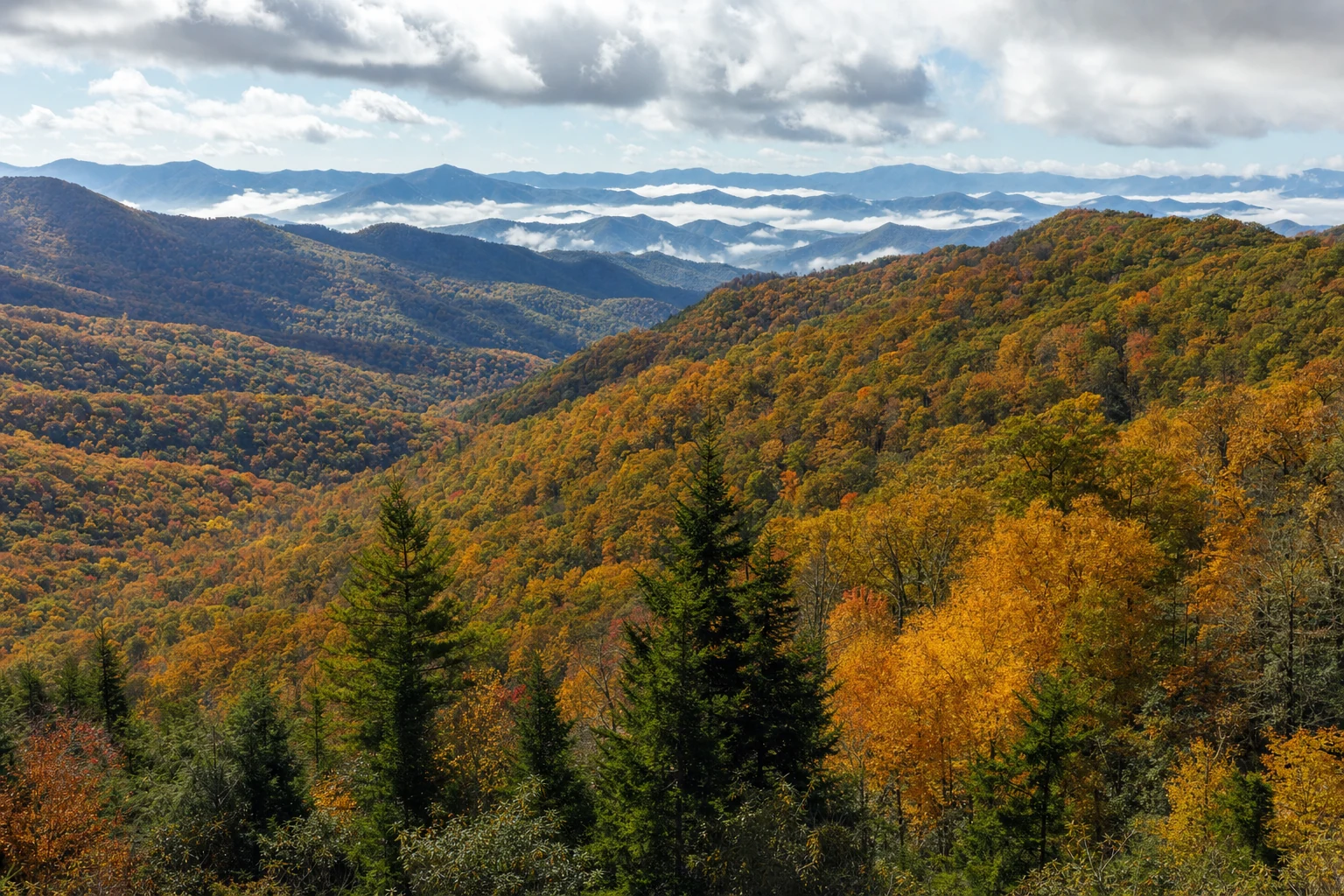
Fall foliage in the lower Little River corridor typically peaks in mid-October. The trail stays accessible through most winters, though the cascades develop ice on surrounding rocks after extended cold snaps, which adds slip hazard if you step off the trail surface. The wide grade stays safe in ordinary winter conditions; ice storms are the exception worth checking on before you go.
Getting there and parking
From Gatlinburg, drive into the park via Sugarlands Visitor Center, continue on Little River Road, and follow signs toward Elkmont. The turn is clearly marked. If you're coming from Wears Valley, the back roads via Wear Cove Gap Road near Metcalf Bottoms or Line Springs Road give you a less congested entry into this part of the park during busy weekends, bypassing the Gatlinburg corridor entirely.
All vehicles parked inside Great Smoky Mountains National Park for more than 15 minutes require a Park-It-Forward tag: $5 per day, $15 per week, or $40 for an annual pass. Buy them through recreation.gov before you leave or at fee kiosks inside the park. The Elkmont lot fills early on summer and fall weekends; arriving by 7 or 8 a.m. typically secures a spot. Later arrivals on busy days may need to park along Little River Road and walk in, which adds distance but is otherwise manageable.
Frequently asked questions
- How long is Little River Trail?
- Little River Trail is 4.9 miles one-way (9.8 miles round-trip), with 500 feet of elevation gain. It is rated moderate.
- Do I need a parking tag?
- Yes — a Park It Forward parking tag is required for vehicles parked more than 15 minutes anywhere inside Great Smoky Mountains National Park. Daily ($5), weekly ($15), or annual ($40) tags are available via recreation.gov or park kiosks.