
About Maddron Bald Trail
Maddron Bald Trail earns its strenuous rating: 7.1 miles one-way, 3,000 feet of elevation gain, and a remote Cosby-area trailhead that sees a fraction of the foot traffic you'd find on the park's western approaches. The Cosby corner of Great Smoky Mountains National Park runs quieter than the Gatlinburg-facing entrances, which means you're less likely to share the old-growth forest with a crowd. Plan a full day.
Trail Overview
The route runs point-to-point from the Old Settlers Trail parking area near Cosby (35.7740° N, 83.2700° W) up to Maddron Bald, gaining the bulk of its elevation across the upper miles where the forest thins and the ridgeline opens. "Point-to-point" means a car shuttle or a long out-and-back. Most hikers return the way they came rather than deal with two-vehicle logistics; if you do go out-and-back, your total day exceeds 14 miles, so pace accordingly.
The old-growth sections early in the climb are worth slowing down for. These aren't young second-growth trees — some of the hemlocks and hardwoods here are centuries old and massive by Appalachian standards. The trail's remote character is genuine: Maddron doesn't connect two popular destinations and doesn't see the constant foot traffic of routes like Alum Cave or Chimney Tops. You'll likely pass fewer people on this trail in a full day than you would in an hour on those.
The bald at the top is the reason to push through. Balds are uncommon in the Smokies, their origin still debated among ecologists, and the open ground at the summit contrasts sharply with the enclosed forest below. You'll know you're getting close when the trees begin to shrink and thin.
Getting There
From downtown Gatlinburg, head east toward Cosby rather than toward the main Sugarlands entrance. The Cosby area sits at the park's eastern end in Tennessee, roughly 45 minutes from Gatlinburg. GPS navigation works reasonably well on the main park roads, but cell service disappears before you reach the trailhead, so download offline maps or note the coordinates (35.7740° N, 83.2700° W) before you leave.
Parking inside Great Smoky Mountains National Park requires a "Park It Forward" tag for any stay over 15 minutes: $5 daily, $15 weekly, or $40 for an annual pass. Purchase at recreation.gov or at park entrance kiosks.
When to Go
The trail is hikeable year-round under normal conditions, but each season delivers a different experience.
Spring (late March through May) brings wildflowers at lower elevations first, climbing the slope as temperatures rise. Streams run high from snowmelt and rain. Trail surfaces can be muddy and slick into April, so traction devices may be worth having if you're heading up early in the season.
Summer means arriving early — before 9 a.m. if you can manage it. Afternoon thunderstorms are common and fast-moving at elevation, and you want to be off the exposed bald before they develop. Heat and humidity in the valley make even the shaded lower sections feel heavy in July and August.
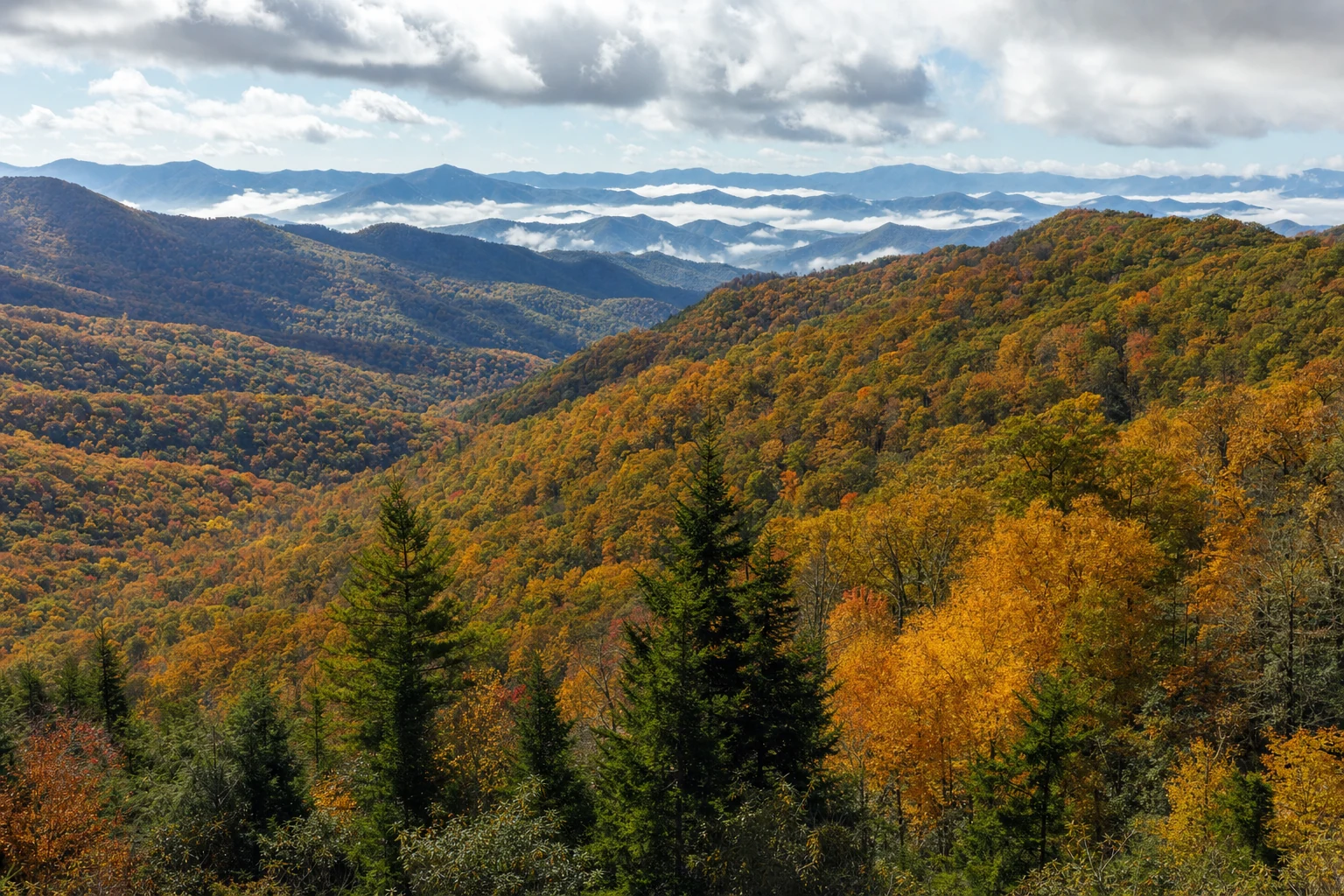
Fall draws the largest crowds to GSMNP overall, with peak foliage typically hitting mid-October at mid-elevations and slightly later up high. The color on the bald, where the views aren't blocked by canopy, can be exceptional. Expect the parking area to fill by mid-morning on October weekends.
Winter cuts foot traffic dramatically. Cold temperatures, ice on the upper trail, and shorter daylight windows make this a hike for experienced cold-weather hikers only, but the silence of the forest in snow and the long sight lines through bare trees are genuinely unlike any other season. Check road conditions before heading out — some park roads close seasonally or during winter weather events.
What to Expect on Trail
Seven miles one-way is a serious commitment on any terrain; add 3,000 feet of gain and you're looking at a full day even at a steady pace. There's no shuttle service, no shelter partway, no easy exit. Once you're in, you're committed to the distance.
The trail surface varies from packed dirt to root-laced switchbacks as it climbs. Old-growth forest dominates the lower and middle sections, with a dense canopy that keeps things cooler on summer mornings but can feel oppressive in heavy weather. The upper miles bring the transition zone where trees shorten and the trail grade steepens before the bald opens up.
Safety
Cell coverage along this trail is poor to nonexistent past the parking area. Tell someone your plan before you leave, including an expected return time. Carry a paper map or a downloaded offline version as backup — don't rely on your phone for navigation once you're in.
Black bears are active throughout GSMNP, and the Cosby area has an established bear population. Keep at least 50 yards of distance if you encounter one. Never leave food, wrappers, or scented items unattended; use bear boxes or canisters where available, or keep everything locked in your vehicle at the trailhead. Carry out everything you carry in.
Water from backcountry streams looks clean and isn't. Filter or treat anything from natural sources. On a strenuous trail with significant elevation gain, you'll drink more than you'd expect — bring more water than seems necessary. Mountain weather shifts faster than most visitors anticipate; a rain layer and a warm layer belong in your pack even on a clear summer morning.
Stay on the marked trail. The vegetation on and around the bald is fragile, and off-trail foot traffic causes erosion that's genuinely difficult to reverse.
Pairing With Other Cosby-Area Trails
The Gabes Mountain Trail connects to Maddron Bald Trail and starts from Cosby Campground (35.7730° N, 83.2180° W), running 6.4 miles one-way with roughly 2,000 feet of gain. Both trails share the same character: dense forest, limited crowds, and a more exploratory feel than the park's western corridors. If you're spending more than one day in the area, the two routes together give you a solid two-day rotation without covering the same ground.
Cosby Campground is worth noting as a base if you'd rather not drive in from Gatlinburg each morning. It's one of the park's quieter campgrounds and puts you within easy reach of the eastern trail network.
Frequently asked questions
- How long is Maddron Bald Trail?
- Maddron Bald Trail is 7.1 miles one-way, with 3,000 feet of elevation gain. It is rated strenuous.
- Do I need a parking tag?
- Yes — a Park It Forward parking tag is required for vehicles parked more than 15 minutes anywhere inside Great Smoky Mountains National Park. Daily ($5), weekly ($15), or annual ($40) tags are available via recreation.gov or park kiosks.