
About Manway Trail:
Now I'll write the trail guide applying the anti-slop constraints throughout.
The Manway Trail runs 2.0 miles one-way through the Cosby sector of Great Smoky Mountains National Park, rated strenuous by the NPS. Cosby sits in the park's northeastern reaches, a region that draws far fewer visitors than the Sugarlands entrance near Gatlinburg despite offering comparable trail density and genuine forest depth. The trail's name carries historical weight before you've taken a step: a "manway" is an Appalachian term for a path cut by hand through mountain terrain, typically by settlers, hunters, or timber crews in the era before the park's establishment, and several such routes survive today as named NPS trails.
What "Strenuous" Means on a Two-Mile Trail
Two miles might not sound demanding, but the NPS strenuous rating reflects elevation change compressed over a short distance rather than gradual climbing you can settle into. Expect sustained steep sections rather than occasional hard pitches. Plan for slow going on the ascent, careful footing where the trail narrows, and real effort on the return when your legs have already worked. Hikers who regularly handle strenuous terrain will find it manageable; if your last outing was a paved greenway, this isn't the right starting point.
The rating also reflects trail character. Manway trails across the park tend to follow older, less-maintained routes: narrower tread, fewer switchbacks than an engineered trail, and more natural obstacles underfoot. You'll likely encounter exposed roots and sections where the route demands enough attention to stay on track. Cell coverage in this part of the park is poor to nonexistent, so navigation apps aren't a reliable safety net if you lose the trail.
Getting There from Gatlinburg
From downtown Gatlinburg, take US-321 North roughly 20 miles to the Cosby community, then follow the signs for Cosby Campground and the park access road. Traffic on this route is significantly lighter than on Newfound Gap Road or the Cades Cove loop; the Cosby corridor simply doesn't pull the same volume, which is part of its appeal. Cosby Campground serves as the hub for this trail network and provides the main parking area.
Park-It-Forward parking tags are required anywhere inside GSMNP for stays over 15 minutes: $5 daily, $15 weekly, or $40 annually, available at recreation.gov or park kiosks. The Cosby lot fills on busy summer and fall weekends, so arriving before 9am is a reasonable precaution.
The Cosby Trail Network
The Manway Trail doesn't sit in isolation. The Cosby sector supports a full network ranging from the easy 1.0-mile Cosby Nature Trail loop up through routes like Firescald Ridge (4.5 miles one-way, strenuous) and the Roundtop Trail (2.0 miles, strenuous). High Rocks Trail matches the Manway's distance and difficulty rating exactly, making the two a natural comparison when you're deciding between options. Salt House Branch Trail offers 2.0 miles one-way at a moderate rating for groups with mixed fitness levels; the Turkeypen Ridge Trail extends that to 3.0 miles at moderate difficulty.
Combining the Manway with one of these for a longer day makes logistical sense since you're already making the drive out. A warmup on the Cosby Nature Trail beforehand costs almost nothing in time or energy and gives you a baseline read on how your legs feel before committing to the strenuous push.
Seasons
Spring (late March through May) brings wildflower displays across the Cosby area. Trilliums and fire pinks work through the forest understory while watercourses run full from snowmelt and spring rain. Debris from winter storms may still cross the path in early spring on less-heavily-trafficked routes like this one.
Summer is the park's peak visitation period, but Cosby stays manageable compared to the main corridors. Parking holds longer into the morning than at Newfound Gap or Clingmans Dome. Start early regardless; afternoon thunderstorms build regularly across the mountains from June through August, and a strenuous trail on exposed terrain is a bad place to be when lightning arrives.
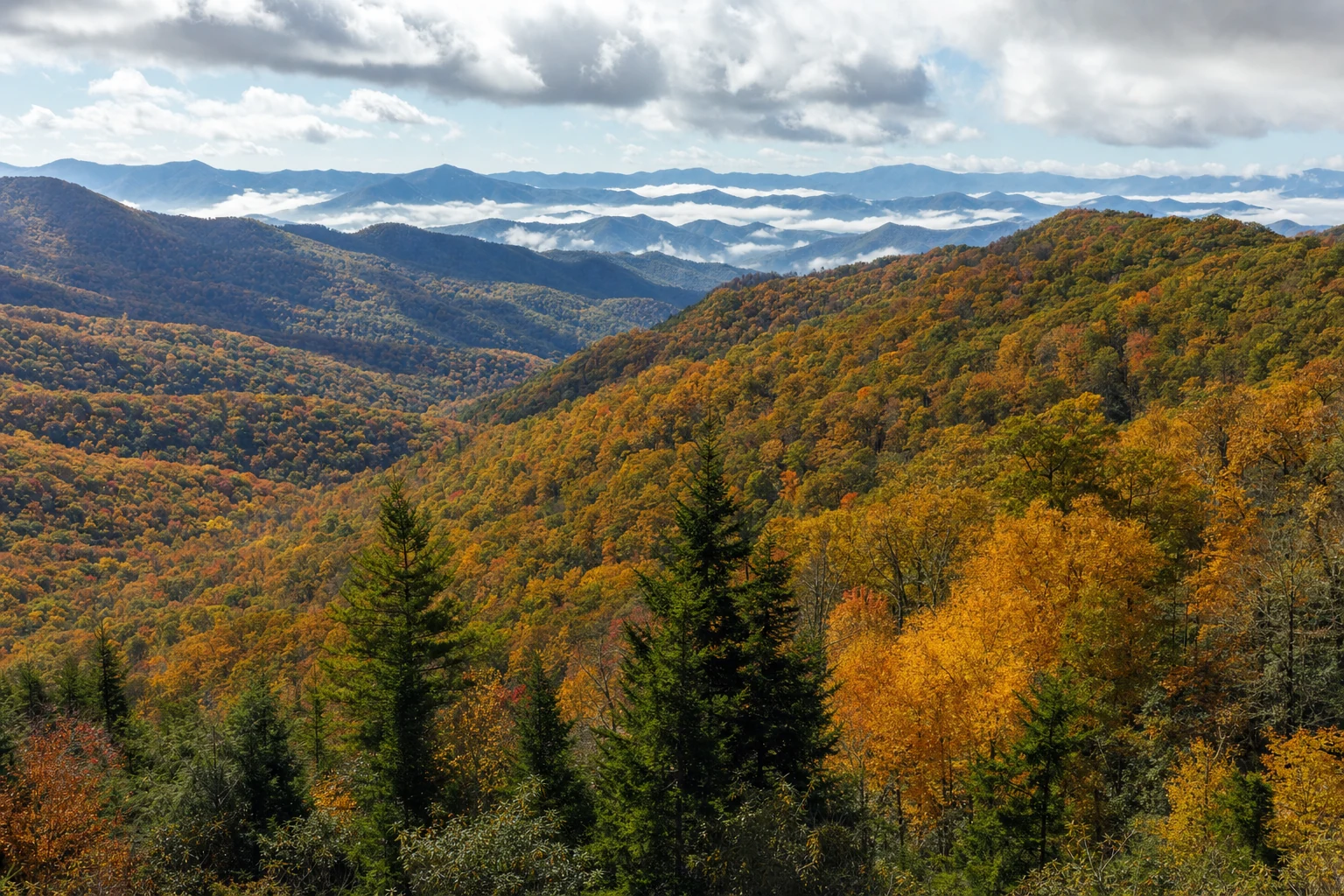
Fall foliage in the Cosby area typically peaks in the second and third weeks of October, running slightly later at lower elevations than the high balds and ridges. The sector sees more interest during this window but not at the scale of Cades Cove or Roaring Fork. Winter strips the canopy and opens long views through bare hardwoods that you simply can't get in summer. Carry traction devices for icy sections; trail conditions at Cosby vary sharply with elevation and recent weather, and the NPS posts trail condition updates worth checking before a cold-weather visit.
What to Carry
The standard calculus holds: carry more water than you think you need (figure at least a liter per person for this level of effort over this distance), a rain layer regardless of the morning forecast, and a warm layer in the shoulder seasons when temperatures drop fast once you stop moving. Strenuous trails with narrow, natural tread are harder on ankles than wide graded paths, so supportive footwear matters more than it does on a loop trail near a visitor center.
Bear activity runs consistent across the park year-round. Keep 50 yards of distance from any bear you encounter; store all food in sealed containers or designated hangers as park regulations require. The proximity of Cosby Campground doesn't soften the requirements or the reality.
Tell someone your plans: specific trailhead, intended turnaround point, expected return time. The combination of limited cell service, strenuous terrain, and a trail name that signals rougher-than-average conditions means you want a backup plan that doesn't depend on your phone.
Who It Suits
The Manway Trail is a good fit for experienced hikers who want lower crowd density and don't mind trading amenities for solitude. Four miles round-trip on steep, uneven ground with a genuinely rough trail surface is a real commitment, not a casual afternoon add-on. Kids who regularly tackle hard trails with adults can handle it; it's not appropriate for young children or anyone new to strenuous hiking.
If you've done similar terrain elsewhere in the park and want to explore the Cosby sector, this is one of the more demanding half-day options the area offers and one of the quieter ones.
Frequently asked questions
- Do I need a parking tag?
- Yes — a Park It Forward parking tag is required for vehicles parked more than 15 minutes anywhere inside Great Smoky Mountains National Park. Daily ($5), weekly ($15), or annual ($40) tags are available via recreation.gov or park kiosks.