
About Meigs Creek Trail:
Meigs Creek Trail runs 3.2 miles as a loop off Little River Road inside Great Smoky Mountains National Park, threading through dense forest with the creek as a near-constant companion. The route is rated moderate — manageable for most fit adults — but the defining feature is also the catch: multiple stream crossings that can range from an easy rock-hop in late summer to thigh-deep and genuinely demanding after heavy rain. Plan around water levels and you'll find one of the quieter loop experiences in the park.
The Trail at a Glance
- Distance: 3.2 miles (loop)
- Difficulty: Moderate
- Location: Little River Road, GSMNP
- Defining feature: Multiple stream crossings of Meigs Creek
- Parking: Park-It-Forward tag required — $5/day, $15/week, $40/year, available at recreation.gov or park kiosks
What "Moderate" Actually Means Here
On most GSMNP trails, moderate signals a mix of rolling terrain, some sustained climbing, and non-trivial footing. Meigs Creek fits that description, but the crossings add a variable that an elevation profile doesn't capture. When water is low, stepping across the creek is part of the appeal — clear shallow runs, fast water, good sound. When the creek is running high from spring snowmelt or a recent rainstorm, those same crossings demand real attention. Wet rocks are slippery. Currents look mild but push hard. If you're not comfortable with water above the knee, check conditions before heading out or pick a dry-weather window.
The loop format is a practical advantage: no car shuttle, no retracing your steps. Whichever direction you start, the trail brings you back to your vehicle. For 3.2 miles at a comfortable pace, budget two to two and a half hours — more if you stop at the creek often, which most people do.
Getting There
The trailhead sits on Little River Road, one of the park's main east-west corridors connecting the Sugarlands Visitor Center (outside Gatlinburg) with the Townsend and Tremont areas to the west. From Gatlinburg, enter the park at the Sugarlands entrance and follow Little River Road west. The road traces its namesake river closely for much of its length, so the drive itself rewards a slower speed.
Parking inside GSMNP for stays over 15 minutes requires a Park-It-Forward tag. Purchase online at recreation.gov before you arrive, or use the kiosks at major trailheads and visitor centers. Most kiosks don't accept cash. Cell coverage on interior trails is poor to nonexistent — download an offline map before leaving the parking area.
Stream Crossings: The Real Planning Variable
Multiple crossings mean multiple chances for wet feet, and wet feet affect every mile that follows. Many regulars on water-crossing trails skip waterproof boots entirely — once water clears the collar, they just trap moisture in — and instead wear trail runners or light hikers they don't mind submerging, with a dry pair of socks waiting in the car.
Creek levels in GSMNP track recent precipitation directly. Spring is typically the highest-water season: snowmelt from the high peaks and frequent rain push Meigs Creek up significantly. Late summer and early fall bring the lowest, clearest water and the easiest crossings. Winter crossings can be bone-cold. After any significant rainfall, expect elevated, murky water regardless of season — check the NPS GSMNP website for trail conditions before heading out, since high-water notices appear there before they reach most third-party apps.
Best Time to Visit
Each season brings a different version of this trail.
Spring turns the forest electric green, wildflowers push through the leaf litter, and the creek is loud and fast. The crossings are at their most demanding, but the energy of the woods in April and May is hard to match. Arrive early on weekends — Little River Road trailheads fill before midday.
Summer is GSMNP's busiest period overall. Weekday mornings are noticeably less crowded than weekend afternoons. Water typically runs lower and clearer by July, making crossings easier. Heavy canopy keeps most of the trail shaded even on warm days.
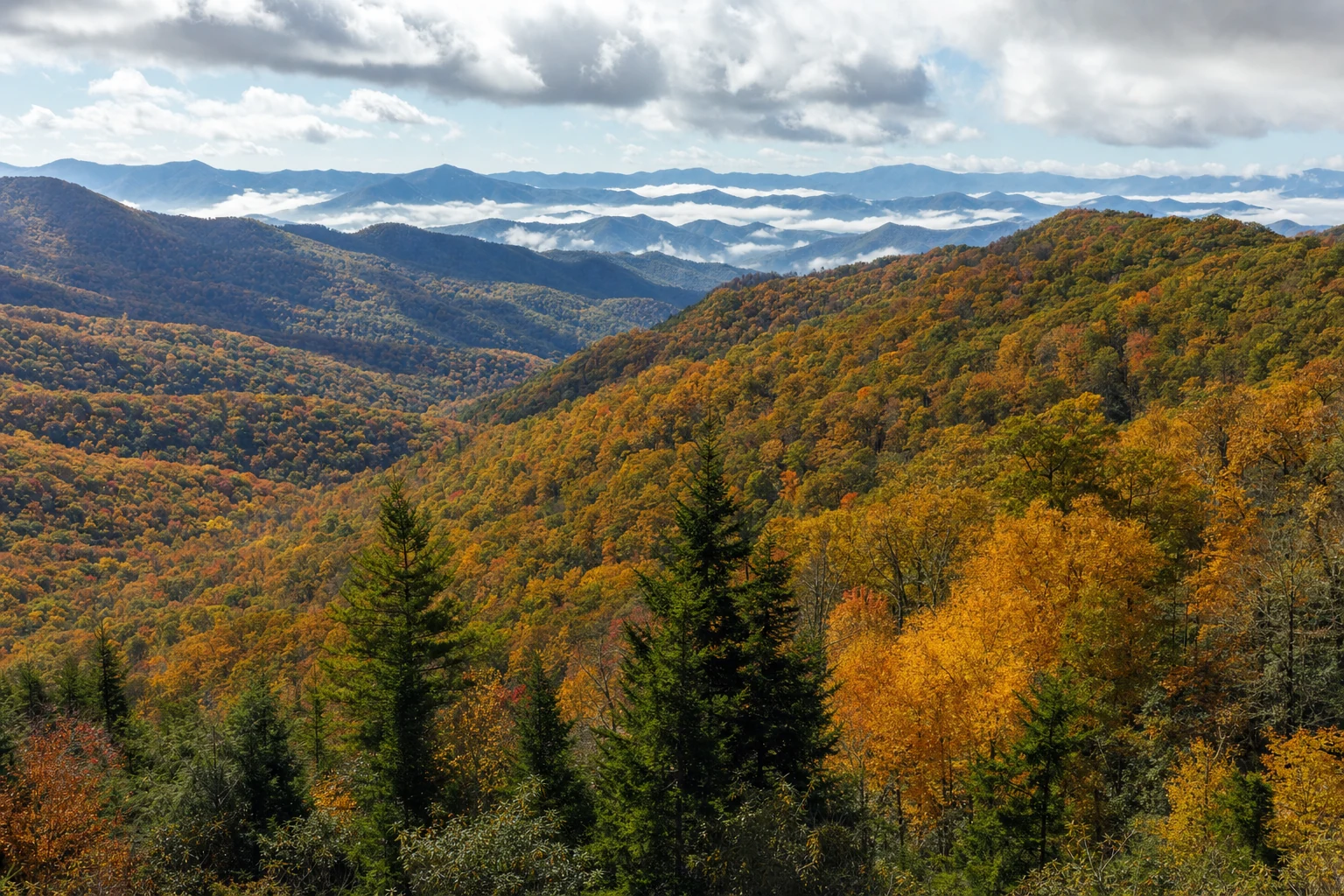
Fall draws the park's largest crowds, with peak color typically arriving at lower elevations in mid-October. A creek corridor shows autumn differently than the high ridges — maples and tulip poplars in golds and oranges above moving water. Book lodging well in advance for any October weekend.
Winter is the quietest window on this trail. Snow is possible but not guaranteed at the elevations Meigs Creek runs. Bare trees open sightlines that disappear completely under full leaf, and you'll likely share the trail with very few others. Ice at crossing rocks is a real hazard — trekking poles help.
What to Pack
The standard GSMNP day hike kit applies, with a few notes specific to a water-crossing trail:
- Footwear you can get wet — trail runners or older hikers rather than waterproof boots when water is moderate to high
- Extra socks — even careful rock-hoppers slip occasionally
- Trekking poles — particularly useful at crossings in higher water and on slick roots after rain
- Rain layer — mountain weather shifts fast; carry one even on clear mornings
- Sufficient water — creek water in GSMNP requires treatment before drinking; carry everything you'll need from the start
- Bear awareness — black bears are active throughout the park, keep 50 yards of distance, and never leave food unattended in a backpack or vehicle without it secured; a hard-sided container or vehicle trunk works for trailhead stops
Pairing with Other Little River Road Trails
Little River Road anchors several other trailheads worth combining with a Meigs Creek hike. Middle Prong Trail, which starts at Tremont further west on the same road, runs 4.0 miles one-way through moderate terrain and passes multiple waterfalls — a natural extension if you want a full day in the Little River drainage. Jakes Creek Trail at Elkmont, to the east, covers 3.3 miles at a moderate pace and sees lighter weekend traffic than some of the more-promoted routes nearby. Either makes a reasonable second hike or an alternative for members of a group split on what they want from the day.
Frequently asked questions
- Do I need a parking tag?
- Yes — a Park It Forward parking tag is required for vehicles parked more than 15 minutes anywhere inside Great Smoky Mountains National Park. Daily ($5), weekly ($15), or annual ($40) tags are available via recreation.gov or park kiosks.