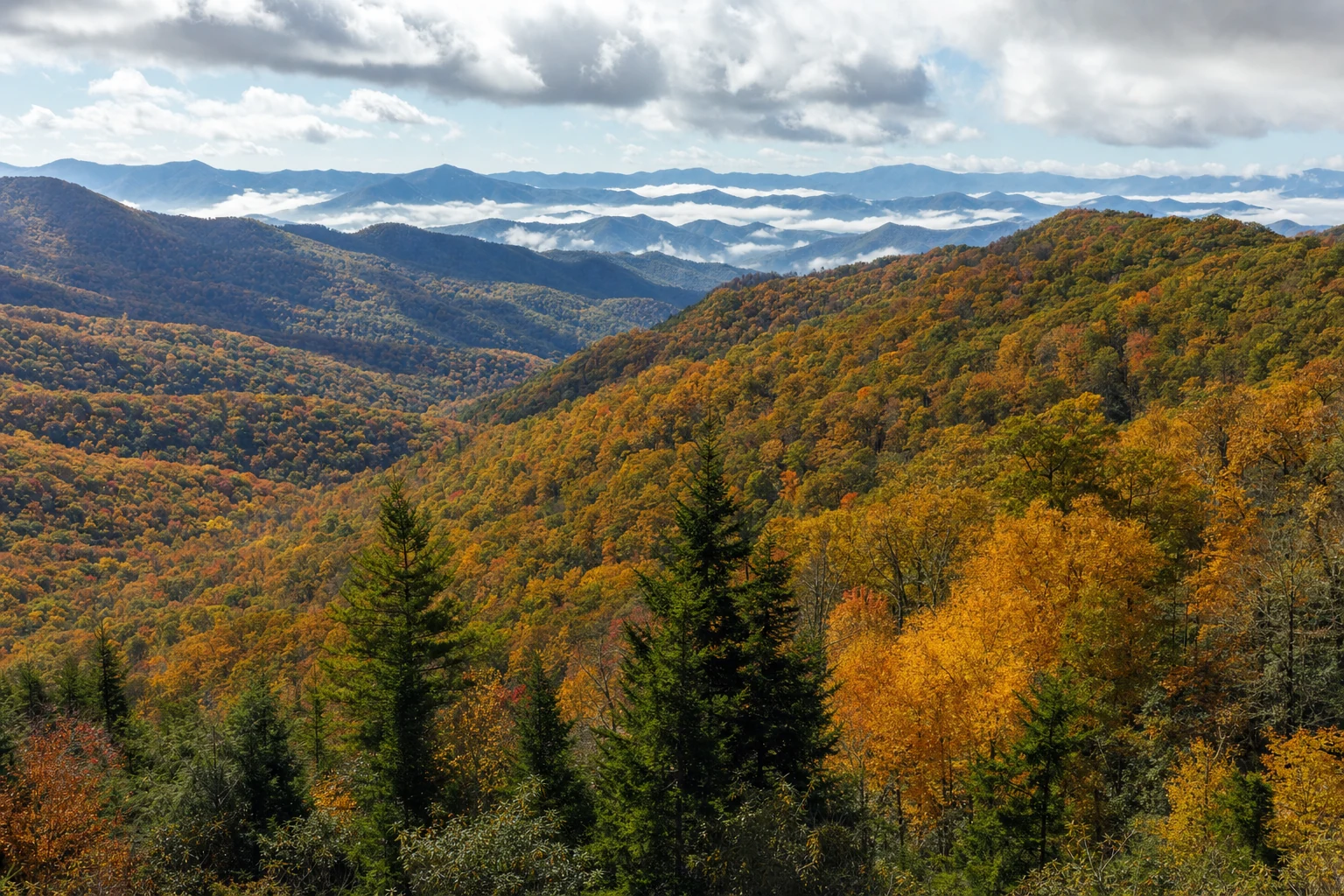

About Mingus Creek Trail:
Now I'll write the page body copy, grounding everything strictly in the confirmed facts and provided research excerpts.
---
Mingus Creek Trail runs 5.8 miles one-way through the Oconaluftee corridor on the North Carolina side of Great Smoky Mountains National Park, accessed via the Cherokee entrance rather than Gatlinburg. Rated moderate, it suits hikers who can handle a sustained half-day or full-day push without the exposure and technical scrambling of the park's strenuous routes. At nearly 12 miles out-and-back if you retrace your steps, this isn't a casual afternoon — treat it as a real backcountry day.
Distance, Difficulty, and What "Moderate" Actually Means Here
The NPS moderate rating is consistent across the park, but it covers real terrain. On Mingus Creek Trail, moderate means sustained uphill sections on a maintained forest path, with footing that gets muddy after rain and doesn't stay flat for long. No ladders, no serious scrambling, no roped sections — just a trail that keeps climbing at a pace that separates hikers who've trained from those who haven't.
The one-way designation matters for planning. Without a vehicle shuttle or pickup at the far terminus, you're committing to an out-and-back. Most day hikers set a turnaround time rather than a turnaround point; the trail is long enough that you can go as far as your day allows and still get a full experience. Budget most of a day for the round trip, not an afternoon.
Trekking poles earn their weight on the descent, especially after wet weather. The trail surface through the creek drainage holds moisture.
Getting to the Trailhead
The Oconaluftee Visitor Center is just inside the park boundary north of Cherokee, NC, on Newfound Gap Road (US-441). From Gatlinburg, you reach it by driving south through the park over Newfound Gap; from Cherokee, you're minutes away. Either approach gives you the same trailhead access.
A Park-It-Forward parking tag is required for any stay over 15 minutes inside GSMNP. Rates: $5 daily, $15 weekly, $40 annual. Purchase at recreation.gov before your trip or at park entrance kiosks. The Oconaluftee area is one of the park's busier access points, so the lot fills fast on summer mornings and throughout fall weekends. Arriving before 9 a.m. is the reliable way to get a space; arriving later is a gamble that sometimes pays off and sometimes doesn't.
What the Trail Delivers
Mingus Creek drains a substantial watershed, so the lower miles track through classic southern Appalachian hollow forest: heavy canopy, rhododendron thickets, moss blanketing every flat rock surface, and the sound of moving water underneath most of the lower stretch. As you gain elevation, the forest character shifts and the canopy opens somewhat, though the trail never breaks out of the trees the way a ridge route would.
This isn't a trail for a single marquee view or a summit photo. The reward here is the sustained immersion in that forest, the creek noise, and the distance you've covered. It connects to the broader GSMNP trail network rather than looping back to the start, so hikers who don't have a shuttle arranged simply pick a comfortable turnaround point. The forest is the destination.
Because the trail stays in the drainage rather than climbing to an exposed ridge, it holds up reasonably well in moderate rain. That said, the creek crossings get slippery when wet, so check conditions if a weather system has moved through.
Seasonal Considerations
Spring is the most persuasive reason to come to Mingus Creek Trail. Snowmelt and spring rain push creek levels high, wildflowers run through the lower sections from April into May, and the summer crowds haven't arrived yet. A Tuesday in late April can feel genuinely remote.
Summer is reliable but congested. The park sees its heaviest visitation from June through August, and Oconaluftee parking reflects that. Solve it with a 7 a.m. arrival. Trail conditions are fine — shade keeps the forest cooler than open routes — but afternoon thunderstorms are common and build fast. Don't get caught on exposed sections when storms roll in; Mingus Creek Trail stays wooded, which helps, but lightning in the park is a real concern.
Fall brings peak foliage and the park's biggest visitor numbers of the year. Mid-October typically delivers the best color at mid-elevations. The Oconaluftee area draws heavy traffic during that window; arrive early or arrive after 3 p.m., when day hikers clear out. The light is good all day in October, so a late afternoon start isn't a bad option if the morning crowds put you off.
Winter thins the crowds to almost nothing. Newfound Gap Road generally stays open except during ice events, so the trailhead is accessible. Bare trees open up sight lines that summer hides, and the creek sounds different against snow-covered banks. It's a legitimate time to go, as long as you're dressed for it.
Safety and Practical Prep
Black bears are active throughout GSMNP year-round. Keep at least 50 yards of distance from any bear you see; if one approaches, make noise, stand your ground, and don't run. Food storage rules are federal: use a bear canister or hang food properly at any backcountry site. Don't leave food or scented items in an unattended pack, even at the trailhead.
Carry more water than you expect to need. Creek water is available but requires treatment before drinking; a lightweight filter adds almost nothing to your pack and solves the problem completely. Cell coverage is poor on this trail, so download an offline topo map before you leave the car — Gaia GPS and Avenza both support GSMNP layers.
Pack a rain layer and a warm layer regardless of the forecast. Mountain weather moves faster than weather apps update, and a clear morning at the trailhead guarantees nothing about conditions four miles in.
Trails to Combine Nearby
If you're spending multiple days on the North Carolina side of the park, several other trails sit close enough to pair with Mingus Creek Trail. The Smokemont Loop Trail (6.1 miles, moderate) starts at Smokemont Campground a few miles up Newfound Gap Road and works well as a second-day option. Kephart Prong Trail (4.2 miles out-and-back, moderate) also runs off Newfound Gap Road and passes a historic Civilian Conservation Corps camp, making it a shorter but substantive alternative for hikers who want something different. For more mileage in creek-bottom forest, Bradley Fork Trail (6.5 miles one-way, moderate) out of Smokemont offers a comparable but distinct experience without repeating what Mingus Creek gives you.
The Oconaluftee area has enough trail density that you can build a three-day itinerary without ever driving to the Tennessee side of the park.
Frequently asked questions
- Do I need a parking tag?
- Yes — a Park It Forward parking tag is required for vehicles parked more than 15 minutes anywhere inside Great Smoky Mountains National Park. Daily ($5), weekly ($15), or annual ($40) tags are available via recreation.gov or park kiosks.