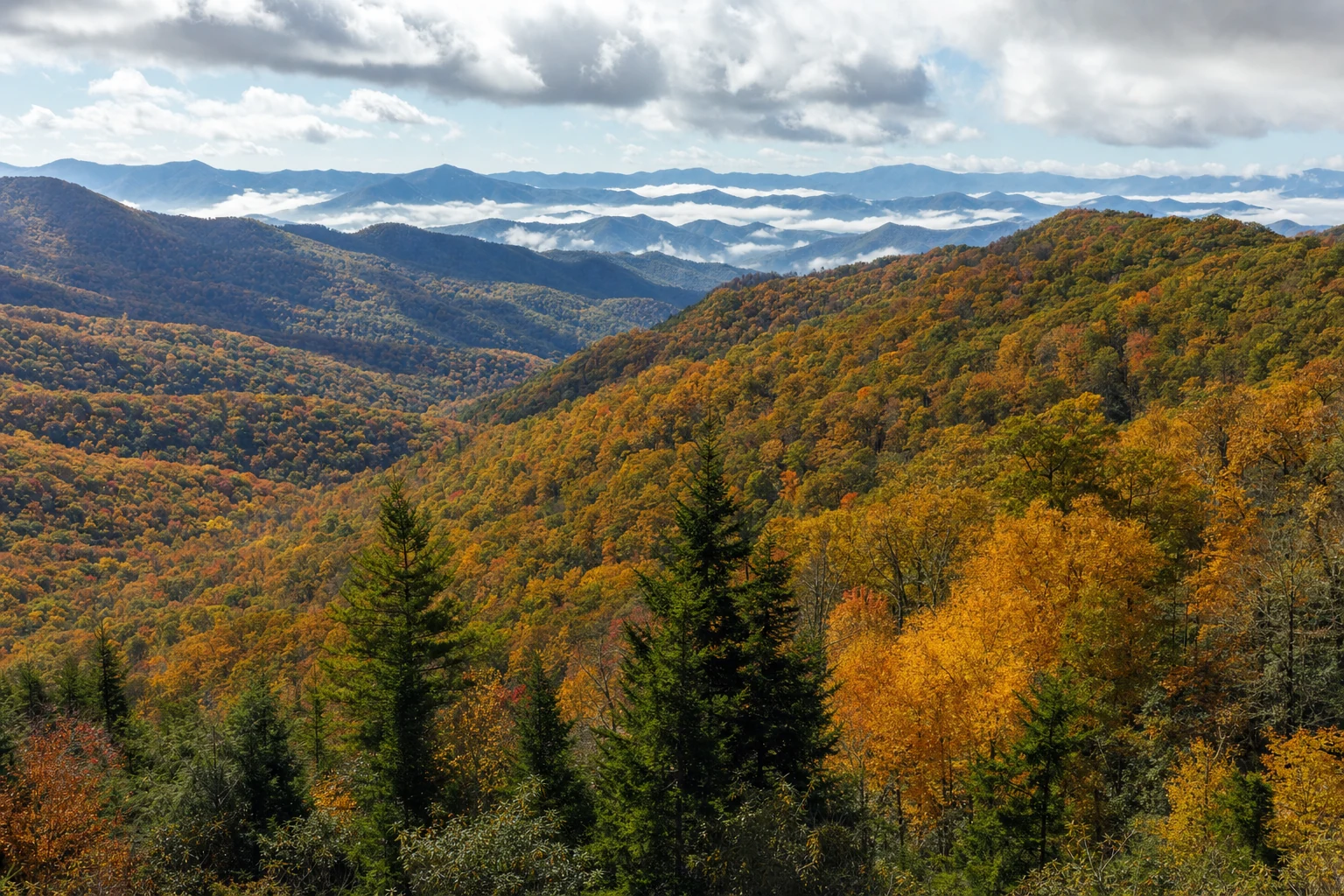

About Miry Ridge Trail:
The name doesn't soften the truth: "miry" is an old English word for boggy, wet, muddy ground, and this trail in the Kuwohi high country earns it. At 5.0 miles one-way and rated strenuous by the NPS, Miry Ridge Trail is one of the more committing day hikes in Great Smoky Mountains National Park. The crowds packing the Kuwohi observation tower never make it here.
What the Distance Actually Means
Five miles one-way sounds manageable until you factor the return. A full out-and-back covers 10 miles, and at a strenuous rating in the Smokies, that means sustained elevation change, rooted and rocky tread, and the kind of leg burn that begins around mile seven and doesn't stop. The Kuwohi area occupies the apex of the park's main ridge, so trailheads in this zone start high rather than climbing from a valley floor. That doesn't simplify things; ridge trails in the Smokies tend to roll through a series of knobs and gaps, and the cumulative effort across that undulating terrain adds up faster than a flat 10 miles would.
Budget five to seven hours for the round trip, depending on pace and how much time you spend stopped. This isn't a trail you start after noon in summer. If 10 miles feels like a stretch, the first two or three miles still deliver the full character of the high-elevation forest before turning back is a completely reasonable call.
The Spruce-Fir Zone
The Kuwohi area sits at the upper limit of the Southern Appalachian spruce-fir forest, one of the rarest ecosystems in the eastern United States. Red spruce and Fraser fir take over here, displacing the hardwood cove forests found lower down. The atmosphere is distinctly northern: cool even in July, often draped in cloud, the ground spongy with moss and accumulated organic material from centuries of slow decomposition. That persistent moisture is part of what makes conditions miry; the high ridge intercepts enormous amounts of precipitation, and water lingers in the trail tread long after lower elevations have dried out.
The Fraser firs have been under sustained pressure from the woolly adelgid, an introduced insect pest, and standing dead snags appear throughout the upper sections. This is the current reality of the forest, not a historical footnote. The silver trunks against green understory have their own stark quality; the ecological loss is real and ongoing.
Trail Conditions and What to Carry
Expect wet rock, exposed roots, and stretches of soft boggy ground wherever the trail crosses slight depressions or seeps. Waterproof boots are not optional. A trekking pole earns its weight on the descent over loose stone, particularly in the back half of a long day when your footing judgment has already been worn down.
The NPS maintains the trail, but high-elevation routes in the Smokies can lag on maintenance response after windstorms and heavy blowdowns. Check the current trail status on the NPS GSMNP website before you go, especially in late spring after winter storm damage, and in fall following any significant weather event. Cell coverage is poor to nonexistent at these elevations, so check before you leave town, not at the trailhead.
Carry more water than feels necessary. The high country is dry work even when it's cold, and the cloud cover that makes the ridge feel cool can mask dehydration. A rain shell and warm mid-layer belong in the pack regardless of the forecast; weather on the main Smokies ridge shifts faster than any app can reliably predict.
Best Season by Season
Late May into early June brings rhododendron bloom to these elevations, typically running two to three weeks behind the display you'd see in the lowlands. Summer means relief from the valley heat; temperatures on the high ridge can run ten to fifteen degrees cooler than Gatlinburg below, which makes this trail an appealing escape on July days that would be punishing at lower elevations. The catch is afternoon thunderstorms, which build fast and put you on an exposed ridgeline if you've pushed too far too late. Start early and be descending by early afternoon.
Fall is the park's peak visitation season overall, but most of those visitors are watching foliage from overlooks and roadside pullouts rather than hiking a strenuous ridge trail, so Miry Ridge sees a fraction of the October crowd. The spruce-fir zone doesn't deliver the same hardwood color show found lower down, but the views through the thinning canopy and the sharpness of the fall air make a strong case for this season.
Winter closes the Kuwohi Road seasonally due to snow and ice, sometimes for extended periods. If the road is open, the trail is a serious undertaking: microspikes or crampons are necessary equipment rather than optional, and the ridge holds ice long after valley areas have cleared. The payoff is near-total quiet, long sightlines, and a forest that looks completely different stripped of its understory.
Spring is unpredictable. The lower Smokies can be hiking weather by April while the high country still holds snow into May. Heavy spring runoff makes the boggy sections genuinely boggy in ways the name promises and the other seasons only partially deliver.
Getting There and Parking
Miry Ridge Trail is in the Kuwohi area of GSMNP. No street address will navigate you to a backcountry trailhead reliably; use the NPS GSMNP trail map to confirm the specific access point before leaving town, and download it for offline use since you won't have a signal once you're inside the park.
The park requires a Park It Forward parking tag for any stop over 15 minutes anywhere inside GSMNP. Tags run $5 per day, $15 per week, and $40 for the year, available at recreation.gov and at park entrance kiosks. Buy it before arriving rather than depending on a kiosk at a remote trailhead.
Other Strenuous Trails in the Kuwohi Area
If you're making the drive to the high country, other strenuous options in the same zone are worth considering alongside Miry Ridge. Fork Ridge Trail (4.9 miles one-way, strenuous) runs a similar character from the Kuwohi area. Rocky Top via the Appalachian Trail from Kuwohi covers 5.6 miles out-and-back and is among the most recognized views in the park. For something shorter in the same high-elevation terrain, the Clingmans Dome Bypass Trail is 0.5 miles and rated moderate. Each of these requires the same parking tag, the same weather awareness, and the same realistic accounting of what strenuous miles at this elevation cost.
Frequently asked questions
- Do I need a parking tag?
- Yes — a Park It Forward parking tag is required for vehicles parked more than 15 minutes anywhere inside Great Smoky Mountains National Park. Daily ($5), weekly ($15), or annual ($40) tags are available via recreation.gov or park kiosks.