
About Mouse Creek Falls Trail (Big Creek)
Big Creek sits in the far northeastern section of Great Smoky Mountains National Park, significantly further from the Gatlinburg visitor corridor than most day-trippers get. The trail to Mouse Creek Falls follows an old logging railroad grade that keeps the walking smooth and consistent underfoot, which is unusual for a Smokies trail of this length. Four miles out-and-back, 400 feet of gain, and a 45-foot waterfall waiting at the turnaround.
The Route
Eight miles round trip, starting and finishing at Big Creek Campground. The trail tracks alongside Big Creek for most of its length, with the water audible and often visible through the trees as you pass. That's part of what makes this walk different from typical Smokies ridge trails; you're moving through a creek-bottom corridor rather than grinding up a slope, and the forest around you has a riparian character entirely different from the dry-ridge alternatives.
The 400-foot elevation gain is spread across 4 miles, so gradually that most hikers don't feel it until they stop walking and check their altimeter. Mouse Creek Falls sits near the 2-mile mark, which means you earn the waterfall without an extended approach, and the return trip covers the same creek views from the other direction, which isn't redundant. Light shifts through the afternoon, and the downstream perspective reads differently than the uphill one.
The falls drop 45 feet off a carved rock face. The plunge pool at the base collects spray and amplifies sound; you'll hear Mouse Creek Falls before you see them on approach. Getting from the viewpoint to the pool's edge involves some scrambling on wet rock, which is worth factoring into your footwear choice before you leave the car.
The Logging Railroad Grade
Before the national park existed, this was logged land, and the rail grades built to haul timber out of these mountains now form the trail bed. The practical result is a wide, stable surface without the root-and-rock obstacle course that makes a lot of Smokies hiking harder than the distance would suggest. Even after rain, the footing stays reasonable — and rain at Big Creek comes without much warning. You can actually look around while you walk rather than watching the ground, and the creek is worth watching; the water runs clear over smooth boulders, and the drainage is wide enough that light reaches the creek bed through the tree canopy above.
When to Go
Spring brings the falls to full volume. Snowmelt and April rains push Mouse Creek hard, and the surrounding forest is in its flowering window through late April, with trillium and other understory plants coming up before the canopy closes over. The combination of high water and active foliage makes this probably the most rewarding season for the waterfall specifically.
Summer is the busiest stretch. Big Creek Campground fills early on weekend mornings, and the trailhead lot is small. If you're visiting between June and August, arriving before 9 a.m. matters more here than on many other park trails. Heavy tree cover compensates by keeping the trail shaded and cooler than exposed ridge routes, which is real relief on a hot day — but it doesn't solve the parking problem if you show up late.
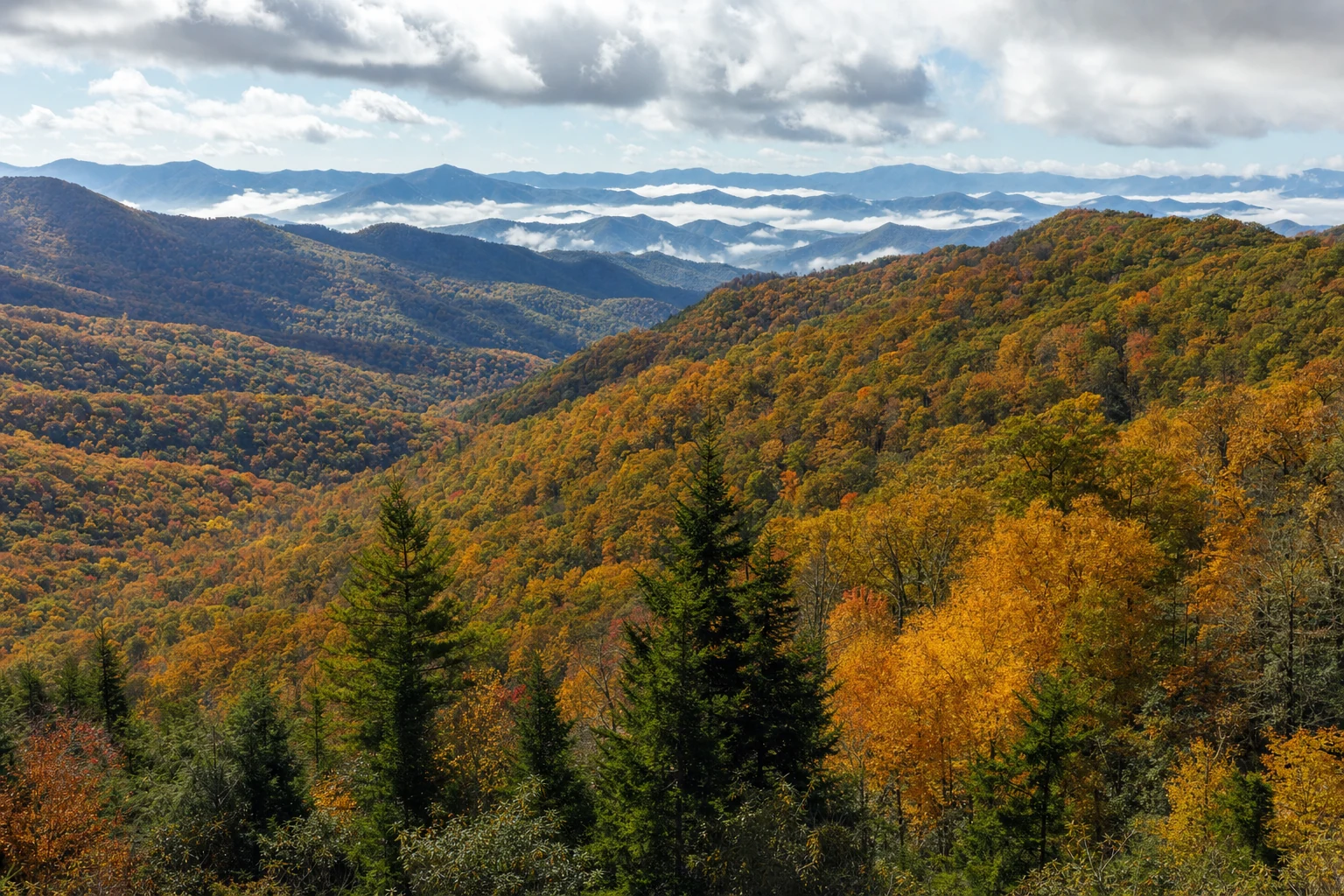
Fall peaks in mid-October at these lower elevations. The Big Creek drainage produces strong color, and lower water levels expose more of the creek's boulder fields, making for better scrambling and easier wading. People who know this trail in multiple seasons often pick October. Weekday visits in mid-October sidestep the worst of the weekend congestion.
Winter visits are possible but conditional. Big Creek Road can close after snow or ice, and you should check road and weather conditions before making the drive. When it's passable, the crowds are gone, the falls occasionally develop ice formations at their edges, and the bare canopy opens up ridgeline views that summer hides entirely. It's a noticeably different trail in winter.
Getting There
The Big Creek approach is distinct from the standard GSMNP entry via Gatlinburg. Rather than heading through town to the Sugarlands entrance, you'll access Big Creek from I-40, following national park signs toward the Big Creek area. The trailhead GPS coordinates are 35.7607° N, 83.1028° W, and that pin lands you directly at the campground.
Parking inside Great Smoky Mountains National Park requires a Park It Forward tag for any stay over 15 minutes. Rates are $5 daily, $15 weekly, and $40 annually; you can buy a tag through recreation.gov before the drive or at park fee stations. Rangers enforce it at Big Creek, and with a small lot and significant traffic on busy days, compliance isn't optional. The annual tag pays for itself quickly if you're planning multiple visits to the park this year.
What to Bring
Moderate difficulty and a gentle grade don't mean the trail asks nothing of you. Mountain weather at Big Creek shifts without much warning; a light rain layer costs almost nothing to carry and gets used more often than not. Bring more water than you expect to need, especially in warm months. The creek looks clean but requires treatment, and the round-trip distance means you'll be on your feet for two to three hours before you're back at the trailhead.
Black bears are active throughout this section of the park. Store food properly, keep distance if you encounter one, and make noise on trail sections where sight lines are short. Cell service is poor to nonexistent in the Big Creek drainage; download your maps offline before leaving the highway.
On footwear: the railroad grade sections are forgiving, but the rock around the base of the falls is wet and slick. Waterproof boots with grip perform better there than low-profile trail runners, and on a rainy day the difference is significant.
Worth Adding to the Day
Midnight Hole, a deep green pool and small waterfall on Big Creek, sits less than a mile from the campground and combines cleanly with Mouse Creek Falls into a single outing without meaningfully extending the total distance. Given that reaching Big Creek requires some driving commitment from Gatlinburg, adding Midnight Hole makes the logistics pay off better. And if you can swing a night at the campground itself, you'll be at the trailhead before most visitors have worked out the I-40 approach, which is its own kind of advantage.
Frequently asked questions
- How long is Mouse Creek Falls Trail (Big Creek)?
- Mouse Creek Falls Trail (Big Creek) is 4 miles one-way (8.0 miles round-trip), with 400 feet of elevation gain. It is rated moderate.
- Do I need a parking tag?
- Yes — a Park It Forward parking tag is required for vehicles parked more than 15 minutes anywhere inside Great Smoky Mountains National Park. Daily ($5), weekly ($15), or annual ($40) tags are available via recreation.gov or park kiosks.