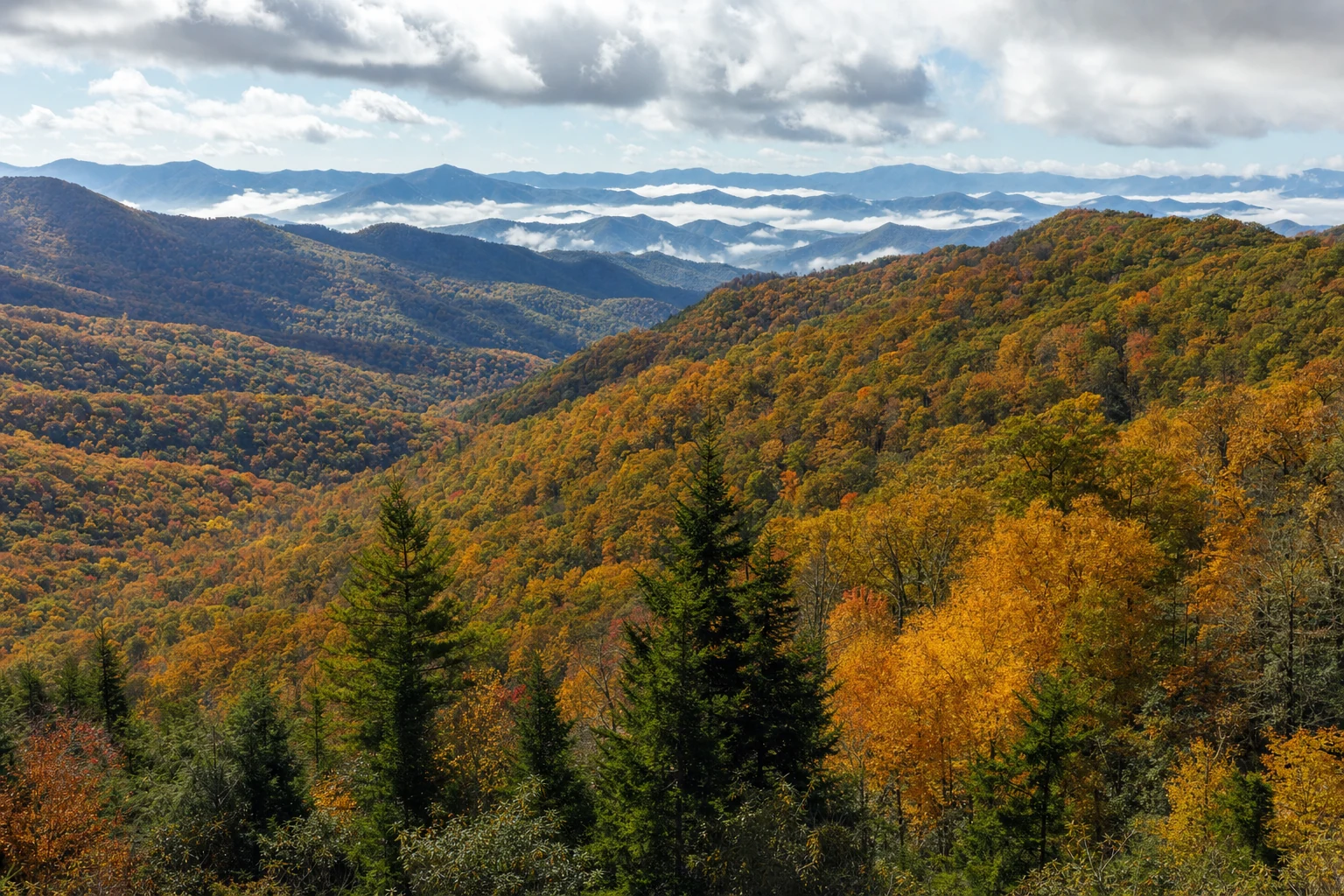

About Ocoee Whitewater Center Trails
The Ocoee Whitewater Center occupies a stretch of river gorge that most Americans saw once, briefly, during the 1996 Summer Olympics in Atlanta, when the Ocoee hosted kayak slalom on a natural river for the first time in Olympic competition. The facility the Games left behind is now a USDA Forest Service recreation site with a short trail network running through the forested slopes above the water. It's a compact destination, but the river views and the Olympic history give it more substance than the mileage suggests.
Trail options
Two named loops form the core of the network. The Bear Paw Loop covers 1.5 miles and stays accessible for most fitness levels; the Chestnut Mountain Loop extends to 2.5 miles with genuine elevation change, which is what earns it a moderate rating rather than easy. Both loops return to the Ocoee Whitewater Center complex, so there's no doubling back on the same ground. You can do one loop, string them together, or cut the day short without retracing your steps.
Mountain biking is permitted on sections of this network, and that changes what the trail feels like. Expect packed dirt rather than groomed gravel, root sections near the ridge, and cyclists passing at variable speeds. On blind corners, move to one edge and make yourself visible. The shared-use arrangement generally works without friction, but this is an active recreation corridor rather than a quiet foot-travel path.
The Olympic legacy underfoot
The 1996 Atlanta Games brought kayak events to the Ocoee River because organizers wanted whitewater slalom on genuinely technical moving water. The Ocoee Whitewater Center was built to support those competitions, and adjacent river sections were engineered to deliver consistent challenge at different water levels. After the closing ceremonies, the facility transitioned to public recreation under the Cherokee National Forest.
From the hiking trails you look down at those same river sections. At high water, typically spring after sustained rain, the Ocoee runs fast and loud and shows immediately why Olympic paddlers chose it. At lower summer levels, the rock formations that create the technical features sit above the surface, visible from the trail. The trail elevation puts hikers at a good angle to actually see the river rather than just hear it, which matters on a short loop where the views are doing most of the work.
When to go
Fall is the strongest season on this network. The canyon walls and mixed hardwood forest concentrate autumn color well, with typical peak near mid-October at river-gorge elevation. Temperatures stay comfortable through November, commercial rafting season winds down, and the crowds thin considerably from their summer peak. October weekends still draw visitors; mid-week in September or November offers the same scenery with a fraction of the parking-lot competition.
Spring brings high water to the Ocoee, which makes the river views from the trail more dramatic. Wildflowers appear on the forest floor through April into early May. The Chestnut Mountain Loop's steeper sections get muddy after heavy rain, so trail shoes with minimal tread will be a problem.
Summer afternoons are warm and humid in the gorge. Start early. Weekend parking at the Ocoee Whitewater Center fills faster than you'd expect once the commercial rafting operations get going; the facility draws a genuinely large crowd during peak season. If part of the appeal is watching paddlers run the river, summer is the most active time for that. If you'd rather have the trail mostly to yourself, it isn't the right season.
Winter sees limited use and possibly reduced facility hours or staffing. Check the Cherokee National Forest's website before planning a winter trip that depends on the visitors center being open.
Getting there and parking
The trailhead is at the Ocoee Whitewater Center, coordinates 35.0800° N, 84.3500° W. Parking is available at the facility lot. For current fees, seasonal hours, and road conditions, check the USDA Forest Service's Cherokee National Forest page directly at fs.usda.gov/recarea/cherokee; parking fee structures for USFS sites change periodically and the official page stays more current than third-party sources.
What to bring
Carry water — there's no potable source on either loop, and the river runs below rather than alongside the trail. One full bottle handles the Bear Paw Loop; bring two for the Chestnut Mountain Loop, especially in summer.
Footwear with grip matters on the Chestnut Mountain Loop specifically. The moderate rating comes from real elevation gain, not just length, and root sections on the descent get slippery in wet conditions. Trail runners or hiking shoes handle it without issue. Running shoes with worn soles don't.
Cell service in the gorge is inconsistent, which is standard for canyon terrain in this part of Tennessee. Download an offline map before leaving rather than counting on navigation working once you're in.
Who this suits
The Bear Paw Loop works for families with kids who can manage 1.5 miles on their own feet. The Chestnut Mountain Loop is better suited to adults or older kids comfortable with hills. If you're visiting primarily to paddle or watch whitewater and want to add some time on foot, the shorter loop fits cleanly between river sessions without demanding a full morning.
People expecting a remote backcountry experience should recalibrate. The Ocoee Whitewater Center is a well-used, active recreation site, and the trails sit close to the main facility. On a summer Saturday the whole corridor gets busy. On a Tuesday in late October, it's a different thing entirely — worth knowing before you decide when to go.
Frequently asked questions
- How long is Ocoee Whitewater Center Trails?
- Ocoee Whitewater Center Trails is 1.5 miles one-way, with modest feet of elevation gain. It is rated easy.
- Do I need a parking tag?
- Yes — a Park It Forward parking tag is required for vehicles parked more than 15 minutes anywhere inside Great Smoky Mountains National Park. Daily ($5), weekly ($15), or annual ($40) tags are available via recreation.gov or park kiosks.