
About Panthertown Valley Trails (Nantahala National Forest)
Panthertown Valley earns its "Yosemite of the East" nickname not through hyperbole but through sheer variety packed into a compact wilderness in Nantahala National Forest. You get granite domes, cascading waterfalls, open meadows, and over 30 miles of interconnected trails woven through designated wilderness — almost no crowds compared to what you'd face at Chimney Tops or Alum Cave on the same weekend. This isn't a quick loop before lunch. Plan for it.
Trail at a glance
The trail system covers over 30 miles of interconnected routes that combine as loops or point-to-point runs depending on how much time and energy you're working with. The main access point is Cold Mountain Gap Trailhead at 35.1500° N, 83.0000° W. Difficulty ranges from moderate on the valley floor connectors to strenuous where the routes climb toward the granite balds and dome features above. That range matters for route design: the same trailhead can launch a mellow waterfall walk or a full-day ridge traverse.
The terrain
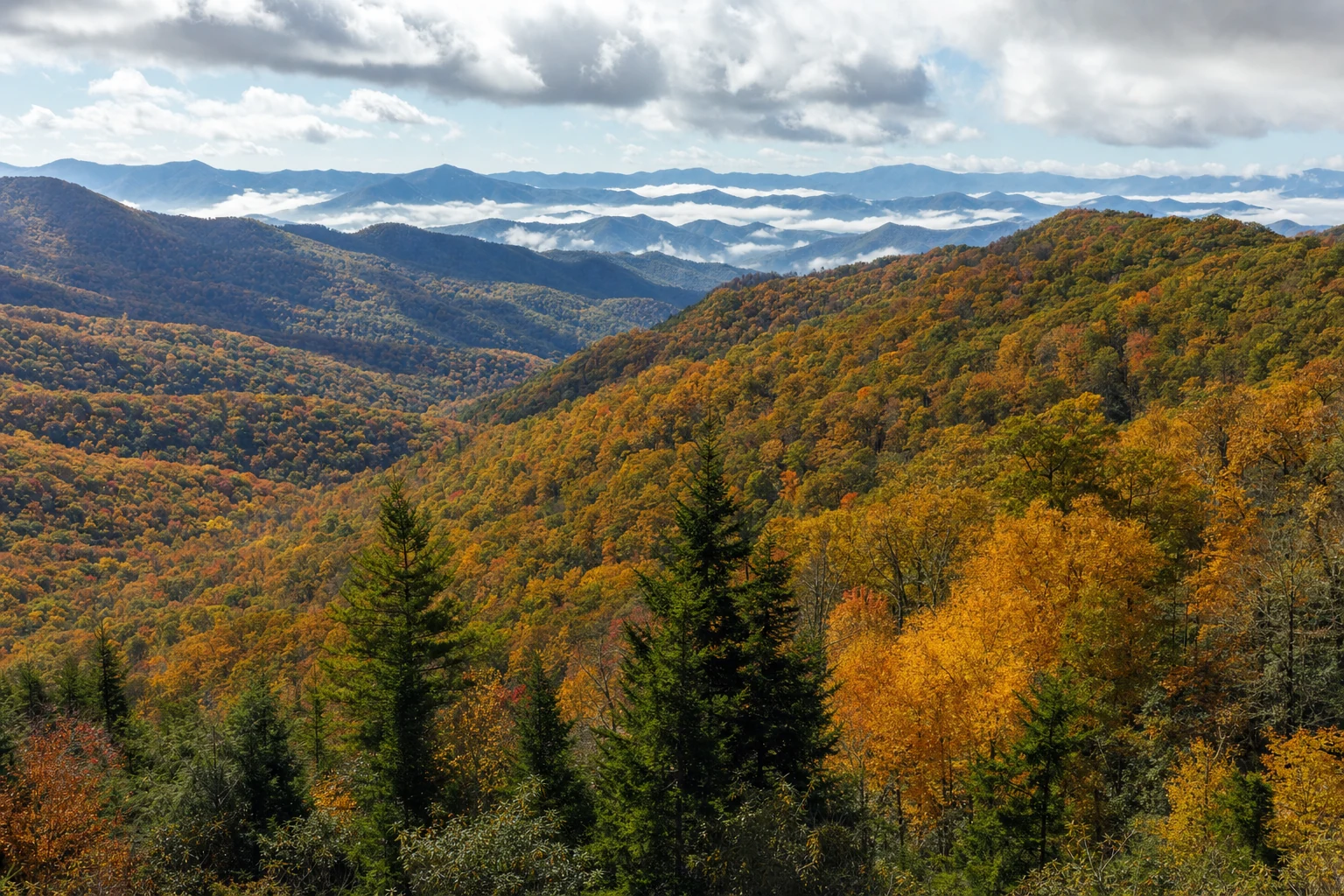
Panthertown's geology explains its character. The valley sits in a bowl of exposed granite and gneiss, carved by streams that drop off surrounding ridges in tight falls before spreading across flatter ground below. Those granite domes aren't just scenic features to look at; on clear days they deliver open views across a landscape that doesn't look like anything else in the Southern Appalachians. The designated wilderness classification keeps the trail infrastructure intentionally spare. Some routes are well-marked with obvious tread. Others require map reading, attention to the topography, and a willingness to slow down at trail junctions.
Download an offline map before you leave the car. Cell coverage across the valley is unreliable, and the trail network has enough intersections that a route-finding mistake can add real mileage without you realizing it until you're already tired.
Waterfalls
The two signature waterfalls are Schoolhouse Falls and Greenland Creek Falls, and they have genuinely different personalities. Schoolhouse Falls drops into a wide plunge pool with a sandy edge; it's the most-visited spot in the valley, and on summer weekends you'll find it well-occupied. Greenland Creek Falls requires more trail time to reach and sees a fraction of the foot traffic. Most people who come to Panthertown for a day trip leave without seeing it.
Both are worth routing your day around, but if crowds matter to you, factor that in. The valley's stream network also feeds additional smaller cascades depending on the season. Spring runoff turns ordinarily calm channels into something considerably louder, and the sound carries through the forest well before you see any water.
Planning your route
Thirty miles of trail is not a day hike for most visitors. The practical decision before you arrive is whether you're doing a focused half-day targeting one or two waterfalls, a longer loop that takes in the dome features alongside the valley floor, or a multi-day backpacking trip using designated campsites within the wilderness area.
For a single-day visit, a loop incorporating Schoolhouse Falls and a granite dome viewpoint covers the essential character of Panthertown without requiring exceptional fitness. Extend the route to include Greenland Creek Falls and you're committing to a more serious push. If you're backpacking, the network gives you real latitude to design almost any itinerary.
Pack more water than you think you need. The streams run cold and clear but require treatment before drinking. Mountain weather in this terrain moves faster than any phone forecast captures; a rain layer and an insulating layer are worth carrying even in July, particularly if your route puts you on exposed granite above the treeline late in the day. Start early: afternoon thunderstorms are frequent enough in summer that being off the dome features before midday is standard practice, not excessive caution.
Best time to visit
Spring runs roughly from late March through May, when waterfalls run at full volume and the valley floor fills with wildflower species that don't persist into summer. Wet weather during this window can make popular access roads and trailhead areas muddy, and some higher routes may still be clearing winter storm damage, so checking conditions before you drive is worth the two minutes it takes.
Summer brings the most foot traffic, concentrated heavily around Schoolhouse Falls on weekends. Arriving before 9 a.m. is the most consistent way to have the major features to yourself. The woodland cover on the valley floor keeps temperatures reasonable in August, which partly explains why Panthertown draws so many people escaping lowland heat.
Fall offers the clearest air, the longest views from the dome features, and the color sequence across the hardwood canopy through October. Winter thins the crowds sharply. Cold snaps coat the waterfall rocks with ice formations that look nothing like their summer versions, and the bare trees open up sightlines that summer obscures entirely. Some access roads to the trailhead close temporarily after ice or snow; confirming road conditions in advance is particularly important from December through February.
Getting there
Panthertown Valley is accessible from Cold Mountain Gap Trailhead at 35.1500° N, 83.0000° W. Visitors approaching from the Gatlinburg and GSMNP corridor travel through a stretch of mountain highway before reaching the Nantahala National Forest boundary. The final section of road to the trailhead benefits from a vehicle with reasonable ground clearance, particularly after wet weather.
Verify road conditions before leaving. Forest service roads serving wilderness trailheads across the Southern Appalachians close for storm damage and winter maintenance without much advance notice; the U.S. Forest Service information line for Nantahala National Forest is the authoritative source for current closures. Trailhead parking is free but limited. On summer weekends, spots fill early enough that a late arrival can mean a half-mile road walk before your hike officially starts.
What to bring
The wilderness designation means no motorized rescue and limited cell connectivity inside the valley. The practical implications:
- Offline topographic map and compass (phone GPS still works without signal; a downloaded map is enough)
- Water filter or purification tablets
- Rain layer and insulating layer, year-round
- Bear canister or hang system for backpacking food storage
- Headlamp with fresh batteries if there's any chance of running long
The black bears in Nantahala National Forest are active throughout the year, not just peak summer. Keep distance, store food properly, and don't leave anything scented in your car at the trailhead.
Frequently asked questions
- How long is Panthertown Valley Trails (Nantahala National Forest)?
- Panthertown Valley Trails (Nantahala National Forest) is 30 miles one-way, with modest feet of elevation gain. It is rated moderate.
- Do I need a parking tag?
- Yes — a Park It Forward parking tag is required for vehicles parked more than 15 minutes anywhere inside Great Smoky Mountains National Park. Daily ($5), weekly ($15), or annual ($40) tags are available via recreation.gov or park kiosks.