
About Ramsey Cascades Trail (Greenbrier)
Ramsey Cascades drops roughly 100 feet over a broad face of rock at the head of the Greenbrier drainage, and the hike to reach it runs 4 miles each way with 2,200 feet of gain through some of the only genuine old-growth forest remaining in Great Smoky Mountains National Park. This is a full-day commitment, not an afternoon add-on. It earns its strenuous rating honestly, and the falls are worth it.
The trail from Greenbrier to the falls
The Greenbrier entrance sits off US-321 East, about 6 miles from downtown Gatlinburg. Follow the road to the trailhead at 35.7170° N, 83.3930° W on Greenbrier Road; the first stretch is paved, then transitions to gravel before you reach parking. That shift in road quality is a preview of the area's character: Greenbrier is the less-developed side of the park, quieter and less trafficked than the Sugarlands corridor, and not a place most first-time Smokies visitors stumble onto.
From the trailhead, the route follows the Ramsey Prong of the Little Pigeon River through much of the lower half before climbing harder toward the falls. The footing is rocky and irregular throughout, and multiple creek crossings have no bridges. In normal late-summer or fall conditions those crossings are a manageable technical challenge; after any significant rain, the water rises fast and the rocks get genuinely slick. Checking the NPS current conditions page before you leave is worth doing for this trail, especially in spring.
Old-growth forest is not common in the Smokies. Most of the surrounding mountains were logged before federal protection in 1934, and the Greenbrier drainage is one of the few places in the park where the original canopy survived intact. The trees grow noticeably larger as you gain elevation, and the understory fills in differently than second-growth forest does. Parts of the corridor still show visible fire marks from the 2016 Chimney Tops Fire; the recovery is interesting to observe, even if you wouldn't call it conventionally scenic.
The falls themselves reward the effort. Ramsey Cascades drops over mossy, broad-faced rock into a pool at the base, and the scale reads larger in person than in most photographs. Best photo light runs from mid-morning to early afternoon, when the sun angle helps rather than blows out the spray.
When to go
Spring delivers the highest water volume, with Ramsey Prong running full from snowmelt through late April; the falls are at their most dramatic during this window. Wildflowers appear on the lower trail from mid-March onward, and Greenbrier as a whole is one of the better spring wildflower areas in the park, particularly along the adjacent Porters Creek Trail.
Summer brings the most foot traffic across the park. Ramsey Cascades stays quieter than more accessible waterfalls like Laurel Falls simply because the distance keeps casual visitors away, but trailhead parking fills on summer weekends by mid-morning. Starting before 8 a.m. solves the parking problem and puts you at the falls before the heat on the upper sections becomes a factor.
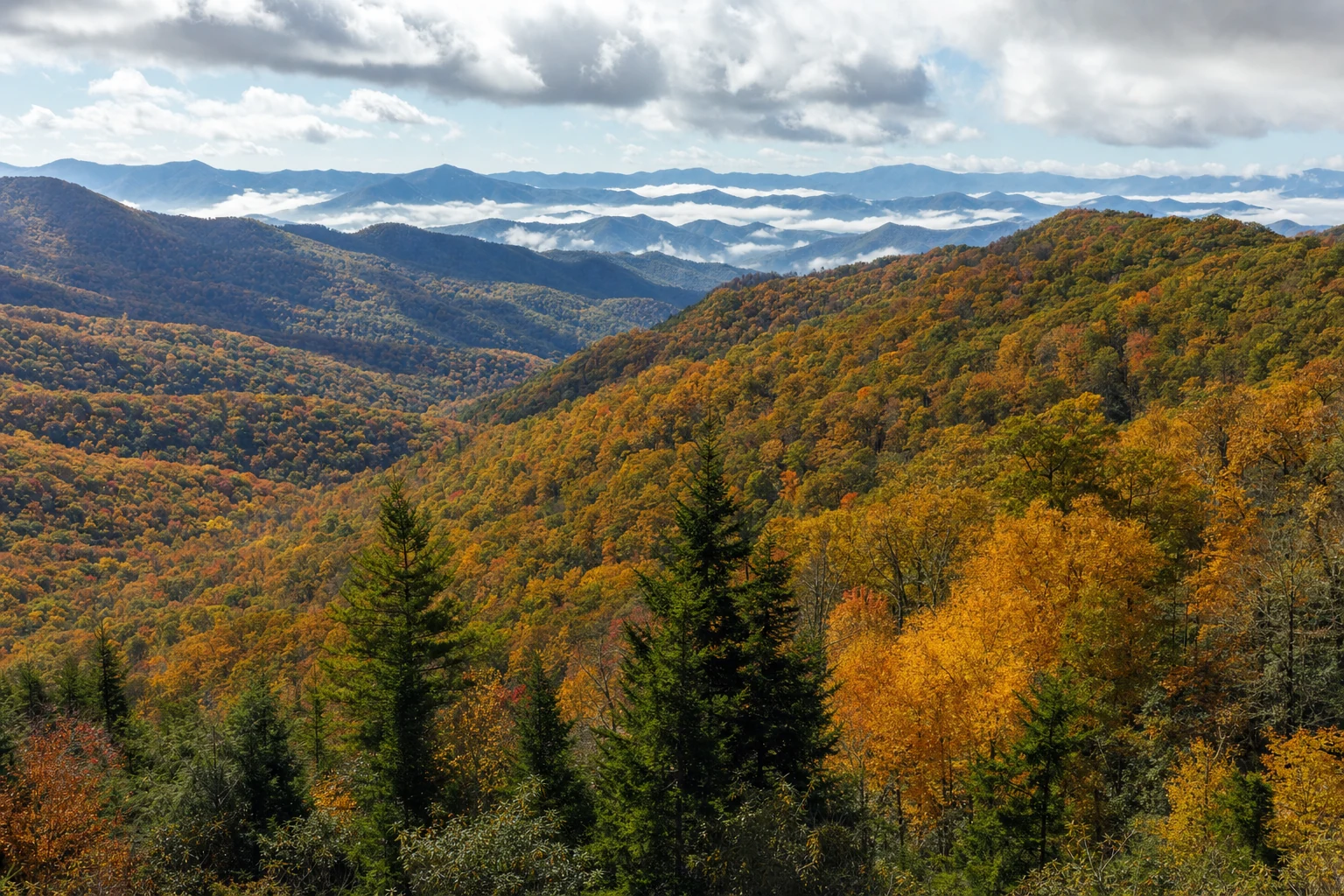
Fall foliage in the Greenbrier drainage peaks around mid-October. The combination of old-growth hardwoods and the river corridor makes the trail worth doing for color alone, separate from the destination.
Winter access is unreliable. The trail closes periodically due to ice on the creek crossings and upper slopes, and that happens multiple times in most winters. NPS posts current alerts at nps.gov/grsm — checking before any winter trip to Greenbrier is not optional.
Logistics
A Park-It-Forward parking tag is required for any vehicle parked inside Great Smoky Mountains National Park for more than 15 minutes. Tags cost $5 per day, $15 per week, or $40 annually; buy them at recreation.gov or at kiosks inside the park. The park itself charges no entrance fee.
Budget 5 to 6 hours for the round trip, more if you stop at the falls for a proper break. The trail loses elevation on the way in, which means gaining all of it back on the return, and the second half of the hike is harder than the first. There are no facilities at the trailhead: no water, no restrooms. Carry everything you need in with you.
Gear
Waterproof boots with ankle support matter here more than on most Smokies trails, given the creek crossings and the wet rock around the falls. Bring at least 2 liters of water per person; there's no potable source on route, and the uphill return dehydrates faster than the downhill approach. A packable rain shell takes up almost no space in a daypack and matters considerably if an afternoon storm catches you 3 miles from the car, which is a routine scenario in the Smokies from May through August.
Wildlife and creek safety
Black bears range through Greenbrier actively. Keep at least 50 yards of distance, never feed them, store food in a canister or hang it properly, and don't leave food or scented items in your vehicle. The creek crossings are the other practical hazard worth taking seriously: if a crossing looks too high after rain, turn around rather than force it. Cell coverage is poor once you enter the drainage, so let someone know your route and expected return time before heading in.
Other trails in the area
Porters Creek Trail runs from the same general area and offers a completely different experience: shorter, flatter, and passing historic homesites before reaching Fern Branch Falls. It's a solid pairing for a two-trail day if you have the time, and in spring when wildflowers cover the lower section it's genuinely worth making the drive for on its own. The Greenbrier Picnic Area sits at the river and works well for lunch before or after either trail; on weekdays the contrast with Gatlinburg's commercial strip is almost startling.
Frequently asked questions
- How long is Ramsey Cascades Trail (Greenbrier)?
- Ramsey Cascades Trail (Greenbrier) is 8 miles one-way (16.0 miles round-trip), with 2,200 feet of elevation gain. It is rated strenuous.
- Do I need a parking tag?
- Yes — a Park It Forward parking tag is required for vehicles parked more than 15 minutes anywhere inside Great Smoky Mountains National Park. Daily ($5), weekly ($15), or annual ($40) tags are available via recreation.gov or park kiosks.