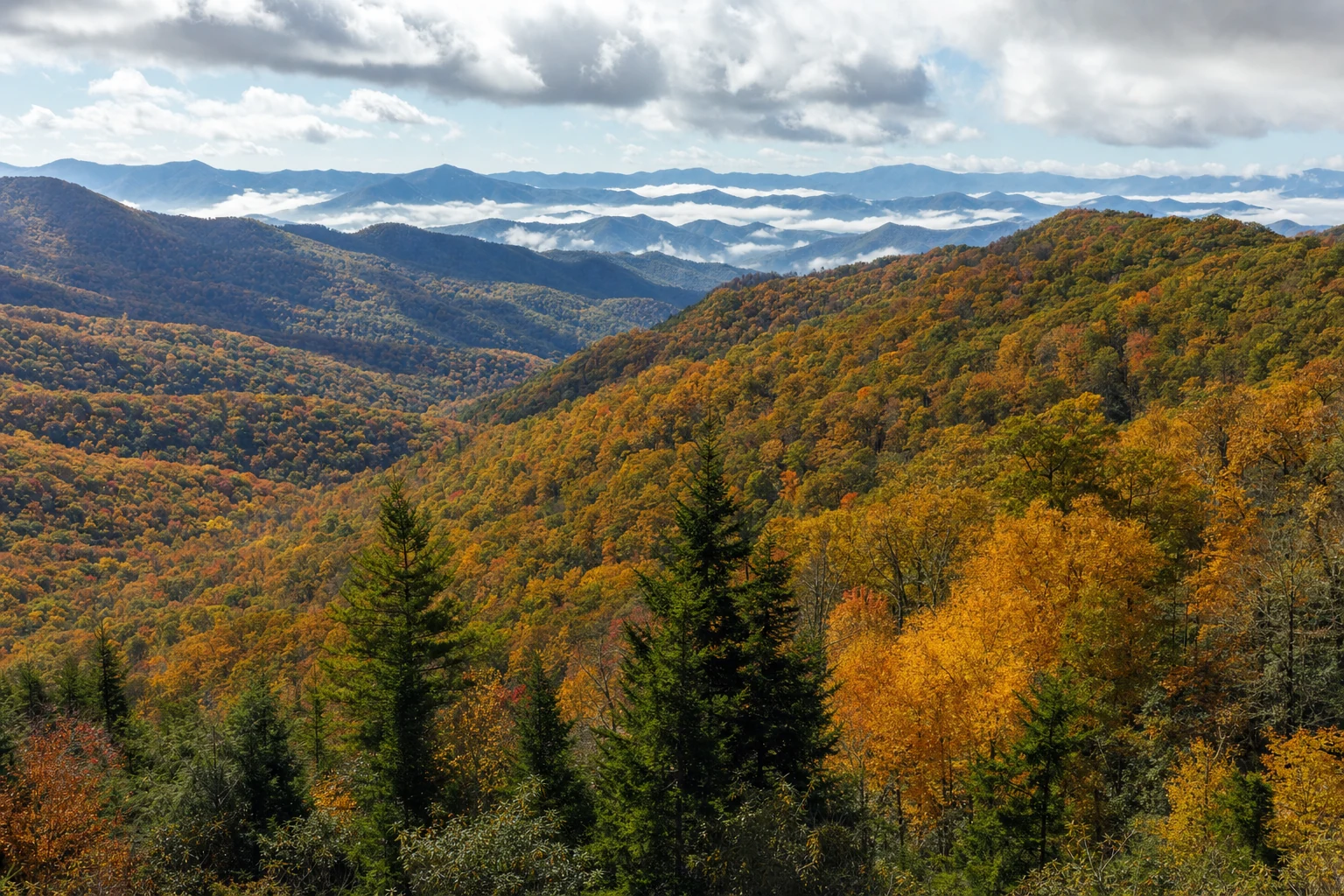

About Smokemont Loop Trail:
Now I'll write the guide using the anti-slop constraints alongside the original requirements.
Smokemont Loop runs 6.1 miles through a part of the park where settlement history and river terrain share space in ways most Smokies trails don't offer. Historic structures mark the route, remnants of the communities that occupied this valley before the National Park Service acquired the land, and the trail tracks alongside the river long enough that moving water becomes the trip's consistent backdrop rather than a brief crossing. Moderate difficulty puts it within reach for most fit day hikers, though six miles with genuine elevation on the upper section means an early start and real preparation matter.
What the Trail Delivers
Start at Smokemont Campground. The path moves into hardwood forest with canopy dense enough to hold back summer heat in the morning hours; on the lower portions near the campground, the going is flat and relatively easy. The upper section gains elevation before descending back to the start, and that climb is where the moderate rating earns its place — not punishing, but enough that you'll know you hiked.
Historic structures scattered along the route are what distinguish this loop from the park's purely natural-scenery trails. The land around Smokemont was settled long before the park existed, and what remains has been preserved rather than restored, which means you're looking at what survives when a building weathers for generations, not something cleaned up for display. These spots draw less foot traffic than the park's more famous historic sites, so you can actually stop and study them.
River walking takes up a good portion of the loop. The sound of water arrives before the view does, and once you're alongside it, slowing down feels inevitable. For anyone whose primary Smokies experience has been ridge trails and high-elevation overlooks, the sustained riverside walking here offers a genuinely different hike.
Who This Trail Suits
Most adults with basic fitness and a full day available can handle the loop. It doesn't require technical skill, scrambling, or poles. Boots or trail runners with solid grip are the practical choice; the upper section gets muddy in wet spring conditions, and the downhill return is easier with traction underfoot.
Plan for three to four hours at a comfortable pace with stops. Fast hikers who skip lingering can finish under three hours; stopping at every river bend and historic structure pushes closer to four. Kids who handle distance well can manage it, though the mileage and uphill sections make it better for older children.
Dogs are not allowed on trails inside Great Smoky Mountains National Park. They can stay in campgrounds and on paved roads, but the trail itself is off-limits — confirm this before making the drive if your group includes a dog.
Timing and Seasons
Spring is the strongest window. April and May bring wildflowers through the hardwood forest, the river runs high off snowmelt, and crowds haven't hit summer levels yet. Getting there early in the season makes the loop feel like a quieter, more private experience; by July, that changes.
Fall foliage peaks around mid-October across the Smokies, and the Smokemont area turns a reliable gold and amber during that window. It's also the park's busiest season. Weekend trailheads at GSMNP campgrounds in October fill before 9 a.m. — weekday visits in that stretch are worth scheduling if your itinerary allows any flexibility.
Summer is manageable with an early start. Campground trailhead parking builds quickly on weekends after mid-morning. The canopy keeps the river sections cooler than exposed ridgeline hikes, which is a meaningful advantage in mid-July.
Winter opens the loop to solitude. Bare trees reveal views the summer growth blocks, and the park's high-elevation road closures don't affect the Smokemont area, which generally stays accessible. Ice on the upper section is possible through January and February; traction devices earn their weight on trips during that window.
Getting There and Parking
Smokemont Campground sits along Newfound Gap Road on the North Carolina side of GSMNP. A Park It Forward parking tag is required for any stay of more than 15 minutes inside the park: $5 for a single day, $15 for a week, $40 for an annual pass. Tags are available at park kiosks or through recreation.gov before your visit. The day-use lot at the campground fills on summer and fall weekends; arriving before 9 a.m. reliably secures a space.
Nearby Trails at Smokemont
Two other routes start from the same campground and work well as extensions or standalone alternatives:
Bradley Fork Trail covers 6.5 miles one-way at moderate difficulty, following a creek corridor deeper into the backcountry. Combining it with the loop is an option for hikers looking for a bigger day; the moderate rating holds throughout, so it's more about added mileage than added technical challenge.
Chasteen Creek Trail runs 2.2 miles one-way at moderate grade and is short enough to tack on before or after the loop if you have energy and daylight left. It keeps you in the Smokemont drainage without requiring a separate outing.
Safety and Practical Notes
Cell coverage is poor throughout most of GSMNP; the Smokemont area holds little to no signal. Download offline maps before leaving cell range. Both the NPS GSMNP app and AllTrails support offline map downloads — set them up at home before driving in.
Water from park streams is not safe to drink untreated. Carry more than you expect to need. Mountain terrain uses water faster than flat-ground activity, and the river alongside the trail is not a backup supply.
Black bears are present throughout the park year-round. Maintain 50 yards of distance, make noise while hiking so encounters stay rare, and never leave food or scented items unattended. Smokemont Campground draws bears that have learned to associate human activity with food, so food storage discipline matters more here than at more remote trailheads.
Mountain weather changes faster than valley forecasts suggest. Pack a rain layer regardless of what the morning sky looks like; afternoon storms build quickly over the ridgelines, and the descent back on a wet trail takes longer than the climb.
Stay on the marked trail. Off-trail navigation through the Smokies' dense undergrowth is harder than it looks — with no cell service and heavy vegetation limiting visibility, a wrong turn compounds faster than you'd expect.
Frequently asked questions
- Do I need a parking tag?
- Yes — a Park It Forward parking tag is required for vehicles parked more than 15 minutes anywhere inside Great Smoky Mountains National Park. Daily ($5), weekly ($15), or annual ($40) tags are available via recreation.gov or park kiosks.