
About Sugarlands Ridge Trail:
Now I have everything I need. Writing the guide.
---
Sugarlands Ridge Trail traces a 0.8-mile loop through the lower forest near the park's Tennessee entrance, rated easy by the NPS. It starts from the Sugarlands area, about two miles from downtown Gatlinburg, and takes most people well under an hour to complete. For what it lacks in challenge, it compensates in accessibility; you can work it into almost any itinerary without restructuring a day around it.
What easy means on this trail
Loop format means you end where you started, no backtracking. Easy in GSMNP terms means no sustained steep pitches, well-maintained natural surface, and a distance most adults cover in 30 to 45 minutes. That said, the trail runs on natural surface, and forest soil turns slick after rain. Trail runners and walking shoes handle it fine; flip-flops don't.
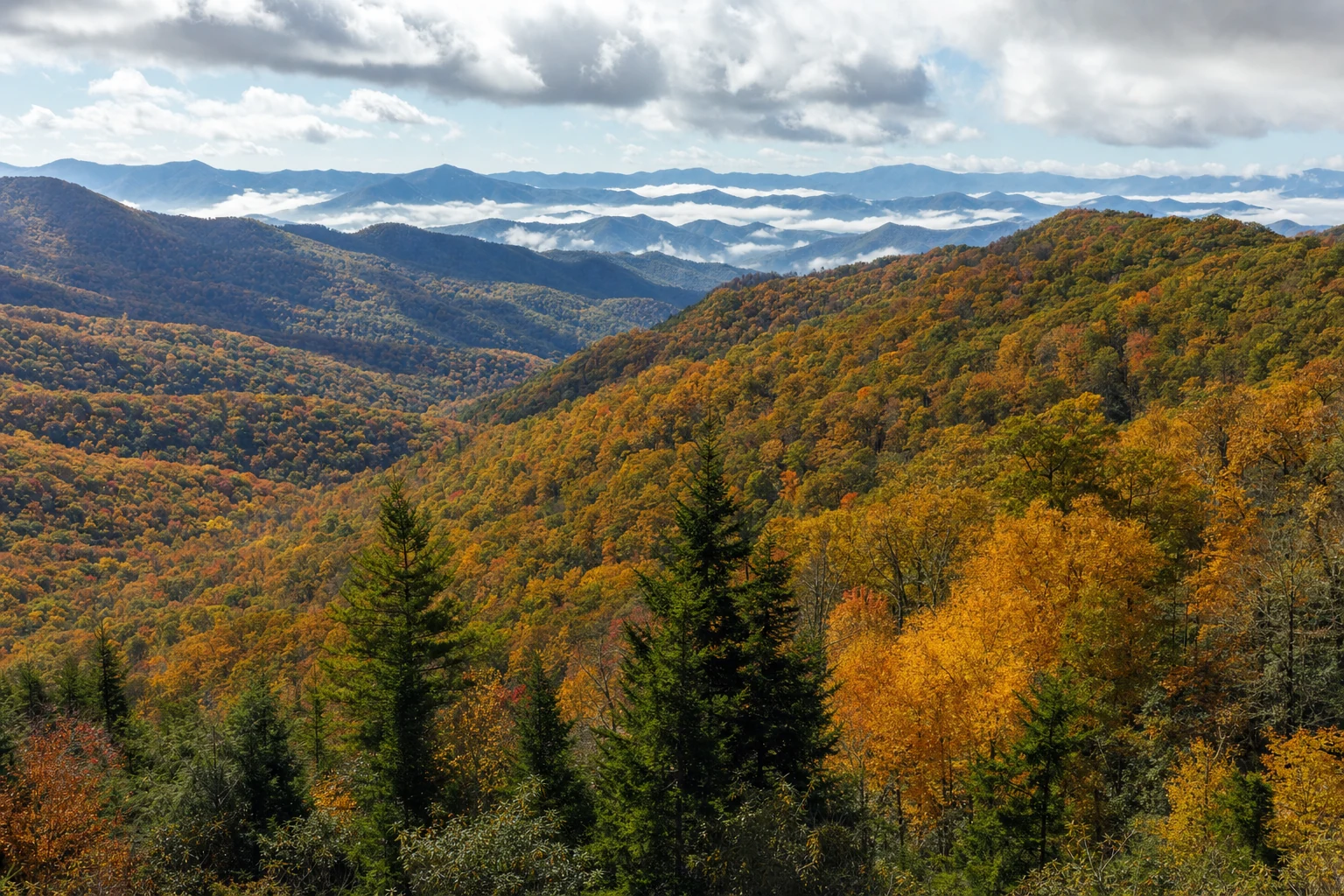
Lower elevation keeps this trail accessible well into the shoulder seasons. You won't encounter the spruce-fir forest of the high country here; the canopy is hardwood-dominant, which means the understory opens up in winter and the wildflower flush in early spring arrives noticeably earlier than it does above 4,000 feet.
Getting there and parking
Trailhead is in the Sugarlands area on the Tennessee side of the park. Use the Sugarlands Visitor Center as your landmark; from downtown Gatlinburg, take US-441 South toward the park entrance and the visitor center appears on your left shortly after you pass through.
A Park-It-Forward parking tag is required for any stay over 15 minutes inside GSMNP: daily tags are $5, weekly $15, annual $40, available at park kiosks or in advance at recreation.gov. On summer weekends and during the mid-October foliage peak, the lots near the visitor center fill by mid-morning. Arriving before 9am makes a real difference; the gap between a quiet morning walk and a parking-lot wait is usually just an hour.
No standalone street address exists for the trailhead since it originates in the Sugarlands zone rather than from a dedicated pull-off. The visitor center is the practical anchor.
Pairing with nearby trails
The ridge loop fits cleanly into a longer morning or afternoon in the Sugarlands corridor.
Cataract Falls Trail covers only 0.25 miles out-and-back and reaches a small waterfall with almost no exertion; combining these two gives you a solid park introduction without demanding much of anyone in the group.
Old Sugarlands Trail runs 3.0 miles one-way at moderate difficulty, passing through former homestead land absorbed by the park when it was established. It's a step up in distance but stays well within reach of hikers who want more after the loop.
Lumber Ridge Trail is rated strenuous and extends 4.2 miles one-way. If you want the ridge loop as a warm-up before a real climb, this is the logical extension from the same area.
When to go
Spring is strong at this elevation. Lower-altitude forest warms faster than the high-country trails, wildflowers push up earlier, and the canopy stays open long enough through April that real light reaches the forest floor. Fall delivers reliable foliage; mid-October is the window to watch for on the Tennessee side.
Summer is busy. Proximity to Gatlinburg and the visitor center makes this one of the higher-traffic zones in the park. A 7am start on a summer Saturday feels like a different place than noon on that same day; late afternoon can be nearly as quiet once the day-trip crowd cycles back toward town.
Winter is worth taking seriously. Low elevation keeps closures rare, and with the canopy bare you get open sightlines through the forest that don't exist in other seasons. Cold mornings in January and February hold real appeal if you're willing to layer up.
Wildlife
Black bears move regularly through the Sugarlands corridor. The park rules are non-negotiable: stay at least 50 yards away from all wildlife, never feed or approach bears, and store every food item and scented product in your locked vehicle. The most common dangerous situation in the park is a hiker inadvertently positioning themselves between a sow and her cubs; if you see bears on the trail, back away and give them space.
White-tailed deer are abundant at lower elevations and largely indifferent to hikers. The lower forest also rewards anyone who slows down enough to actually listen; the bird population here is easy to walk right past.
What to bring
Carry water even for a short loop. Mountain exertion burns through hydration faster than flat walking, and nothing on this trail provides a water source. A rain layer belongs in the pack through summer and fall; afternoon storms build fast over the Smokies and a slick natural-surface trail in a downpour is no fun.
Cell coverage is poor to nonexistent inside the park. Download offline maps or the NPS app trail data before you park. The Sugarlands Visitor Center is worth a stop on the way in: rangers post current trail conditions and road closures, and the information there is more current than most of what a web search will surface.
Frequently asked questions
- Do I need a parking tag?
- Yes — a Park It Forward parking tag is required for vehicles parked more than 15 minutes anywhere inside Great Smoky Mountains National Park. Daily ($5), weekly ($15), or annual ($40) tags are available via recreation.gov or park kiosks.