
About Sweat Heifer Creek Trail:
Now I'll write the guide using only the confirmed facts (4.5 miles one-way, Strenuous, Newfound Gap Road) plus the verified context from the existing draft, following all the anti-slop rules strictly.
---
Sweat Heifer Creek Trail isn't a subtle name. It describes exactly what 4.5 miles of strenuous climbing through Great Smoky Mountains National Park feels like on a summer afternoon, and it does so with a frankness that the standard NPS difficulty ratings don't quite capture. Starting from Newfound Gap Road and pushing up toward the Appalachian Trail ridgeline, this trail draws people who want sustained effort in mature mountain forest rather than a quick waterfall loop with a hundred other visitors.
What the Name Tells You
Folk names in the Smokies stick because they're accurate. The climb here is relentless; you're not dealing with a single sustained push followed by flat recovery. The NPS "Strenuous" rating applies for the full 4.5 miles of the one-way route, which means the 9-mile round trip reverses all of that climbing on the descent. Knees and ankles absorb as much punishment going down as lungs do going up.
There's no dramatic exposed summit waiting as a payoff in the way Charlies Bunion (8 miles out-and-back from Newfound Gap) delivers a rock perch above the treeline. The value on Sweat Heifer is the forest itself and the quieter connection to the AT ridge, without the crowds that show up wherever there's a famous viewpoint attached. If a summit photo is the goal, Rocky Top is the right choice. If the point is hours in deep mountain woods with few other people, this trail delivers.
The Route
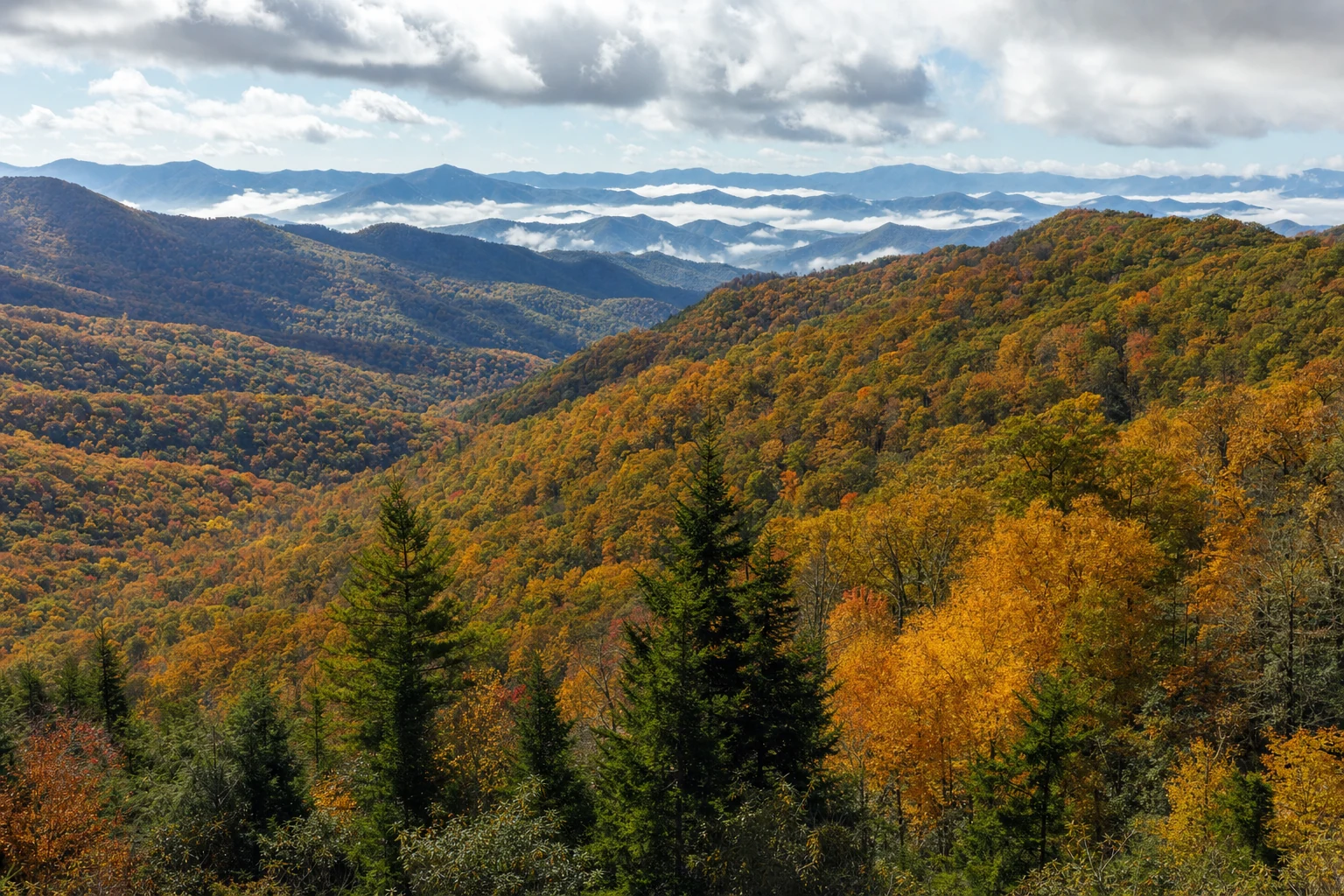
The trailhead sits along Newfound Gap Road, already at elevation for this part of Tennessee, which means the surrounding forest from the start reflects the park's mid-to-upper zone: mature hardwoods giving way, as you gain height, to the dense spruce-fir coverage that defines the park's upper elevations. The creek drainage the trail follows keeps moisture in the air and ferns along the banks; higher up, the canopy closes in and the air runs noticeably cooler and quieter than anything down in the valley.
The grade climbs consistently. Long flat sections don't exist on this route, which is exactly why it rates strenuous rather than moderate. You'll feel the elevation gain within the first mile and the trail won't let you forget it, but the forest shifts with the ascent in ways that make the work feel like it's going somewhere rather than just burning calories. The creek drainage provides the ambient sound you associate with Smokies backcountry rather than road noise or voices from nearby parking areas.
Reaching the AT at the top opens access to the long ridgeline trail running along the Tennessee/North Carolina state line. That's worth noting for anyone planning a point-to-point or a longer combination route, though any such plan needs a shuttle car or a clear turnaround time — adding miles to an already strenuous 9-mile day requires honest planning.
Gear and Logistics
Parking anywhere inside Great Smoky Mountains National Park requires a Park It Forward tag: $5 for a single day, $15 for a week, $40 for an annual pass. Purchase at recreation.gov or at kiosks inside the park before you park. There's no park entry fee, so the parking tag is the one cost to account for.
Bring more water than you expect to need. A 9-mile strenuous day in mountain terrain burns through water faster than most people plan for, and stream water along the route needs treatment before drinking. Two liters per person is a reasonable floor, not a ceiling. Add a rain layer and a warm layer regardless of the morning forecast; mountain weather on Newfound Gap Road shifts fast, and afternoon conditions in the spruce-fir zone can be cold and wet even in July. Trekking poles pay for themselves on the descent here, particularly for anyone with knee history.
Cell coverage along most of this trail runs from minimal to nothing. Download an offline topo map at home before driving to the trailhead. The park's trail markings are reliable, but troubleshooting navigation while tired and deep in the forest wastes time and daylight.
When to Go
Late April through early June catches the upper-elevation wildflower sequence. The bloom runs later at altitude than it does in the valleys, so you can track it through several weeks if you visit progressively higher trails as the season moves up the mountain. Spring also brings the creek drainage up significantly, and the water noise carries through the whole lower section of the trail.
Summer mornings are workable; afternoons at elevation in July are hot and humid. Starting before 8am makes a real difference on a strenuous climb. The advantage of Sweat Heifer over the park's high-traffic trails is that crowds thin out fast once you're past the first mile on any route without a famous waterfall or viewpoint at the end.
Fall is the most photogenic window. Mid-October is the typical peak for upper-elevation color in the park, and the morning light in October hits the forest differently than summer's flat midday haze. Expect the park to be significantly busier on fall weekends than almost any other time of year. Arriving well before 9am is less a suggestion than a practical requirement for getting parking without circling.
Winter hiking on this trail is for experienced cold-weather hikers only. Snow and ice develop quickly at upper elevations and Newfound Gap Road itself may close in serious weather. The payoff, when conditions allow, is complete solitude and long views through bare branches that summer never offers. Microspikes and proper layering are required gear, not optional.
Who This Trail Suits and What Pairs With It
This route genuinely demands fitness and prior trail experience. A hiker comfortable with moderate park trails but unfamiliar with sustained steep climbing will find this harder than expected. That said, you don't need technical skills or specialized gear beyond solid trail footwear, appropriate layers, and navigation capability.
For a longer day built around the same stretch of Newfound Gap Road, the Dry Sluice Gap Trail (2.5 miles one-way, Strenuous) and Road Prong Trail (2.7 miles one-way, Strenuous) cover similar terrain character in shorter out-and-back formats; either pairs well for hikers who want two strenuous trails in one day without committing to the full Sweat Heifer round trip distance. Combining any of these via the AT is possible but demands realistic mileage math and a defined turnaround time.
Charlies Bunion, accessible from Newfound Gap, covers 8 miles out-and-back on the AT with exposed ridge views and significantly more foot traffic. It's the right choice if the payoff view matters most. Sweat Heifer suits people who prefer the forest over the panorama.
Frequently asked questions
- Do I need a parking tag?
- Yes — a Park It Forward parking tag is required for vehicles parked more than 15 minutes anywhere inside Great Smoky Mountains National Park. Daily ($5), weekly ($15), or annual ($40) tags are available via recreation.gov or park kiosks.