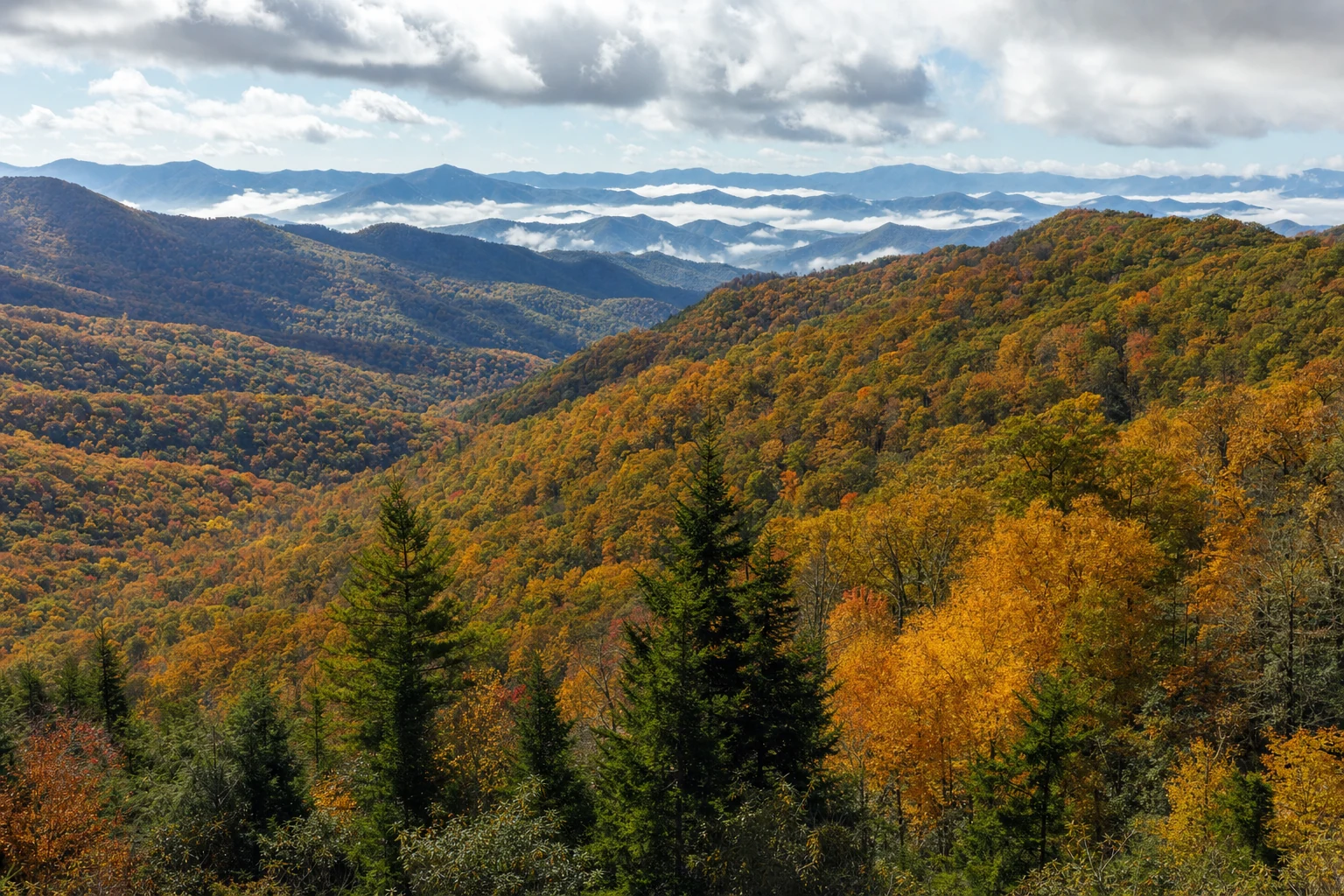

About Tricorner Knob (via AT):
Now I'll write the guide using only supported facts, with the anti-slop rules applied throughout.
---
Tricorner Knob sits at one of the Appalachian Trail's major backcountry junctions in the eastern reaches of Great Smoky Mountains National Park, at high elevation and a long way from the visitor centers. Reaching it means committing to a serious day hike or, more practically, an overnight trip using the shelter at the junction itself. The reward is real: a remote corner of the Smokies that most park visitors never see, on a section of trail where the crowds that pile into Sugarlands and Newfound Gap simply don't follow.
What the trail actually involves
The "via AT" label tells you something important. Tricorner Knob isn't reached by a single standard trailhead; it's a high-elevation destination accessible from several directions along the Appalachian Trail, and your approach depends on your starting point, your fitness level, and whether you're planning a point-to-point route or coming back the way you came. The NPS classifies this as a high-elevation objective with various access points.
For context on what the AT demands in this park: Charlies Bunion from Newfound Gap is 8 miles out-and-back and rated strenuous; Rocky Top from the Kuwohi trailhead runs 5.6 miles out-and-back and carries the same rating. Tricorner Knob is typically a longer proposition than either of those and is better suited to strong hikers doing an overnight than to someone attempting a casual round-trip. The sustained elevation means the approach involves real climbing regardless of the route, and high-elevation ridgeline terrain in the Smokies comes with its own weather patterns.
The shelter and overnight options
Tricorner Knob Shelter sits right at the trail junction and holds 12 to 14 people. The positioning makes it a natural stopping point for AT section hikers and thru-hikers moving through the park, so competition for spots is genuine during spring and fall. Water comes from a nearby spring, but that spring can fluctuate and become unreliable in dry conditions. Treating it as your only water source is a mistake; carry enough to be self-sufficient, and filter everything you draw from any backcountry source in the park.
The shelter is three-sided and covered, consistent with the AT shelter design throughout GSMNP. It doesn't provide the kind of weather protection a tent does, so in cold or wet conditions you'll want a sleeping bag rated for temperatures below what the forecast shows. Ridge temperatures at high elevation run noticeably colder than Gatlinburg, sometimes dramatically so.
Permits and reservations
All overnight backcountry camping in Great Smoky Mountains National Park requires a permit, reserved in advance through recreation.gov. There are no walk-up backcountry permits issued at trailheads. The permit fee applies per night, and shelter reservations at popular AT stops fill weeks ahead during spring wildflower season (late April into May) and October foliage. If your dates are flexible, weeknights open up considerably.
Day hikers who make it to Tricorner Knob and return without camping don't need a backcountry permit, but the distance makes that a strenuous long day. Only attempt it as a day trip if your group is fit, starts early, and has the navigation confidence to move efficiently on unfamiliar terrain with limited phone coverage.
Choosing your access point
Because Tricorner Knob is reachable from multiple AT entry points, settling on a trailhead requires some homework. The eastern side of the park has several access corridors; Cosby and Big Creek are among the entry areas used for routes into the high AT ridgeline in that part of the park. Your specific approach determines the total mileage, the elevation profile, and whether a car shuttle makes more sense than an out-and-back.
Check current trail conditions with the park before finalizing anything. Seasonal road closures at higher elevations can affect access, and storm damage occasionally closes sections of the AT. The NPS GSMNP trail conditions page is the right place to look, not secondhand sources.
Parking at any GSMNP trailhead requires the Park-It-Forward tag for stays over 15 minutes: $5 per day, $15 per week, or $40 for an annual pass. Buy it at recreation.gov or park kiosks before driving in. Rangers check regularly, and citations are not rare.
Gear and safety
Pack for the gap between Gatlinburg and the ridgeline, which is wider than most visitors expect. A rain layer and insulation belong in the pack even on sunny summer mornings; afternoon thunderstorms above 5,000 feet can arrive fast and with no warning from the valley below. Trekking poles are worth their weight on the descent after a full day in the backcountry.
Cell coverage disappears quickly once you leave the front-country areas. Download offline topographic maps before you leave town; Gaia GPS and the NPS app both cache well. Tell someone your planned route and return time. If you're new to backcountry navigation, this is not the place to learn.
Food storage matters. GSMNP has one of the highest concentrations of black bears of any national park, and bears in this region are experienced at finding food that hikers think is hidden. Use a bear canister or the food hangs at designated sites. Keep 50 yards of distance from any bear you encounter, and don't run.
Timing your visit
Fall is the strongest window for high-elevation hiking in the Smokies. Foliage typically peaks in mid-October on the upper ridges, the air clears, and the shelter crowds thin relative to the peak summer weekends. Spring brings wildflowers at lower elevations and colder, wetter conditions up top. Summer works but demands an early start to beat afternoon lightning; plan to be off exposed ridgeline by early afternoon. Winter is for experienced cold-weather hikers only; ice forms on the AT ridgeline regularly, and the shelter's water source may freeze.
Frequently asked questions
- Do I need a parking tag?
- Yes — a Park It Forward parking tag is required for vehicles parked more than 15 minutes anywhere inside Great Smoky Mountains National Park. Daily ($5), weekly ($15), or annual ($40) tags are available via recreation.gov or park kiosks.