
About Turkeypen Ridge Trail:
Turkeypen Ridge Trail runs 3.0 miles one-way through the Cosby area of Great Smoky Mountains National Park, rated Moderate by the NPS. It sits in one of the park's least-trafficked corners, which means you can get genuine ridge hiking without the parking gridlock that plagues the Sugarlands and Cades Cove corridors. For hikers who want a solid half-day outing with real elevation and forest character, this trail delivers without demanding technical skills or an alpine start.
Trail Basics
Distance is 3.0 miles one-way, which puts a round trip at 6.0 miles — enough to make a satisfying day hike without becoming a slog. The NPS rates it Moderate, the middle tier on the park's three-point scale. In Smokies terms, Moderate typically means meaningful elevation change and uneven terrain underfoot, but nothing that requires scrambling or route-finding. A reasonably fit adult who hikes occasionally can complete this trail without special preparation. Hikers who regularly do strenuous trails may find the pace relaxed; newer hikers should budget extra time and watch their footing on root-covered sections, which are standard throughout the park.
The trailhead is in the Cosby area. A Park It Forward parking tag is required for any vehicle parked in the national park for more than 15 minutes — daily passes run $5, weekly $15, and an annual pass $40. Purchase at recreation.gov in advance or at park entrance kiosks. Cosby's trailhead areas are smaller than major park corridors, so arriving early on weekends and during peak fall foliage (mid-October through early November) is practical advice, not a cliché — the lot genuinely fills.
Terrain and Trail Character
The trail follows a ridge, which shapes the entire experience. Ridge hiking in the Smokies typically alternates between forested climbs, occasional exposed sections with longer sight lines through the tree canopy, and descents that work your knees differently than the ascent did. The name "Turkeypen" echoes old Appalachian land-use history — the mountains around Cosby were farmed, logged, and hunted by Cherokee and European settlers long before the park's 1934 establishment, and many trail names in this area preserve that layered past.
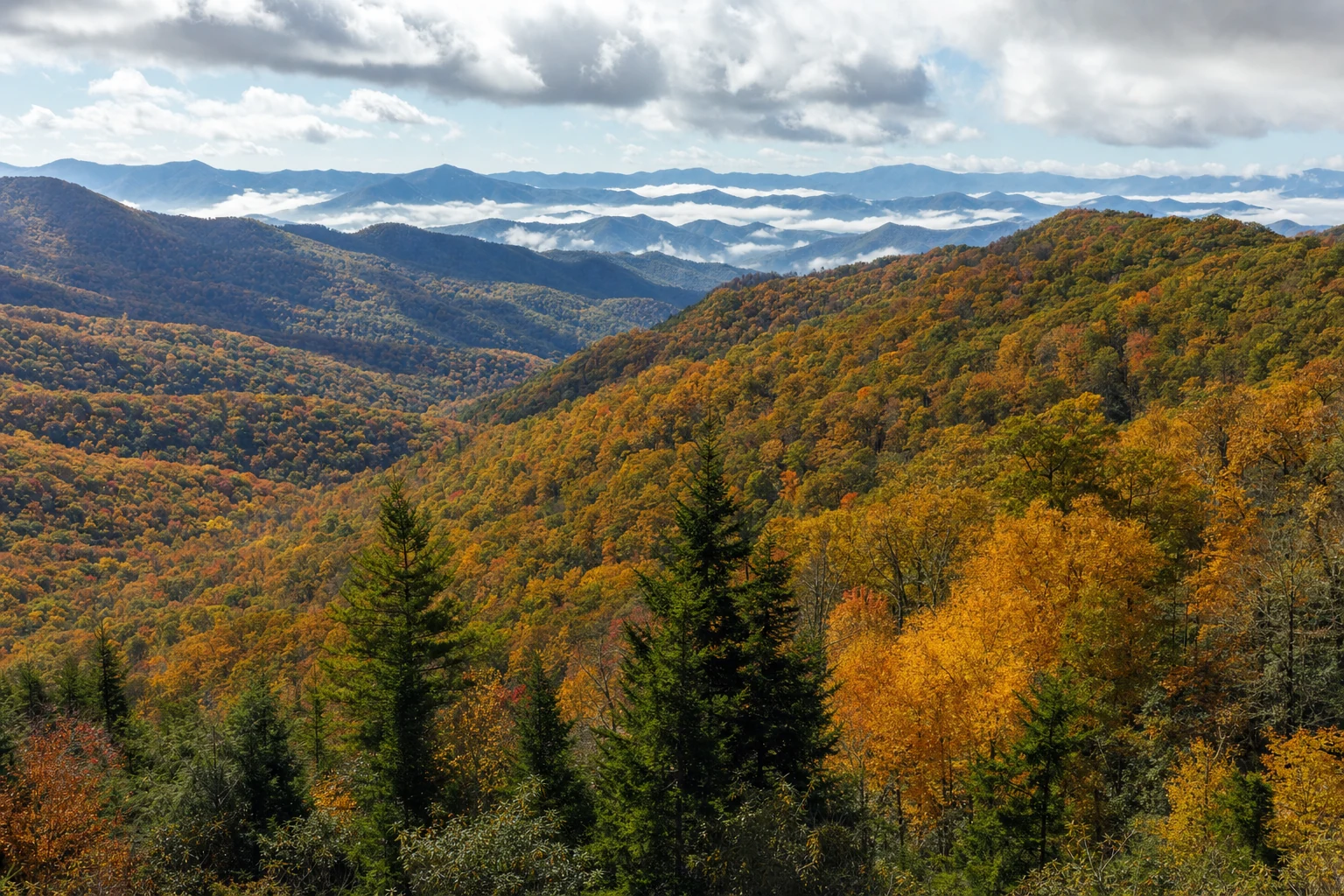
The forest in the Cosby zone is second-growth mixed hardwood — tulip poplar, red maple, oak, and hickory dominate the mid-elevations. The canopy closes tightly enough in summer that shade is consistent, which makes July and August hikes more bearable than on south-facing slopes elsewhere. In spring, the forest floor comes alive before the canopy leafs out, and trillium, violets, and serviceberry are common at lower to mid elevations throughout the park. In fall, the hardwood mix produces some of the richest color in the eastern US — this is the trail for people who want foliage without the Highway 441 backup.
The Cosby Corner
Most visitors to Great Smoky Mountains National Park enter via Gatlinburg and the Sugarlands Visitor Center. Cosby is the other direction — northeast of the main corridor, off TN-32 — and the difference in crowd level is substantial. Cosby Campground is one of the park's smaller campgrounds and consistently among the least-used, even on summer weekends when Elkmont is booked months out. The trailheads that branch from this area, including Turkeypen Ridge, share that relative quiet.
That's not because Cosby is inferior terrain. Several strenuous routes depart from this zone, including Firescald Ridge Trail (4.5 miles one-way, Strenuous) and Birch Spring Gap Trail (2.7 miles one-way, Strenuous), alongside more accessible options like the Cosby Nature Trail (1.0-mile loop, Easy) that runs through the campground. Turkeypen Ridge occupies the middle ground — long enough for real exercise, demanding enough to feel earned, short enough to leave time for a camp dinner or a drive back to Gatlinburg for the evening.
Nearby Trail Pairings
If you're making the drive to Cosby, it's worth knowing what else is in the area so you can build a full day. From the same general zone:
- Cosby Nature Trail — 1.0-mile loop, Easy. Good warm-up or cool-down option, suitable for all ages and abilities.
- Birch Spring Gap Trail — 2.7 miles one-way, Strenuous. For fit hikers who want to stack a harder route onto the same day.
- Firescald Ridge Trail — 4.5 miles one-way, Strenuous. One of the more demanding trails in this part of the park; experienced hikers pair it with overnight backcountry permits at designated campsites.
- High Rocks Trail — 2.0 miles one-way, Strenuous. Another Cosby-area option with a reputation for rewarding views at the top.
- Indian Grave Gap Trail — 2.0 miles one-way, Moderate. Comparable effort to Turkeypen Ridge, different routing.
- Roundtop Trail — 2.0 miles one-way, Strenuous. Short but steep; combines well with Turkeypen for a longer loop if the connecting terrain allows.
Combining Turkeypen Ridge with one shorter trail makes a satisfying two-trail day without overextending. Check current trail conditions at the Cosby Campground contact station or the NPS GSMNP website before adding routes — wet spring conditions can make ridge descents slippery and some stream crossings in the area rise with rainfall.
Best Time to Hike
All four seasons are worth considering, each with real trade-offs.
Spring (mid-March through May) is the wildflower window. The Cosby area sees trillium, phacelia, and wild geranium in good numbers, and the elevation gradient along a ridge trail lets you watch different species bloom as you climb. Rainfall is frequent and the trail will be muddy after wet periods — trekking poles help.
Summer (June through August) means full canopy shade, which matters on a ridge trail that gets direct sun on open sections. Start by 7 or 8 a.m. to beat afternoon heat, and carry more water than you expect to drink — the Smokies are humid and sweat evaporates slowly. Thunderstorms build most afternoons in July and August; plan to be off exposed ridge sections by early afternoon.
Fall (September through November) peaks in color typically around mid-October at mid-elevations in the Cosby zone. The Turkeypen Ridge parking area will see more competition for spots during peak weekends — arrive by 8 a.m. or plan for overflow. The reward is worth it: hardwood ridges in full color are what put the Smokies on the fall foliage map.
Winter (December through February) is the sleeper season. Crowds drop dramatically, the leafless canopy opens long views that summer hides, and ice-rimed branches on a cold morning are striking. Dress in proper layers — wet cold in the mountains at 3,000 to 4,000 feet hits harder than the temperature reading suggests — and check NPS road status before driving out, since Cosby Road occasionally closes in ice conditions.
Getting There
From Gatlinburg, take US-321 North toward Cosby. The drive is roughly 18 miles and takes 30 to 40 minutes depending on traffic through Pittman Center. Turn onto TN-32 and follow signs for Cosby Campground. The Cosby area trailheads are at the end of the campground road. Cell service is unreliable once you're past Cosby — download the NPS GSMNP offline map or bring a printed map, particularly if you're combining trails.
No entrance fee exists for the park itself, but the Park It Forward parking tag is mandatory for your vehicle. First-time visitors sometimes miss this — the ranger station at Cosby can help if you're unsure which pass applies to your situation.
Practical Gear Checklist
- Water: carry more than you think you need — at least 2 liters for a 6-mile round trip in moderate conditions
- Rain layer: packable shell, even on clear mornings
- Trekking poles: useful on root-heavy ridge descents
- Trail map: paper backup or offline NPS app (no signal in park)
- Bear awareness: follow NPS protocols — 50 yards minimum distance, no food left in vehicles, use bear canisters or hang bags at designated backcountry sites
- Sun protection: applicable on open ridge sections even under tree cover
The trail requires no permit beyond the parking tag for a day hike. Backcountry overnight camping requires advance reservations through the NPS backcountry permit system, which applies to any designated campsite in the park.
Frequently asked questions
- Do I need a parking tag?
- Yes — a Park It Forward parking tag is required for vehicles parked more than 15 minutes anywhere inside Great Smoky Mountains National Park. Daily ($5), weekly ($15), or annual ($40) tags are available via recreation.gov or park kiosks.