
About Wayah Bald Tower Trail
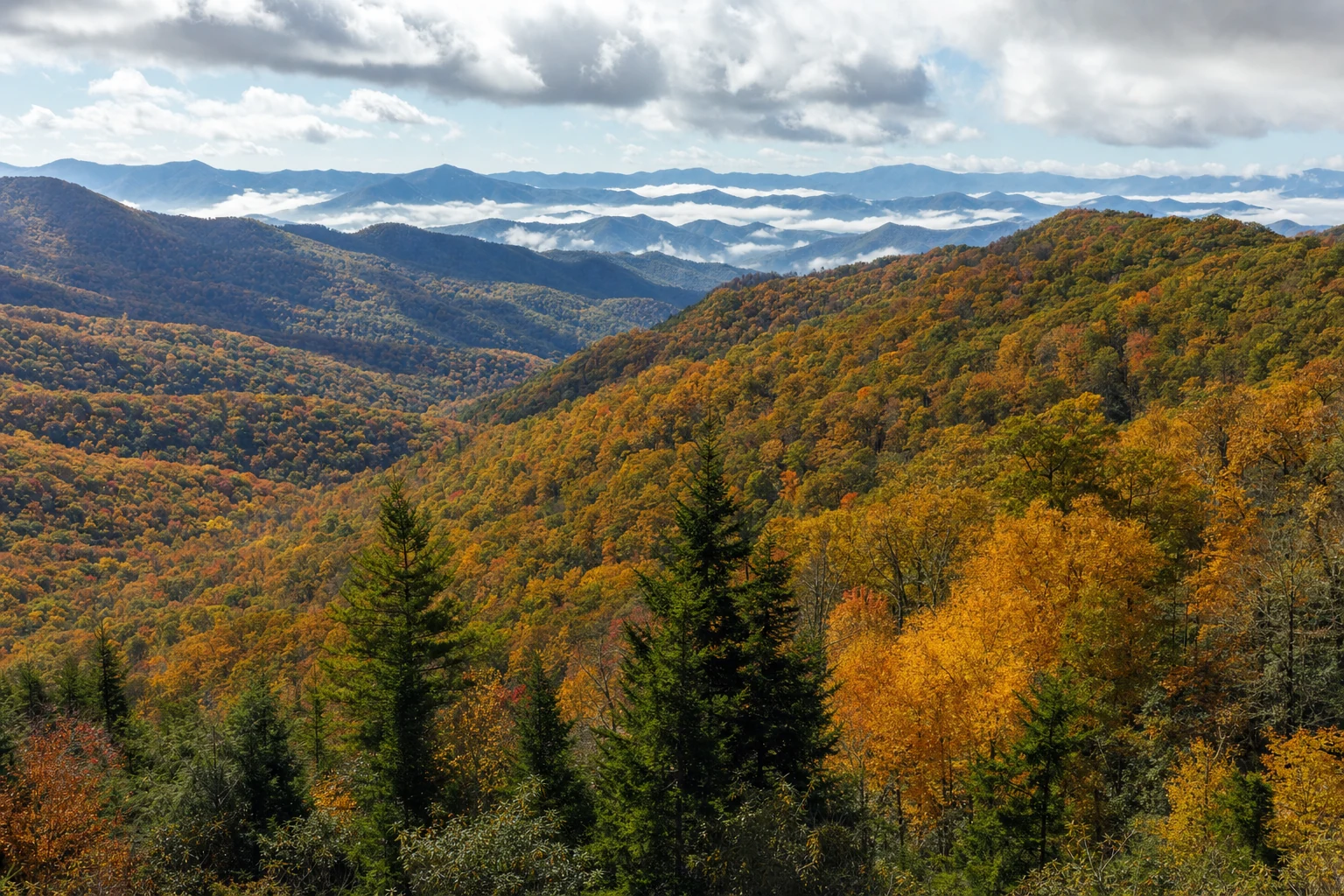
Wayah Bald Tower Trail earns its "easy" rating, but the payoff at the top has nothing easy about it. Half a mile of walking puts you on an open summit with ridgelines spreading in every direction, including a clear look toward Great Smoky Mountains National Park on days without haze. The draw here isn't the hike; it's what happens when you step out of the trees and the horizon opens up.
Trail at a glance
The route is 0.5 miles one-way, out-and-back, with minimal elevation gain from the trailhead on Wayah Bald Road (Forest Service Road 69) at 35.1600° N, 83.5900° W. Difficulty is rated easy. The summit also sits at a junction with two long-distance routes: the Appalachian Trail and the Bartram Trail. For through-hikers covering serious mileage, Wayah Bald works as a legitimate high-elevation stop; for day visitors, those connections are useful context rather than anything you need to plan around.
The tower
The fire tower at the summit is the reason most people make the drive. It's built of stone rather than the wood-and-metal construction typical on many Appalachian peaks, which gives it a solidity that suits the exposed setting. You can climb it. The views from the upper level extend across multiple mountain ranges, and on clear days you can pick out landmarks in the Smokies. On hazy summer afternoons, the ridges dissolve into the layered blue atmospheric effect that gave these mountains their name in the first place — still worth seeing, just differently.
The summit itself is a bald, meaning the trees pull back and you're standing in the open on grassy ground with nothing interrupting the sight lines. Wind is a constant here. Even calm days at lower elevations can feel genuinely exposed at the top, and temperatures typically run a few degrees cooler than the trailhead. In summer, when the valleys below are humid and heavy, that cooling effect is a genuine asset. In November it's less charming; a single layer won't cut it and you're an hour from your car.
Balds in this region also tend to hold wildflower blooms that wouldn't survive the forest canopy lower down. Spring visits can coincide with color across the open ground before the full leaf-out blocks the mountain views below. It's a two-for-one that most visitors who come only in fall miss entirely.
The walk
From the parking area, the trail gains the summit steadily without anything you'd call a real climb. Older adults and kids who can handle a half mile of uneven footing manage it without difficulty; so do hikers coming off an injury who want a legitimate view without a punishing approach. The surface runs packed dirt through most of the route, then opens to exposed rock near the top. Nothing requires hands or special footwear.
The round trip takes most people well under an hour, which makes this a natural add-on to a longer day rather than a full-day destination on its own.
Getting there
From downtown Gatlinburg, follow the main corridors toward the park entrance at Sugarlands on the Tennessee side or Oconaluftee on the North Carolina side, then continue toward Wayah Bald Road (FS 69). Navigation apps will get you to the trailhead, but cell service degrades significantly as you gain elevation; download offline maps before you leave. FS 69 is a forest road and may run unpaved in sections. Conditions vary by season, particularly in spring when snowmelt and rain can leave the surface soft. High-clearance vehicles handle it more comfortably, though dry-condition travel in a standard passenger car typically works.
A Park It Forward parking tag is required inside Great Smoky Mountains National Park for any stop over 15 minutes. Rates are $5 daily, $15 weekly, or $40 annually, available at recreation.gov or at park kiosks. Buy before you arrive — don't count on purchasing one at the trailhead itself.
When to go
Spring at this elevation runs several weeks behind the valleys. Wildflowers appear after lower peaks have already peaked, and waterfall flow stays strong through April into early May. It's the quietest season by far; you're more likely to share the summit with AT hikers than with day-trippers. Summer mornings offer the clearest sight lines before haze builds across the ranges; arriving before 9am in July or August means sharper views and fewer people competing for space on the tower stairs.
Fall brings the obvious draw. Mid-October typically marks peak color across this elevation band, and the open bald means you're watching the change across multiple ridgelines simultaneously, not just the canopy immediately around you. Weekend parking fills fast during the foliage window — plan accordingly or arrive early.
Winter is the underrated season, when the roads allow it. The stone tower in ice looks nothing like it does in the other three seasons, and views through bare trees carry farther than any other time of year. Check road conditions before heading out; high-elevation closures happen and Wayah Bald Road is no exception.
Before you go
Pack water even for a short trail. The open summit reflects heat, there's no water source once you leave the parking area, and half a mile feels longer when you've underestimated the exposure. A rain layer costs nothing to carry and matters considerably when afternoon storms roll in fast; summer afternoons in this range are notoriously unpredictable and the tower cabin offers limited shelter.
Black bears range through the broader area. Keep at least 50 yards of distance if you see one, secure all food and scented items in your car, and make noise when moving through denser cover away from the summit. Encounters on a regularly visited trail are uncommon. Uncommon isn't impossible. Cell service on and near the summit is unreliable; don't count on a signal for navigation or emergencies. Download offline topos, tell someone your plan, and carry what you need before you leave the house.
Frequently asked questions
- How long is Wayah Bald Tower Trail?
- Wayah Bald Tower Trail is 0.5 miles one-way (1.0 miles round-trip), with modest feet of elevation gain. It is rated easy.
- Do I need a parking tag?
- Yes — a Park It Forward parking tag is required for vehicles parked more than 15 minutes anywhere inside Great Smoky Mountains National Park. Daily ($5), weekly ($15), or annual ($40) tags are available via recreation.gov or park kiosks.